In this article
- Why the Balgjaj Lakes are worth the hike
- Where Liqenet e Balgjajt are and why Klos makes a good base
- Best season for Balgjaj hiking
- Route planning, 4x4 access, and when to use a local guide
- What to pack for glacial lakes in Albania
- After the hike: food, rest, and a slower evening in Klos
- A simple one-day plan for Klos mountain trails and Liqenet e Balgjajt
- Frequently asked questions
Why the Balgjaj Lakes are worth the hike
Wet grass brushes your boots above Klos, the road dust is still on the car, and the water ahead looks cold even before you reach its edge. This is often the first feeling of Liqenet e Balgjajt, the Balgjaj Lakes: a high mountain day that asks you to slow down, look at the sky, and listen to local advice before you trust any line on a map.
These are glacial lakes Albania still keeps quietly in the language of shepherds, village roads, and summer hikers. They feel hidden not because local people do not know them, but because they receive far less international attention than the famous northern routes.
What the landscape feels like
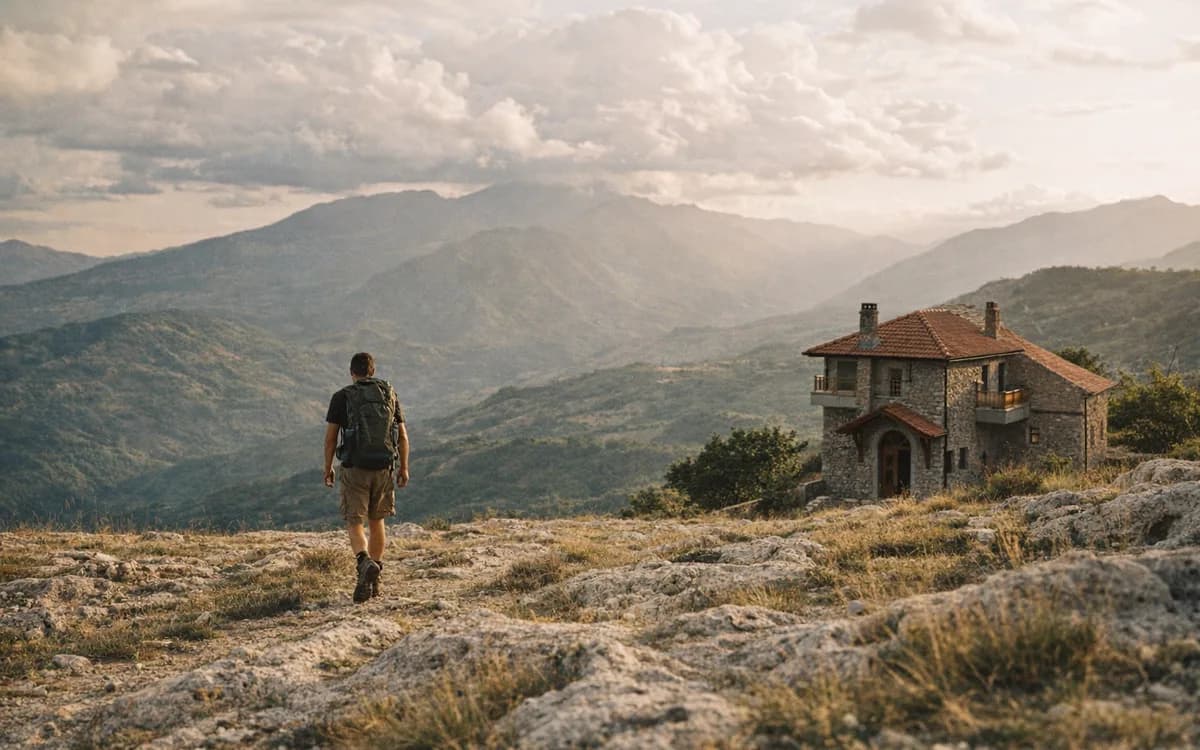
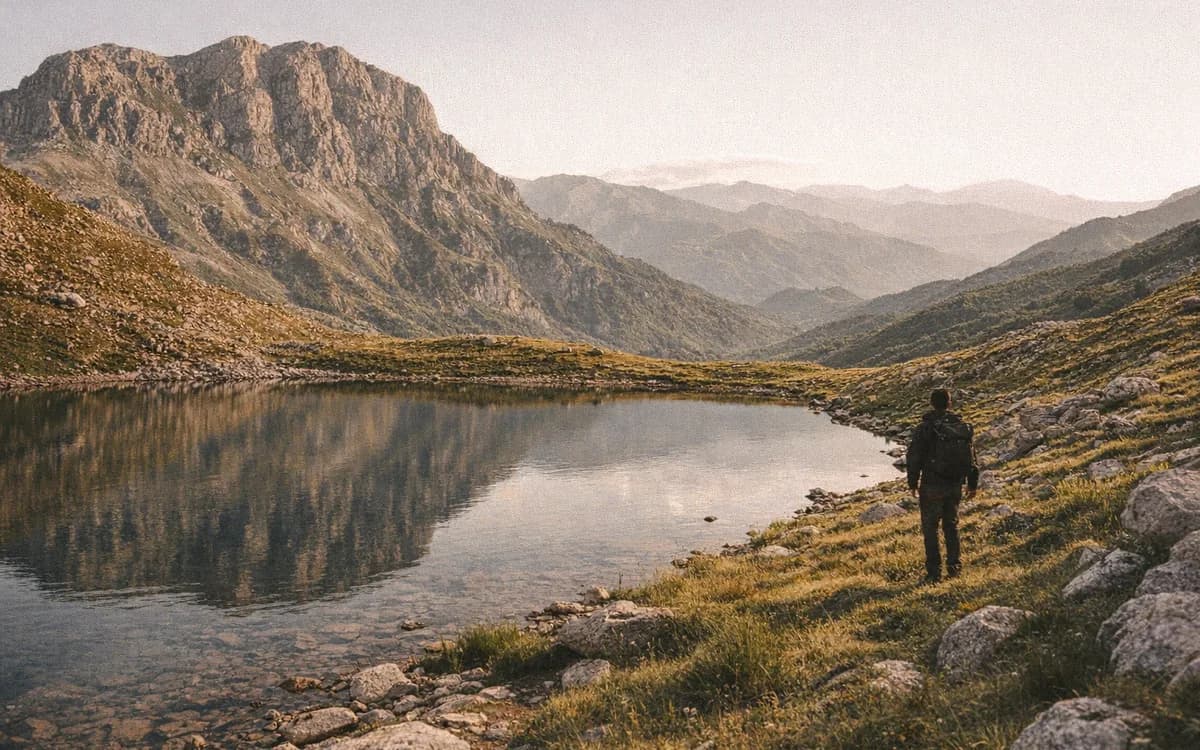
Expect cold water, grassy slopes, pale stone, grazing animals, and wide views over the Mat highlands. On a clear day, the ridges hold the light beautifully. On a cloudy day, the same slopes can feel serious very quickly.
That is part of the appeal. The lakes reward hikers who enjoy patience: watching clouds, choosing footing carefully, and accepting that a mountain plan is never fully decided from a screen.
Who this route suits
Balgjaj hiking suits fit walkers with proper footwear, mountain sense, and comfort on uneven ground. It is not the right choice for travelers expecting paved access, cafés beside the trail, or a marked sign at every turn.
If silence, high air, and a local Albanian route sound better than a packaged viewpoint stop, the lakes may be exactly the day you came for.
Where Liqenet e Balgjajt are and why Klos makes a good base
Liqenet e Balgjajt lie in the Balgjaj massif above the Mat and Klos area. Reaching them is less about following one polished tourist corridor and more about understanding mountain roads, nearby villages, weather, and the right starting point for that week.
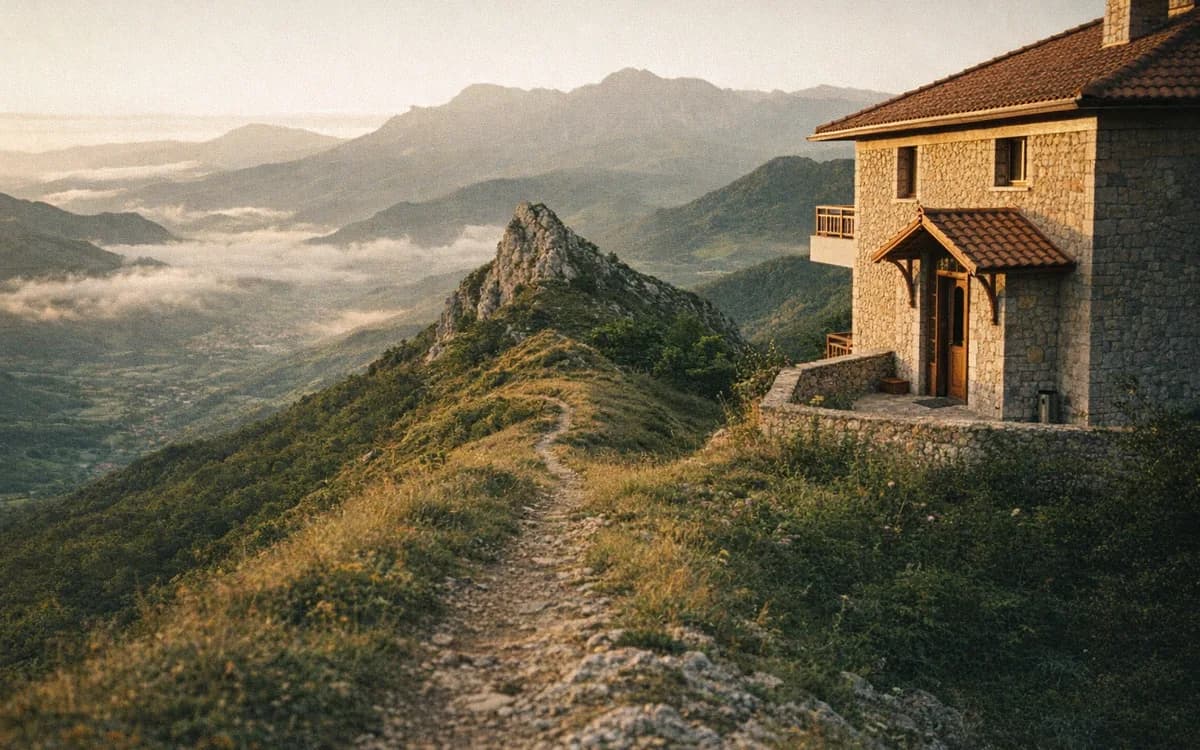
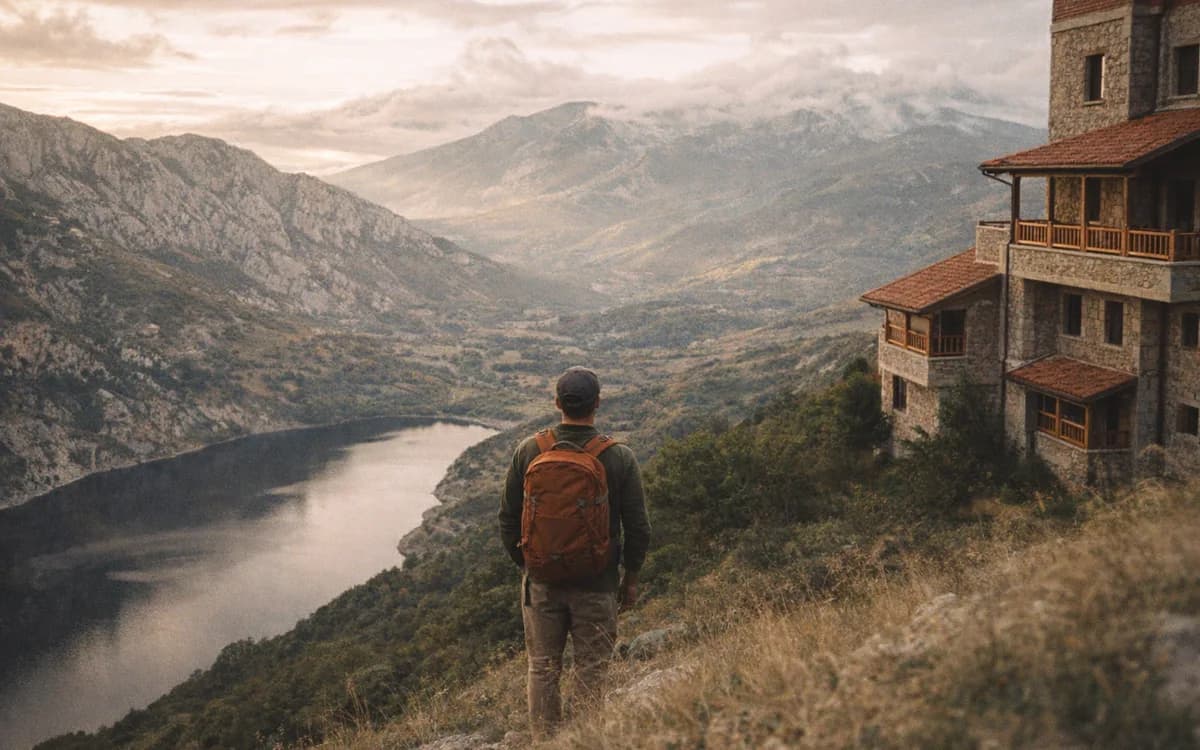
That is why Klos works well as a base. You can sleep low, start early, walk high, then return for dinner and rest instead of trying to force a long same-day drive from farther away.
We are in Fshat, on Rruga e Arbërit in Klos, Dibër County, only about 35 to 40 minutes by road from Tirana. The Murriz Tunnel, opened to traffic in March 2025, has made this Tirana–Dibër corridor fast and reliable, but the final mountain approach still asks for local judgment.
Base low, walk high
Arriving the evening before gives you room to ask about the road, check the forecast, prepare layers, and avoid a rushed morning. Our guesthouse has 9 rooms, but the useful part for hikers is simpler than the number: you can come as a couple, with friends, or as a small family group, sleep properly, and start the lake day without a dawn drive from Tirana.
You can see our rooms when shaping the trip.
Road access changes the day
The road approach can change after rain, snowmelt, or rough maintenance periods. A route that feels simple in dry summer weather may become slow or unsuitable after a storm.
We do not recommend assuming a standard car will always be enough. Ask locally before committing to a start point, and treat the road as part of the mountain day, not just the way there.
Best season for Balgjaj hiking
The main season for Balgjaj hiking is late spring through summer, with early autumn possible in settled weather. This is high country, so winter can leave traces long after the valley has turned green: snow patches, mud, wet grass, and waterlogged ground can all linger higher up.
Summer gives visitors the easiest planning window. Days are longer, the approach is usually more predictable, and groups with limited time have a better chance of reaching the lake area without rushing. Still, even in July or August, you need layers, sun protection, enough water, and an early start.
Late spring and early summer
Late spring can be beautiful: green slopes, strong water, and cooler walking temperatures. It can also be uncertain. After heavy rain or late snow, the ground may be soft and the road may not match what an old map suggests.
If you are visiting in May or early June, ask the night before and again in the morning. The best answer is the current one.
High summer
High summer is the most straightforward season for visitors from abroad. Start early while the air is cooler, especially on exposed sections where shade may be limited.
An early breakfast helps. At Bujtina Çupa, breakfast is served from 07:30 to 09:30, and for a mountain day we always prefer a calm start over a late rush.
Autumn windows
Early autumn can bring clear air and quieter slopes, but it should not be treated as guaranteed. Days shorten, weather can shift quickly, and a small delay on the road matters more when daylight is limited.
If the forecast is unsettled, choose a lower walk near Klos or save the lakes for another visit. The mountain will not be offended.
Route planning, 4x4 access, and when to use a local guide
The lake route is not one where every visitor begins from the same signed trailhead in the same conditions. The day depends on the road, the vehicle, the weather, the group’s pace, and the advice you receive before leaving Klos.
A 4x4 or high-clearance vehicle often makes the approach safer and more realistic, especially after rain or outside the driest weeks of summer. If you have a standard car, do not assume it can continue all the way to the most convenient walking start. Stopping earlier may be the wiser choice.
Offline maps are useful, and we recommend having them downloaded before departure. But maps do not replace local knowledge when tracks split, fog drops, or a road has changed since the last update.
Through our hiking experiences, we help guests plan guided mountain days from Klos, including our regular route on Rruga e Arbërit.
The same principle applies for Balgjaj: the best plan is the one fitted to the season, not copied blindly from another person’s summer.
Practical access and geography
The lakes sit high in the Balgjaj massif, around 1,800 metres above sea level, so the approach feels different from a valley walk even when the weather looks gentle from Klos. You gain height by road first, then by foot, and that road section is often the detail that decides the day.
Do not picture a paved tourist entrance with parking lines and a café at the top. Access is by rough mountain road, with sections that can become slow after rain, snowmelt, or erosion. In dry summer, a suitable vehicle may bring you closer to a practical walking start; in wetter periods, the same approach may mean stopping lower and adding time on foot.
Because tracks and village approaches can shift with conditions, we prefer not to promise one fixed starting point before we have checked locally. Ask in Klos the evening before, confirm again in the morning, and be honest about your vehicle. A beautiful lake day begins with a practical road decision.
How hard is the hike?
This is best understood as a moderate-to-demanding mountain day. If road access is good and the starting point is higher, the walk may feel manageable for fit hikers. If the vehicle must stop lower, or if the ground is wet, the day becomes longer and harder.
Expect uneven terrain, wind, sun exposure, and limited services once you are above the villages. Good shoes matter. So does saving energy for the descent.
Do you need a guide?
Experienced hikers in stable summer weather may manage with preparation and clear local directions. For first-time visitors, hikers with only one available day, groups without Albanian language, or anyone facing uncertain weather, a local guide is strongly recommended.
A guide is not just someone who walks in front. The value is in choosing the right approach, reading conditions, and knowing when the plan should change.
What to ask before you go
Before leaving, ask about road condition, snow or mud, current water sources, grazing dogs, mobile signal, and the realistic start point for your vehicle.
Check the forecast the night before and again in the morning. If the clouds are building early, or the road already feels wrong, adjust the day before you are committed too high on the mountain.
What to pack for glacial lakes in Albania
European hikers who are used to marked Alpine infrastructure should pack for a more independent day here. Services are limited, signs may be sparse, and the weather can ask for both sunscreen and a warm layer in the same afternoon.
Bring sturdy hiking shoes, a wind layer, a warm layer, sun hat, sunscreen, enough water, snacks, offline map, charged phone, power bank, and a small first-aid kit. In spring or after wet weather, add a waterproof jacket, extra socks, and trekking poles for soft ground and descents.
Food and water
Do not assume shops, cafés, or reliable drinking water on the route. Pack lunch before leaving Klos, and carry more water than you think you need on a hot day.
If you stay with us, ask the evening before about food for the trail. A simple packed meal can make the difference between a good decision at midday and a tired one.
Mountain etiquette
Near the lake edges, stay on durable ground where possible. Cold water and fragile shores deserve care; swimming should never become the main plan.
Close gates if you pass through them, give livestock and shepherd dogs space, greet people respectfully, and carry out every piece of rubbish. These are working mountain landscapes, not empty scenery.
After the hike: food, rest, and a slower evening in Klos
After a day of cold water, high air, and rough ground underfoot, the best reward is not another drive. It is dry clothes, water, a shower, and a proper meal.
Our kitchen is built around Albanian mountain food: bread and pies from the wood-fired oven, dairy from local shepherds, herbs from the garden, and warm dishes that make sense after walking. Dinner is served from 18:00 to 22:00, which gives hikers time to return without turning the evening into a race.
What to eat after a mountain day
The menu changes with the season, but the spirit is simple: warm plates, local ingredients, and food that brings the group back to the table. You might choose Tavë dheu (traditional Albanian clay-pot dish), Byrek Bujtine (our house byrek pie), soup, grilled vegetables, or something slow and hearty.
For a special mountain meal, Pule fshati me jufka (village chicken with jufka noodles) is one of the dishes our guests ask about most.
If you want to see what is usually served, visit our kitchen before you travel.
Why not rush back to Tirana the same night
The drive from Tirana to our area is only about 35 to 40 minutes, but after a demanding hike even a short return can feel longer than expected. Rural roads, tired legs, and late light are not a good combination.
When possible, plan Balgjaj as part of a two-night stay in Klos: arrive, check conditions, hike, eat, sleep, and drive onward the next day with a clear head.
A simple one-day plan for Klos mountain trails and Liqenet e Balgjajt
A good Balgjaj day starts before the morning of the hike. The evening before, arrive in Klos, check weather and road conditions, confirm the vehicle or guide plan, charge your phone, prepare layers, and organize food.
In the morning, eat early, drive toward the mountain approach, and begin walking while temperatures are still cooler. Keep the pace steady. The goal is not to race to the lake, but to reach the high ground with enough energy and judgment to return safely.
Around midday, if conditions allow, enjoy the lake area, eat your packed lunch, and keep watching the clouds and wind. Afternoon is for descending with daylight in hand, returning to Klos, showering, eating dinner, and resting properly.
The night-before checklist
Use a simple checklist: weather checked, road advice received, route agreed, phone charged, offline map downloaded, food packed, water ready, layers prepared, driver or guide confirmed.
If one piece is missing, solve it before sleep. Morning decisions are better when the essentials are already settled.
The turn-back rule
Turning back is normal in the mountains. It is not a failure. If the road is worse than expected, the weather closes in, someone feels unwell, or the group is moving too slowly, choose the safer plan.
The lakes will still be there in better weather.
Frequently asked questions
Are Liqenet e Balgjajt the same place?
Yes. The Balgjaj Lakes are the English name for Liqenet e Balgjajt, a group of high glacial lakes in the Balgjaj massif above the Mat and Klos area.
When is the best time to hike there?
Late spring through summer is the main hiking season. Early autumn is possible in settled weather, but snow, mud, and short daylight can affect access outside summer.
Do hikers need a 4x4?
A 4x4 or high-clearance vehicle is often the safer choice for the mountain approach, especially after rain or during shoulder season. Road conditions should be checked locally before departure.
Is a guide necessary for Balgjaj hiking?
A guide is strongly recommended for first-time visitors, poor visibility, shoulder-season conditions, or hikers without local route knowledge. Experienced summer hikers may manage with careful preparation.
Can the lakes be visited as a day hike from Klos?
Yes, they work well as a full-day hike from Klos when road access and weather are good. Visitors should start early and avoid rushing the return.
Want the lake day without guessing at roads and weather? Book your stay in Klos, and we will help you shape a mountain plan that fits the season.