In this article
If you came looking for a jufka recipe, you should end up with noodles, not pie. Jufka are Albanian egg noodles, strongly connected with Dibër homes, where thin dough is rolled, cut, dried, and saved for a warming tray with chicken or broth. Once you know that difference, you can cook a simple oven version at home and recognize the dish when you sit down at a Klos table. This jufka recipe keeps to that home logic: dried noodles, hot broth, gentle fat, and enough oven time for the tray to settle.
In our kitchen, the smell changes when the dry jufka toast for a few minutes: a little nutty, a little buttery, ready for the first ladle of hot chicken broth to hiss across the tray.
At Bujtina Çupa, we love jufka because one tray carries the taste of nearby Dibër and northern Albanian mountain homes in a plain, generous way.
It is the kind of food that feels right after the road: village chicken, good broth, and the patience to let the jufka absorb the liquid slowly.
Our kitchen is the natural place to ask what is cooking that day, because Albanian food is always tied to the season, the garden, and the hands preparing it.
What jufka are in Albanian cooking
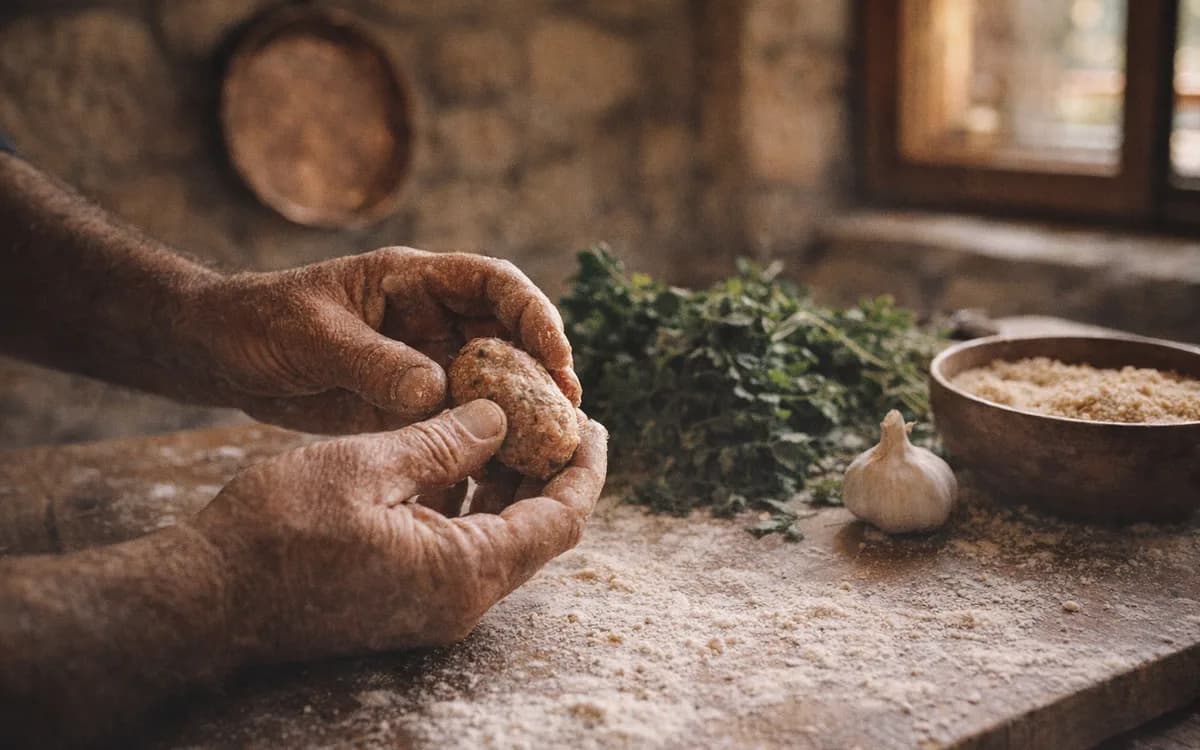
Jufka are dried egg noodles or ribbon-like pasta. In Dibër, the word also describes a household habit: making dough when there is time, drying it carefully, and keeping it ready for a meal that can feed people well. The usual dough is simple: flour, eggs, milk or water depending on the home, and salt. The rolled sheets are cut into small strips or broken pieces, then dried until they can be stored.
That makes jufka different from byrek, lakror, or other pies. Those dishes wrap fillings in dough. Jufka become the body of the dish itself, soaking up stock and fat until the noodles turn soft at the center and lightly toasted at the edges. When Albanians talk about jufka me pulë (jufka with chicken), they mean this kind of comforting noodle dish, not a nettle pie or filo pastry recipe.
Because the noodles are dried, the recipe is forgiving, but it still asks for attention. Dry jufka need hot broth, enough fat to carry flavor, and time in the oven. Too little liquid leaves hard patches. Too much liquid makes the tray heavy. The best version feels homey: tender noodles, clear chicken flavor, browned edges, and enough rest that the serving spoon lifts portions instead of soup.
Ingredients for this jufka recipe
This method serves four to six people and uses a baking dish large enough for the noodles to sit in an even layer. Quantities can move a little because jufka brands and homemade batches absorb broth differently.
- 400 g dried jufka noodles
- 1 small village chicken, or 4 chicken legs or thighs
- 1 onion, finely chopped
- 2-3 tablespoons butter, olive oil, or a mix of both
- 1.2-1.5 liters chicken broth from simmering the chicken
- Salt and black pepper
- Optional: a bay leaf, a little thyme, or a small spoon of paprika
- Optional serving sides: plain yogurt, pickles, salad, or fresh bread
If you cannot find Albanian jufka, use sturdy dried egg noodles, short tagliatelle broken into pieces, or another pasta that can absorb stock without collapsing. Avoid very thin soup noodles; they soften too quickly and lose the texture that makes the dish satisfying.
Simmer the chicken and make the broth
Put the chicken in a pot with water, salt, and the optional bay leaf. Simmer gently until the meat is cooked and the broth tastes clear and savory. A whole small chicken may need about an hour; pieces usually need less. Skim the surface if needed, then remove the chicken and strain the broth so it is clean enough to pour over the noodles.
Taste the broth before it reaches the baking dish. This matters more than exact measurements. The jufka will drink in that liquid, so bland broth creates bland noodles. A flat broth needs salt in small amounts. A broth that tastes too strong can be loosened with a little hot water. Pull the chicken into large pieces or leave smaller pieces whole, depending on how you want to serve the tray.
In a pan, soften the chopped onion in butter or olive oil until sweet and translucent. Do not rush it into browning. The onion should melt into the jufka rather than compete with the chicken. For paprika, stir it into the fat for a few seconds at the end so it blooms without burning.
Toast, bake, and rest the jufka
Heat the oven to about 190 C. Spread the dried jufka in the baking dish and toast them for a few minutes, or warm them in the pan with the onion and fat. This small step helps the noodles keep character. They should smell nutty, not dark or scorched.
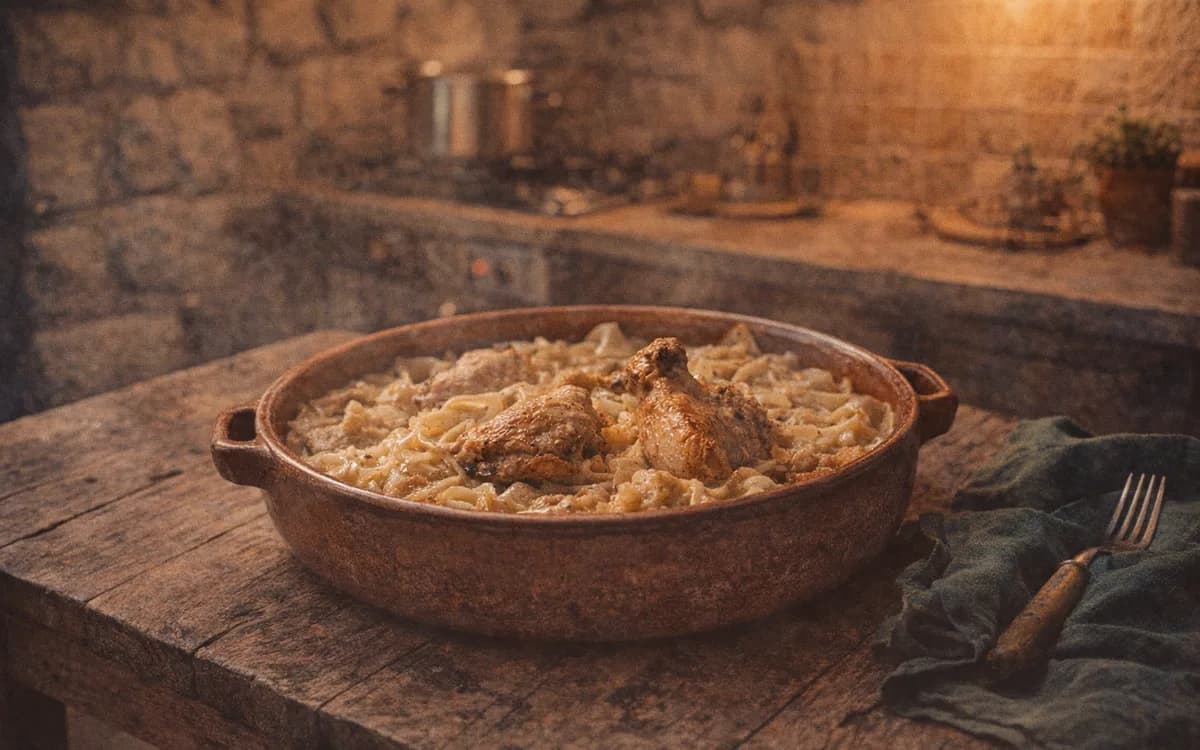
Add the onion and fat to the dish, then nestle the chicken pieces over the noodles. Pour hot broth over the jufka until the liquid just reaches the top of the noodle layer. Press down any dry patches with a spoon. The surface should look wet but not flooded. You can hold back a little broth and add it during baking if the edges dry before the center softens.
Bake until the jufka have absorbed most of the liquid and the top begins to brown, usually 25-35 minutes depending on the dish and the noodles. Check once in the middle. A dry-looking tray can take a small ladle of hot broth while the noodles are still firm. A soupy tray near the end needs a little longer uncovered.
Rest the dish for 10 minutes before serving. This is not just for neat portions. Resting lets the noodles finish absorbing liquid, so the final texture is tender, rich with broth, and lightly browned in places, with chicken that still feels moist.
Why this dish belongs at a mountain table
When we cook jufka, the method says a lot about northeastern Albanian homes: dry pasta prepared ahead, chicken cooked slowly, broth used fully, and a meal designed to satisfy people after work, winter weather, or a long drive through the mountains. The dish belongs easily on a Klos table, beside whatever else the season has brought to the kitchen.
The local detail also helps you avoid confusion. Jufka are not the same as yufka sheets, filo pastry, byrek, or lakror. Those foods may share a family of dough traditions, but the plate is different. Plainly: ask for jufka and you should get noodles; ask for byrek or lakror and you should get pie.
After our hiking experiences, when guests come back hungry from Rruga e Arbërit or the mountain viewpoints, jufka make a good conversation starter at the table.
Ask whether the kitchen is preparing Pule fshati me jufka (village chicken with jufka), what broth is on the stove, and what seasonal dishes would sit well beside it. On our traditional menu, it is one of the kitchen-showcase dishes, especially when the day calls for village chicken and a generous tray. The answer depends on the day, the season, and what our kitchen has ready.
Serving and substitutions
Serve jufka warm, not boiling hot. Plain yogurt is a good contrast because the noodles are rich with stock and fat. Pickles or a sharp salad also help. If the chicken is very tender, place it on top in large pieces; if you prefer an easier shared table, pull the meat from the bones and fold it gently through the noodles after baking.
For home cooks outside Albania, the hardest part may be finding dried jufka. A sturdy egg noodle is the closest practical substitute. With regular pasta, choose a shape with some body and reduce the broth slightly until you know how much it absorbs. You do not need to copy every household detail; start with the structure that matters: dry noodles, good broth, gentle fat, oven absorption, and rest.
Diaspora cooks often work with store-bought egg noodles that are softer or thinner than jufka from Dibër. Test them with a small handful first: pour over hot broth in a little oven dish, bake for 15 minutes, and check whether the noodles hold their shape. That quick trial tells you whether to use less broth, shorten the bake, or choose a sturdier brand.
For noodles made from scratch, keep the dough firm enough to roll thin and dry fully before storage. Freshly cut strips can work in a hurry, but dried jufka behave differently because they absorb broth slowly and keep more bite in the oven. That difference is why the dish feels distinct from ordinary pasta with sauce.
Leftovers can be reheated with a splash of broth or water. Cover the dish so the top does not dry before the center warms. The noodles will be softer the next day, but the flavor often deepens because the broth has settled into them.
Frequently asked questions
What is jufka?
Jufka are Albanian egg noodles strongly associated with Dibër. They are usually rolled thin, cut, dried, and cooked later with chicken, broth, butter, or other simple village ingredients.
Can I make this jufka recipe outside Albania?
Yes. Use dried jufka if you can find it, or substitute a sturdy egg noodle or small pasta shape. The result will not be identical, but the broth-to-noodle method still works. This jufka recipe is especially forgiving if you test how quickly your noodles absorb broth before baking a full tray.
How much broth should jufka absorb?
Add enough hot broth to just cover the noodles in the baking dish. The jufka should absorb most of the liquid while baking, leaving tender noodles with a lightly browned top.
How do you keep jufka from becoming soggy?
Toast the dry jufka lightly, add hot broth gradually, avoid flooding the dish, and let it rest after baking so the noodles finish absorbing liquid.
If you want to taste the dish in its own valley, with local timing and honest kitchen advice, book a stay and tell us what kind of trip you are planning.
.jpeg&w=3840&q=75)