In this article
- What Is Albanian Stuffed Eggplant?
- Ingredients for Albanian Stuffed Eggplant
- How to Make Patellxhan te Mbushur Recipe Step by Step
- Serving Albanian Stuffed Eggplant the Summer Way
- Common Mistakes When Cooking Eggplant with Tomato and Herbs
- Variations Across Albanian Homes
- Quick Recipe Card Notes for Home Cooks
- Frequently asked questions
What Is Albanian Stuffed Eggplant?
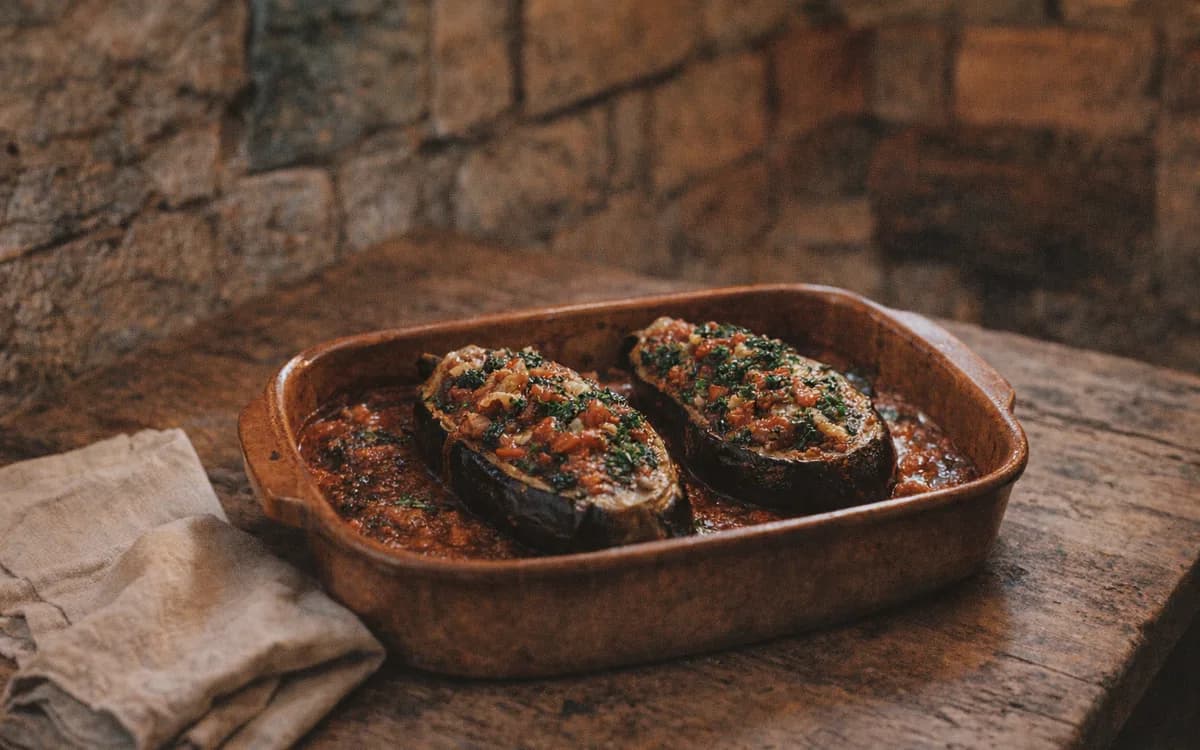
When summer eggplants soften in the market baskets, patëllxhan të mbushur is one of the simplest Albanian ways to turn them into supper: split, roasted, and filled with tomato, garlic, parsley, and olive oil. The phrase is used for stuffed eggplant or stuffed eggplants; in Albanian recipes you may also see it as patëllxhanë or patëllxhane të mbushur. In many homes it is a light tavë, a baked dish, served warm or left to settle on the table while bread is cut and salads are dressed.
You may also see the name written without Albanian accents as patellxhan te mbushur, especially in English recipe searches. The dish is the same: eggplant first, tomato and herbs inside, olive oil carrying the flavor.
This is not the same as stuffed peppers, and it is not a cheese bake. Eggplant is the main vegetable here. It becomes soft and almost creamy, taking in the sweetness of cooked onion, the sharpness of garlic, and the deep red of tomato sauce. A good tray should look glossy, not dry, with the skins still holding their shape.
Albanian versions move easily between vegetarian and meat-filled. For summer, we like the vegetarian version first: ripe eggplants, tomatoes, onion, garlic, parsley, olive oil, salt, and black pepper. Families who want something richer often add a little minced beef or lamb.
How it differs from other stuffed vegetables
Peppers stay brighter and firmer when baked. Eggplant collapses gently, which is why it needs a filling that is thick, not watery. Compared with fërgesë, the pepper, tomato, and cheese bake many Albanians love, stuffed eggplant has no cheese base. The flavor comes from eggplant with tomato and herbs, and from enough patience in the oven.
Ingredients for Albanian Stuffed Eggplant
For 4 servings of Albanian stuffed eggplant, choose vegetables that feel heavy for their size. The skin should be glossy, the stem fresh, and the eggplant not too large. Oversized eggplants can be seedy and slightly bitter, though salting helps.
You will need:
- 4 medium eggplants
- 3 to 4 ripe tomatoes, grated or finely chopped, or about 400 g crushed tomatoes
- 1 large onion, finely chopped
- 4 garlic cloves, minced
- 4 to 5 tablespoons olive oil, plus more for drizzling
- 1 small bunch parsley, chopped
- Salt and black pepper
- Optional dried oregano or fresh mint
- Optional 2 tablespoons uncooked rice, if you want a firmer filling
- Optional 200 to 250 g minced beef or lamb for a meat version
The filling should taste bright, garlicky, and rich from olive oil rather than heavy. Cook the onion until sweet, add the garlic only briefly so it does not burn, then add tomato and let it reduce. Parsley goes in near the end, when the sauce is thick enough to mound on a spoon.
At Bujtina Çupa, in Klos in the Mat region of northern Albania, we cook with the same respect for the vegetable itself. Produce comes from the garden and nearby farms, and our wood-fired oven is used for breads, pies, and slow dishes. This recipe is for your home kitchen, not a promise of a fixed daily menu dish, but the spirit is the same: let the season do the work.
See our kitchen.
On a fuller Albanian table, stuffed eggplant might sit beside dishes such as Sallatë fshati or Byrek Bujtine. Those small plates matter. They make the meal feel complete without hiding the eggplant.
Vegetarian version
The vegetarian version is the default here. Tomato, onion, garlic, parsley, and olive oil are enough when the vegetables are ripe. If you add rice, keep it modest. Too much rice turns the filling away from eggplant and toward a stuffed-grain dish.
Optional meat version
For a heartier family meal, brown 200 to 250 g minced beef or lamb with the onion before adding the tomato. Let the meat take color, then simmer it in enough tomato to stay moist. The final filling should still be spoonable and glossy.
How to Make Patellxhan te Mbushur Recipe Step by Step
This patellxhan te mbushur recipe works best when the eggplants are partly cooked before stuffing. If you fill raw eggplants, the tomato can dry out before the flesh becomes tender. Roasting is easier for most home cooks than frying, and it uses less oil.
Step 1: Prepare the eggplants. Wash 4 medium eggplants and cut them in half lengthwise. You can also slit them lengthwise and keep each one mostly whole, but halves are easier to fill. Sprinkle the cut sides lightly with salt. If the eggplants are small and fresh, 10 minutes is enough. If they are large, let them rest for 20 minutes, then pat dry.
Step 2: Soften the eggplants. Heat the oven to 200°C. Brush the cut sides with olive oil and place them cut-side down on a baking tray. Roast for 20 to 25 minutes, until the flesh is softening and lightly browned. The skins should still hold together.
Step 3: Make space for the filling. Turn the eggplants over. With a spoon, press the center of each half to make a hollow, or scoop out a little flesh and chop it into the filling. Do not tear the skins. They are the small boats that carry the dish.
Step 4: Cook the tomato filling. Warm 3 tablespoons olive oil in a pan. Add the onion with a pinch of salt and cook until soft and sweet, about 8 minutes. Add the garlic and stir for 30 seconds. Add the tomatoes, black pepper, and oregano or mint if using. Simmer until the sauce is thick and the raw tomato smell has gone. Stir in parsley at the end.
Step 5: Fill and bake. Spoon the filling into the eggplants. Arrange them in a baking dish. Add 2 or 3 tablespoons water or tomato sauce to the bottom so nothing sticks. Drizzle with olive oil. Bake at 190°C for 25 to 35 minutes, until bubbling and fully tender.
Step 6: Rest before serving. Let the dish stand for 10 minutes. The filling settles, the oil shines on the surface, and the flavor becomes rounder.
The lesson changes with the season and the group. Our Traditional Cooking Class runs 3 to 4 hours and can include hands-on cooking with local ingredients, byrek, traditional meat dishes, and bread baked in the wood-fired oven. Summer vegetables often lead the conversation because they teach patience better than any recipe card.
Visit us for a cooking class.
Roast, fry, or bake from raw?
Roasting is the best home method: steady, clean, and not too oily. Pan-frying gives deeper flavor and is common in many homes, but eggplant drinks oil quickly. Baking from raw is possible, but it needs a longer covered bake and a wetter base. For beginners, roast first.
How to know the eggplant is done
The skin should slump slightly, and the flesh should be spoon-tender. The filling should look glossy, not soupy. If the top browns too quickly, cover the dish loosely and keep baking until the eggplant is soft all the way through.
Serving Albanian Stuffed Eggplant the Summer Way
Albanian stuffed eggplant is generous because it does not demand perfect timing. Serve it warm from the oven, or let it rest until it reaches room temperature. In July and August, that second way can be even better. The tomato settles. The garlic softens. The olive oil carries everything.
Serve it with crusty bread, plain yogurt, cucumber salad, olives, or a simple green salad. If you are making a larger table, it can be a vegetarian main for some guests and one vegetable plate beside grilled meat for others. At Bujtina Çupa, dinner service runs from 18:00 to 22:00, and the rhythm of this dish suits a long summer evening: not rushed, not fussy, and strongest when the vegetables taste of the season.
For a guesthouse-style plate, keep the garnish simple. A little parsley. A spoonful of yogurt on the side. Bread close enough to catch the tomato oil.
What to drink with it
Cold water is enough. A light white wine also works well because the dish is tomato-rich but not heavy. If you like raki, keep it for after the meal: a small glass of Raki Rrushi, Raki Kumbulle, or Raki Thane, the three types we serve at our bar.
Common Mistakes When Cooking Eggplant with Tomato and Herbs
Watery filling usually starts in the pan. Tomatoes need time before they go inside the eggplants; if they are added raw, they release too much liquid in the oven and the final dish tastes thin. Cook them down until the sauce is thick and the oil begins to separate at the edges.
Do not trust a browned top by itself. Test near the stem with a spoon or small knife. The flesh should give easily. If the filling is done but the eggplant is firm, cover the dish and continue baking.
Oil needs a steady hand. Eggplant loves oil, but it should not swim. Brush or drizzle, then add more only if the pan looks dry. If there is too much liquid at the end, spoon off a little and return the dish to the oven uncovered for 5 to 10 minutes.
Bland seasoning is the quiet mistake. Salt the onion as it cooks. Taste the tomato before filling. Parsley should be fresh, not dusty and old. Garlic should be present but not burnt.
Can you make it ahead?
Yes. Roast the eggplants and cook the filling earlier in the day, then assemble and bake before serving. Leftovers keep well in the refrigerator and reheat gently. They also taste good at room temperature with bread and yogurt.
Variations Across Albanian Homes
There is no single fixed version of stuffed aubergine in Albania that everyone points to as the only correct one. Households adjust by region, garden, fasting days, and who is coming for lunch. Some keep it completely vegetarian. Some add minced meat. Some add a spoonful of rice to hold the tomato together. Some use more garlic, some more parsley, and some finish with a little white cheese at the table.
In northern cooking, the best versions are often practical rather than decorated. A dish is judged by whether the vegetable is tender, whether the sauce tastes alive, and whether there is enough bread for the juices. That matters more than restaurant-style plating.
The contrast is useful in a different way: both dishes reward patience, but they are not interchangeable. Byrek depends on thin dough and a savory filling. Stuffed eggplant is tomato-filled, eggplant-centered, and usually lighter.
Cook from our byrek recipe.
Stuffed aubergine Albania vs imam bayildi
Stuffed eggplant belongs to a wider Balkan and Ottoman family of dishes, including imam bayildi. We do not need to argue over borders to cook well. The Albanian home version here is simple: eggplant, tomato, garlic, parsley, olive oil, and a baked finish. Optional meat makes it richer, but the summer vegetable remains the center.
Quick Recipe Card Notes for Home Cooks
Use this as a quick guide when you are ready to cook.
- Serves 4 as a main with salad, or 6 as part of a larger table
- Prep time is about 20 minutes, plus a short salt-rest if needed
- Baking time is about 35 to 45 minutes after the eggplants are softened
- Best eggplants are medium, glossy, and heavy for their size
- Best tomatoes are ripe summer tomatoes, or good canned crushed tomatoes outside the season
- Vegetarian filling uses onion, garlic, tomato, parsley, olive oil, salt, and black pepper
- Meat version uses 200 to 250 g minced beef or lamb browned with the onion
- Storage is up to 3 days in the refrigerator
- Reheat covered in a low oven or in a pan with a spoonful of water
- Freezing is possible, but not ideal because eggplant softens further after thawing
The best version depends on ripe tomatoes, enough olive oil, and patience. Let the eggplant become tender before you ask it to carry the filling. Let the tomato thicken before it goes into the oven. Then rest the tray before serving.
Frequently asked questions
Is stuffed eggplant vegetarian?
Yes, it is often vegetarian when filled with tomato, onion, garlic, parsley, and olive oil. Some Albanian families also make a meat version with minced beef or lamb.
Do you need to salt eggplant before stuffing it?
Salting is optional for small, fresh eggplants. Large or older eggplants benefit from 20 minutes of salting to reduce bitterness and draw out extra moisture.
Can Albanian stuffed eggplant be served cold?
Yes. Albanian stuffed eggplant tastes good warm or at room temperature, especially in summer with bread, yogurt, olives, and salad.
What is the best tomato for patellxhan te mbushur?
Ripe summer tomatoes are best. Outside tomato season, good canned crushed tomatoes usually work better than pale fresh tomatoes.
Can you add meat to stuffed eggplant?
Yes. Brown minced beef or lamb with the onion before adding tomato, then fill and bake the eggplants as usual. Keep enough tomato in the pan so the meat stays moist.
Want to cook dishes like this with us while the summer vegetables are at their best? Join a cooking class — we will set the tray in the oven and sit down to the same meal together.