In this article
What makes this petulla recipe Albanian?
This petulla recipe starts the way many Albanian breakfasts do: a soft bowl of dough, hot oil, and a table waiting for honey, jam, white cheese, yogurt, and strong coffee. Petulla are Albanian fried dough pieces, usually eaten warm, often at breakfast, sometimes as an afternoon snack when the kitchen is already busy and someone asks for something simple.
They are not neat bakery doughnuts. Petulla are more rustic. One may puff like a small pillow, another may stretch into an uneven oval, and the best ones have golden edges, a tender middle, and steam inside when you tear them open. That irregular shape is part of their charm.
Across Albanian families, the method changes from house to house. Some make yeast-raised petulla. Some use yogurt and baking powder. Some mix a wetter batter and drop it into the oil with a spoon. This version is a yeast-raised breakfast dough because it gives clear signs to follow: a soft dough, a proper rise, and pieces that puff quickly in the pan.
At Bujtina Çupa, in Fshat on Rruga e Arbërit near Klos in Dibër County, we think of recipes like this as table food, not display food. Breakfast service runs from 07:30 to 09:30, and the feeling of the morning table is generous and practical: something warm, something fresh, something to share before the mountain day begins.
Petulla, petla, and Albanian fried dough
You may hear similar names across Albanian-speaking families and neighboring Balkan kitchens: petulla, petla, fried dough, fritters. The words shift, but the idea stays close. Flour, liquid, a little patience, and hot oil turn into a plate that disappears quickly.
For this recipe, we keep the focus on the Albanian home-style method: a soft dough, not too sweet, served with both sweet and savory things in the middle of the table.
Ingredients for soft Albanian fried dough
For a home batch of petulla, you do not need many ingredients. What matters most is the texture of the dough and the heat of the oil.
- All-purpose flour - about 500 g, plus a little extra only if needed
- Warm water or milk - about 300 ml; warm, not hot
- Active dry yeast - 7 g, or one standard packet
- Sugar - 1 teaspoon, to wake the yeast and help browning
- Salt - 1 teaspoon, because fried dough still needs flavor
- Egg - 1, optional, for a richer and softer dough
- Plain yogurt - 2 tablespoons, optional, for tenderness and a slight tang
- Oil in the dough - 1 tablespoon, optional, to make the dough easier to handle
- Neutral frying oil - enough for 4 to 5 cm depth in a heavy pan
Water gives a lighter petulla. Milk gives a richer one. Yogurt makes the dough softer and a little tangy, especially good if you plan to serve savory petulla with cheese or yogurt. The egg is also optional. Albanian household recipes are rarely one exact formula; they are adjusted by hand, by weather, by flour, and by how many people are waiting.
Use a neutral oil with a high smoke point. Sunflower oil or another mild frying oil works well. The dough should be able to float and puff instead of sitting flat on the bottom of the pan.
For serving
For sweet petulla, set out honey, fig jam, plum jam, or a light dusting of powdered sugar. Petulla with honey is the pairing many people remember first: hot dough, honey melting into the torn middle, fingers a little sticky.
For savory petulla, bring white cheese, strained yogurt, olives, boiled eggs, tomatoes, peppers, or fresh herbs to the table. The dough itself does not need to change. The plate around it changes.
How to make petulla step by step
Start with the yeast. Pour the warm water or milk into a large bowl, add the sugar and yeast, and wait 5 to 10 minutes. If the yeast is alive, the surface will look foamy or creamy. If nothing happens, your yeast may be old or the liquid may have been too hot.
Add the egg, yogurt, oil, and salt if using them, then begin adding flour gradually. Stir with a wooden spoon or your hand until the dough comes together. Do not rush to add all the flour at once. Petulla dough should be soft, elastic, and slightly tacky. It should pull rather than tear. It is not meant to be stiff like bread dough.
When the dough gathers into a soft mass, knead it in the bowl for a few minutes. If it sticks heavily to your fingers, add a spoonful of flour. If it feels dry and tight, wet your hand and work that moisture into the dough. Cover the bowl and let it rise in a warm place until puffy and roughly doubled, usually 60 to 90 minutes depending on the room.
The best rising cue is not the clock. Look for life in the dough. It should feel lighter, with small bubbles at the surface or around the edges of the bowl. When you press it gently, it should give way instead of resisting.
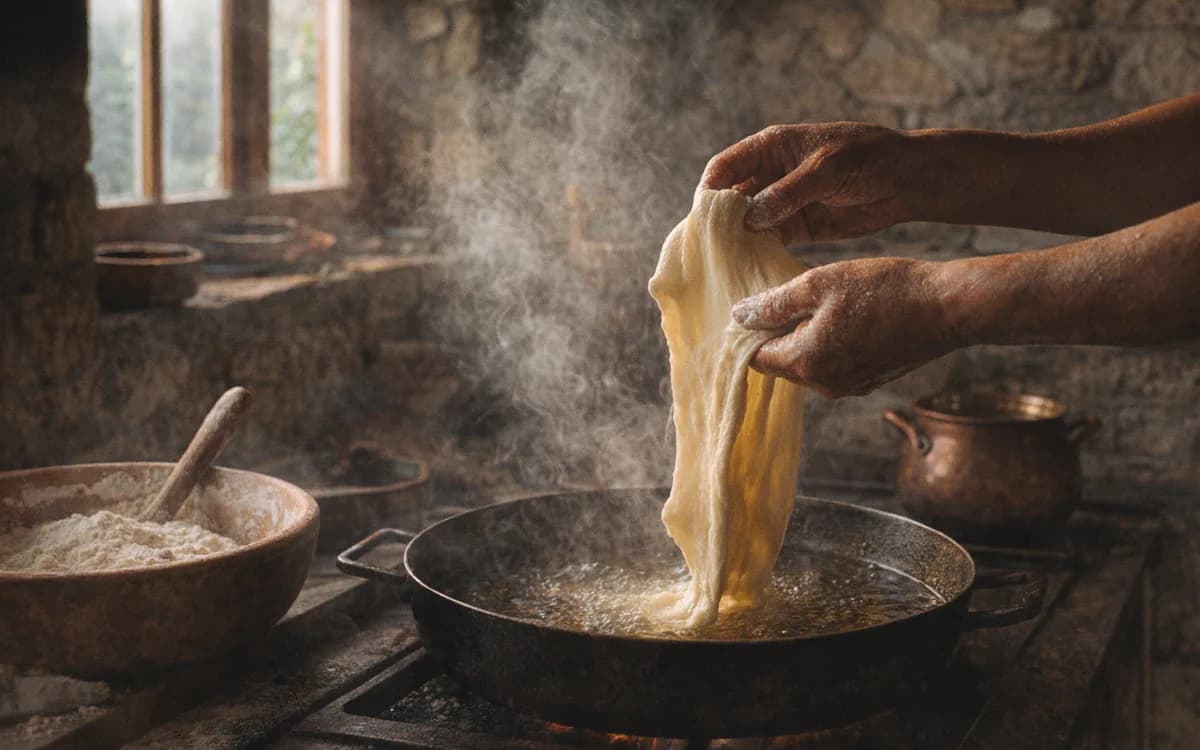
To shape the petulla, oil your hands lightly. Pinch off pieces about the size of a walnut or small egg, stretch each one gently, and lower it carefully into the hot oil. If your dough is looser, use two oiled spoons: one to scoop, one to push the dough into the pan.
Fry in small batches. The oil should shimmer, and a tiny piece of dough should bubble immediately when dropped in. If it sinks and sits quietly, the oil is too cool. If it darkens in seconds, the oil is too hot. Turn each petulla once or twice until golden on both sides, then lift it out and drain on paper or a rack.
Serve while hot. Petulla lose their best texture as they sit, so the cook is often still frying while the first plate is already being eaten.
Mixing the dough
Warm liquid helps the yeast wake up, but hot liquid kills it. Aim for comfortably warm, like bath water for a child. If you are unsure, cooler is safer than hotter; the rise will simply take longer.
Add flour slowly. A dough that feels slightly sticky at the beginning often becomes easier after resting. Too much flour is one of the quickest ways to make heavy petulla.
Frying without greasy petulla
Greasy petulla usually come from oil that is not hot enough. The dough then absorbs oil before it has time to puff. Keep the pan steady, fry fewer pieces at a time, and let the oil recover between batches.
Do not crowd the pan. Each piece needs space to expand, turn, and brown. When the petulla are ready, they should feel light when lifted, with crisp edges and a soft center.
Petulla with honey, jam, cheese, and savory petulla ideas
Petulla with honey should be eaten while the dough is still warm. Tear one open, let the steam escape, and drizzle honey into the middle so it sinks into the soft crumb. A little goes a long way. If the honey is thick, place the jar near the warm stove for a few minutes before serving.
Jam is just as welcome. Plum jam gives a deeper, winter flavor. Fig jam feels rich and sweet. Berry preserves are useful for readers across Europe who may not have Albanian village jams in the cupboard but still want the same comfort of fruit against fried dough.
Savory petulla make a fuller plate. Crumble white cheese over the top, or serve the cheese in a bowl so each person can tear, dip, and choose. Strained yogurt balances the fried dough with cool acidity. Olives, boiled eggs, tomatoes, cucumbers, peppers, and herbs turn the plate into a relaxed breakfast that can hold people at the table a little longer.
In our kitchen, this is how we like to think about breakfast foods: not one perfect plated portion, but a warm pile in the center, with seasonal things around it. Our restaurant is open daily to hotel guests and outside visitors, and our broader table also includes dishes such as Byrek Bujtine, Tavë dheu, and Pule fshati me jufka when the day moves from breakfast into lunch or dinner.
See our kitchen if you are planning a meal around your stay.
Sweet petulla for breakfast
For a sweet breakfast, keep the dough itself only lightly sweet. Let the honey, jam, or powdered sugar do the work. This keeps the petulla flexible, so someone at the same table can eat one with honey and the next with cheese.
Coffee or mountain tea belongs beside them. So does patience, because the last batch is often the best batch, when the oil is steady and the cook has found the rhythm.
Savory petulla for a fuller plate
Savory petulla are not a separate recipe. They are the same Albanian fried dough served with saltier, cooler, brighter foods. Cheese and yogurt are the most useful because they cut through the richness.
Later in the day, small savory petulla can also become a warm snack beside olives and cheese. At breakfast, we keep the table simple: coffee, tea, dairy, preserves, fruit, and whatever is warm from the pan.
Troubleshooting: flat, oily, dense, or burnt petulla
Flat petulla usually mean the dough did not rise enough. Check the yeast first. If the yeast is old, it will not lift the dough. If the liquid was too hot, the yeast may have died before it began. If the room was cool, the dough may simply need more time.
Oily petulla point to the pan. The oil may be too cool, the pan may be crowded, or the dough may be so wet that it cannot puff quickly. A slightly sticky dough is correct; a loose batter needs confident heat and spoon shaping.
Dense petulla often come from too much flour. It is tempting to keep dusting and kneading until the dough stops sticking, but that makes the finished pieces heavy. Use oiled hands instead of adding more flour at the shaping stage.
Burnt outside and raw inside means the oil is too hot or the pieces are too large. Lower the heat slightly and make smaller pieces. Petulla should brown steadily, not blacken at the edges before the center cooks.
If you want to prepare ahead, mix the dough in the evening and let it rest overnight in the refrigerator, covered well. In the morning, bring it closer to room temperature before shaping and frying. Cold dough can go into the oil, but it will puff more slowly and may brown unevenly.
Petulla are best fresh. If you have leftovers, warm them briefly in the oven until the edges wake up again. Avoid the microwave if crisp edges matter to you; it softens the outside and makes the dough chewy.
The right dough texture
The right dough is soft and slightly sticky. It clings a little, but it should not pour like pancake batter unless you are choosing the spoon-dropped style. When stretched, it should pull into a thin edge before tearing.
Oiled hands are better than floured hands. Flour changes the dough. Oil helps you handle it without making it heavy.
The right oil temperature
You do not need a thermometer, though it helps. Watch the oil. It should shimmer, not smoke. A small test piece should bubble right away, rise toward the surface, and turn golden in a steady way.
If the test piece browns too fast, wait a minute or lower the heat. If it sits pale and quiet, give the oil more time. Good frying is a rhythm, not a race.
Bring petulla to the breakfast table
Petulla are meant to be shared hot. Do not plate them one by one like a formal dessert. Fry, drain, pile them in a warm bowl, and bring the bowl straight to the middle of the table. Put honey, jam, cheese, yogurt, and fruit within reach. Let people choose.
For guests, the order matters. Have the toppings ready before you fry. Make the coffee. Set out napkins. Warm a bowl if the kitchen is cold. Then fry in batches and bring the first petulla out while the last ones are still puffing in the pan.
Beside petulla, serve boiled eggs, seasonal fruit, tomatoes in summer, or a simple bowl of yogurt. In colder months, thicker preserves and warm tea make the table feel complete. The food is humble, but the welcome is not small.
If you want to learn more Albanian dough traditions, look next at jufka, the fine egg noodles used in dishes such as Pule fshati me jufka. It is a different dough, dried instead of fried, but it belongs to the same patient kitchen world.
Our hands-on Traditional Cooking Class lasts 3 to 4 hours and can include byrek, traditional meat dishes, and bread baked in the wood-fired oven, depending on the season and group. It is a good way to understand how Albanian cooking feels before it becomes a finished plate.
Ask about our cooking class when you plan your stay in Dibër.
What to serve beside petulla
Keep the table balanced: coffee or tea, yogurt, white cheese, preserves, eggs, and fruit. Petulla bring warmth and richness; the other foods bring freshness, salt, and contrast.
If you are coming to us from Tirana, the drive is only about 35 to 40 minutes (roughly 35 km) on the modern Rruga e Arbërit, with the Murriz Tunnel, opened in March 2025, making the Dibër corridor far quicker than many travelers expect. Arrive the evening before, sleep in the mountains, and let breakfast be slow.
Want the feeling of an Albanian mountain breakfast? Book your stay and come wake up with us in Klos.
Frequently asked questions
What are petulla?
Petulla are Albanian fried dough pieces, usually made from a soft yeast or yogurt dough and served warm with honey, jam, cheese, or yogurt.
Are petulla the same as doughnuts?
No. Petulla are rustic fried dough, usually less sweet than bakery doughnuts, irregular in shape, and served with toppings rather than filled or glazed.
Can petulla be savory?
Yes. Savory petulla use the same fried dough but are served with white cheese, yogurt, olives, eggs, tomatoes, peppers, or herbs instead of honey or jam.
Why are my petulla oily?
Petulla turn oily when the frying oil is too cool, the pan is crowded, or the dough is too loose to puff quickly. Fry smaller batches and test the oil with a tiny piece of dough first.
Can petulla dough rest overnight?
Yes. Petulla dough can rest overnight in the refrigerator when covered well. Let it warm slightly before shaping and frying so it puffs more evenly.
.jpeg&w=3840&q=75)