In this article
- What Albanian cheese means at the table
- Gjizë cheese: soft, tangy and made for warm dishes
- Djathë i bardhë: Albanian white cheese and how it differs from feta
- Kaçkavall in Albania: firm yellow cheese for grilling, slicing and meze
- How Albanian cheeses appear from breakfast to dinner
- Buying, storing and ordering Albanian dairy with confidence
- Frequently asked questions
What Albanian cheese means at the table
Albanian cheese is not one thing served at the end of a meal. It is breakfast with warm bread, a salty bite beside tomatoes, a soft curd stirred into peppers, and a firm yellow slice passed with raki. At our table in Fshat, on Rruga e Arbërit near Klos, cheese belongs to the rhythm of the day.
The first word to know is djathë, which simply means cheese. From there, the names become more useful. Gjizë is a soft curd cheese, often compared with ricotta, though many Albanian versions are tangier and saltier. Djathë i bardhë means white cheese, usually a brined cheese that can be sliced or crumbled. Kaçkavall is firm yellow cheese, made for slicing, frying, grilling or eating in small pieces with bread.
Milk source changes the taste. Cow milk is often milder. Sheep and goat cheeses can feel richer, sharper or more fragrant. In mountain dairies, mixed milk is common, and one village table may not taste exactly like the next.
For travelers, the menu name is only the beginning. Texture tells you almost as much as the word: spoonable, crumbly, brined, elastic, fried, melted.
The three cheeses most visitors notice first
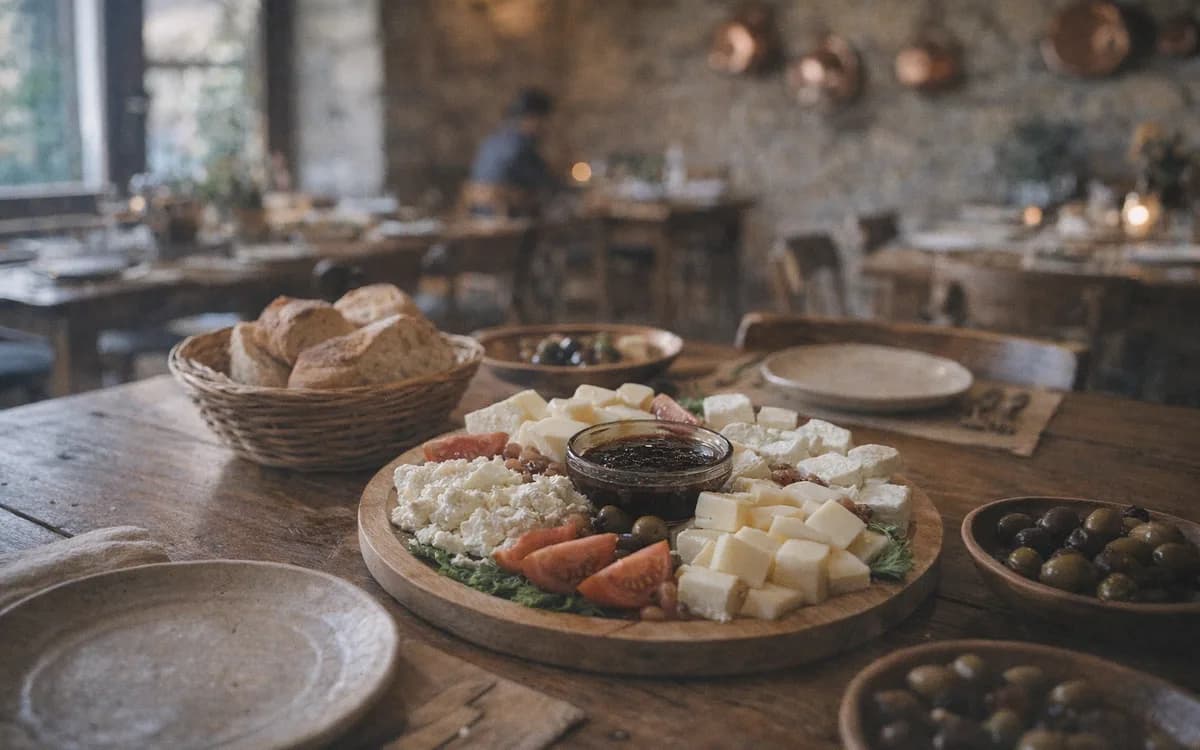
Most guests first notice three shapes of Albanian dairy. Gjizë is soft and curd-like. White brined cheese is salty, pale and usually more structured. Kaçkavall is yellow, firm and easy to slice.
Once you know those three, Albanian meals become easier to read. A village salad tastes brighter because the cheese brings salt. A warm pepper dish feels creamy because gjizë has softened into the vegetables. A plate of meze feels complete because kaçkavall gives a rich bite between olives, bread and pickles.
Gjizë cheese: soft, tangy and made for warm dishes
Gjizë cheese is one of the quiet workers of Albanian cooking. It does not always sit proudly in cubes on top of a plate. Often it disappears a little, folding into vegetables, eggs or dough until the dish tastes creamy without feeling heavy.
Fresh gjizë can be mild, loose and spoonable. Salted gjizë can be sharper and more crumbly. Some versions are almost smooth; others have small curds, a little grain, and a clean sour-milk smell. It is not a neat block like brined white cheese, and it is not usually as elastic as kaçkavall.
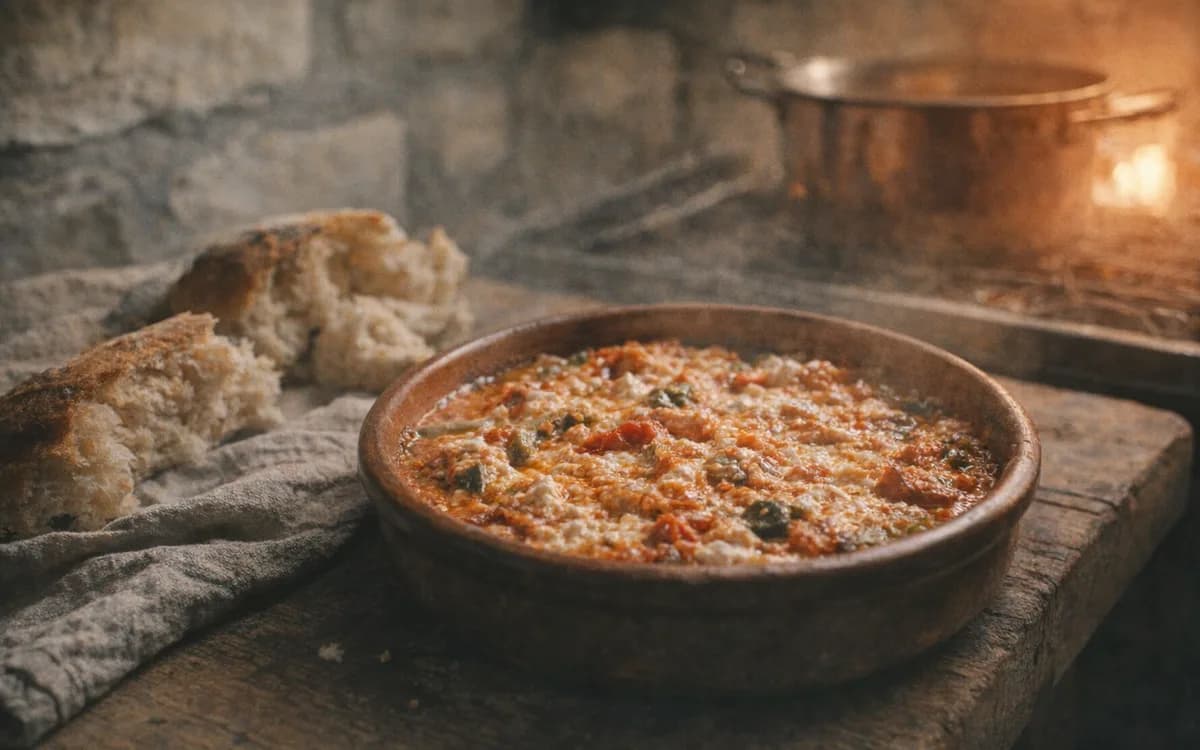
In warm dishes, gjizë is especially useful. It can soften into peppers and tomatoes, fill byrek or lakror, or sit beside vegetables as a cool contrast. Our menu includes Fërgesë, a slow-cooked dish of peppers, tomatoes and cottage cheese, and Gjizë fshati, village ricotta with butter and eggs. Those dishes show why gjizë matters: it brings body, salt and dairy tang without covering the flavor of the vegetables.
Gjizë also belongs to breakfast. With bread, eggs and a few slices of cucumber or tomato, it makes a simple plate feel complete. If you are from the Albanian diaspora and trying to cook old flavors outside Albania, this is often the cheese you miss before you know its name.
How to recognize gjizë on a plate
Look for soft white curds rather than cubes or clean slices. If the cheese is blended into hot peppers, tomatoes, onions or eggs, it may be gjizë doing the work.
The flavor is not always strong at first bite. It may seem gentle, then leave a light tang and salt after the vegetables. If a dish feels creamy but no cream is visible, ask whether gjizë is inside.
Where we use it in a guesthouse meal
At Bujtina Çupa, cheese appears in cooked dishes, meze, pies and breakfast plates. The exact ingredients change with the season and the kitchen, but the idea stays the same: soft cheese is for warmth, filling and balance.
See our kitchen for the traditional dishes and meze we serve through the day.
Djathë i bardhë: Albanian white cheese and how it differs from feta
Djathë i bardhë means white cheese, and for many Albanians it is the everyday cheese of the table. Visitors often compare Albanian white cheese with feta. That comparison helps at first, but it can also flatten the story.
White brined cheese in Albania changes by milk, maker, age, salt and firmness. One piece may slice cleanly. Another may crumble into a salad. A third may soften at room temperature and become creamy at the edges. Brine keeps it bright and salty, which is why it works so well with plain bread, fresh vegetables and olives.
You may meet it at breakfast with eggs and bread. You may see it crumbled over a tomato-cucumber salad, tucked into a byrek filling, served as part of a meze plate, or eaten with grilled peppers. In summer, some households like white cheese with watermelon because the salt and sweetness sit well together.
On English menus, the phrase “white cheese” usually points to this family of brined cheeses. It does not always mean Greek feta, and it does not tell you whether the milk is cow, sheep or goat. If you are curious, ask. Albanians are used to talking about food at the table.
Salt, brine and milk source
Two white cheeses can look similar and taste different. Cow milk versions are often gentler. Sheep milk can feel fuller. Goat milk may bring a sharper note. Mixed milk can sit somewhere between them.
Brine also matters. A firmer, saltier piece may be meant for small bites with bread rather than large forkfuls alone. If the salt feels strong, do not judge it by itself. Taste it with tomato, cucumber, olive oil, bread or grilled vegetables. The balance is the point.
At our restaurant, dairy shows up in many forms: Djath miks as a mixed cheese plate, Djathë dhie for goat cheese, Djathë dele for sheep cheese, and Sallatë fshati, the village salad. These are simple plates, but they teach quickly.
Best places to taste white cheese as a visitor
Start with breakfast or salad. Breakfast is forgiving because bread softens the salt. Salad is clear because tomatoes and cucumbers show what the cheese adds.
Meze is another good place. Order small plates, taste slowly, and notice the texture before asking for a second portion. If you are cooking later, that memory will help more than a label in a shop.
Kaçkavall in Albania: firm yellow cheese for grilling, slicing and meze
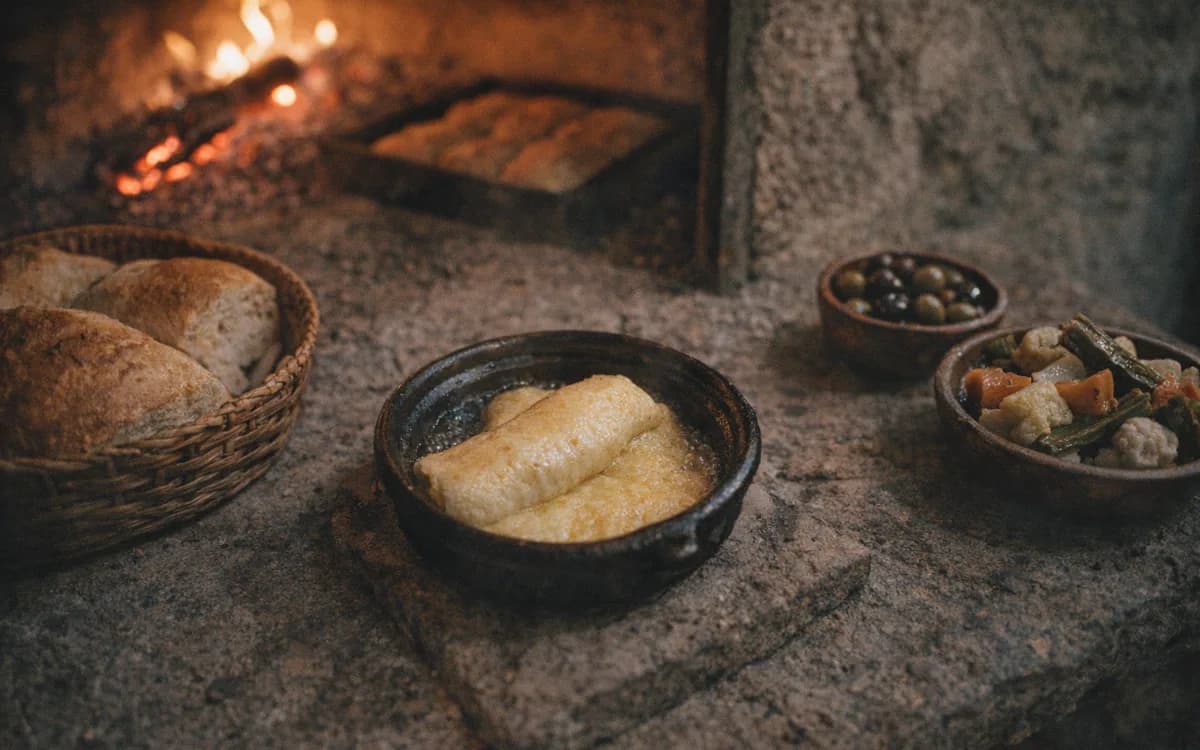
Kaçkavall in Albania is the firm yellow cheese many travelers recognize fastest. It is known across the Balkans, but every table treats it a little differently. Compared with gjizë and white brined cheese, kaçkavall is firmer, more elastic and often richer.
It can be sliced thinly for a cold plate, grated over baked dishes, fried as a hot meze, tucked into sandwiches, or served with cured meats and pickles. When heated, it can soften and brown in a way fresh white cheese usually cannot. That is why it is useful for cooks who want dairy flavor plus structure.
At Bujtina Çupa, one of the clearest menu examples is Kaçkavall me flakë në furrë, baked yellow cheese finished with flame. We also serve Djathë me kadaif e mjaltë, cheese with kadaif pastry and honey, which shows another side of the Albanian table: salty dairy meeting sweetness.
Kaçkavall is less briny than djathë i bardhë, though it can still be salty. If Albanian white cheese feels too sharp at first, kaçkavall can be an easier bridge.
Why kaçkavall works with raki
Raki is strong, clear and direct. Cheese helps pace it. Small slices of kaçkavall, bread, olives and Turshi shpie, our homemade pickles, give salt and fat between sips without turning the moment into a formal tasting.
Our bar serves Raki Rrushi, Raki Kumbulle and Raki Thane, along with house-region wines and beers. The best pairing is often the simplest one: a small plate, a mountain evening, and time to talk.
After dinner, the bar is where many guests taste raki with salty bites and mountain views.
How Albanian cheeses appear from breakfast to dinner
A day of Albanian dairy starts early. Our breakfast service runs from 07:30 to 09:30, and cheese fits naturally beside bread, eggs, tomatoes, cucumbers, olives and tea. Some mornings call for white cheese. Some call for gjizë. The plate does not need many things if the bread is warm and the cheese is good.
At lunch, cheese often brightens vegetables. Crumbled white cheese can turn a simple salad into a full plate. Gjizë can make peppers and tomatoes feel rounder. Kaçkavall can appear in meze when guests want something richer before grilled meat or oven dishes.
By dinner, served from 18:00 to 22:00, cheese becomes part of the slower table. It may come before the main dish, beside raki, or inside something baked. Albanian cheese often seasons a dish as much as it enriches it. A salty brined cheese can do the work of both dairy and salt. Gjizë can soften sharp vegetables. Kaçkavall can add warmth and bite.
Our wood-fired oven is used for breads, pies and slow dishes, and cheese is one of the ingredients that shows why that matters. Byrek Bujtine and Lakror me miell misri are the kind of foods where filling, dough and heat must agree with each other.
For cooks outside Albania
If you cannot find gjizë, look for a dry ricotta-style cheese or farmer’s cheese, then adjust the salt yourself. Avoid very wet ricotta if the dish needs structure.
For djathë i bardhë, a feta-style brined cheese can stand in, but taste it first. If it is too salty, rinse it lightly and let it drain. For kaçkavall, look for a firm Balkan-style yellow cheese. If that is not available, choose a firm melting cheese with moderate salt rather than a very soft one.
Texture matters more than the exact label. Soft curd for filling and blending. Brined white cheese for salt and crumble. Firm yellow cheese for slicing and heat.
Learning the difference by cooking
Cheese makes the most sense when your hands are in the dough or near the pan. In our Traditional Cooking Class, guests spend 3–4 hours cooking with local ingredients, learning dishes such as byrek, traditional meat dishes and bread baked in the wood-fired oven.
The lesson changes with the season and the group, but the useful question stays the same: when should the cheese melt, when should it stay in pieces, and when should it be added at the end?
Buying, storing and ordering Albanian dairy with confidence
When ordering, keep the words simple. Ask for djathë if you mean cheese in general. Ask for gjizë if you want soft curd cheese. Ask for djathë i bardhë if you want white brined cheese. If milk source matters to you, ask whether it is cow, sheep or goat.
Good fresh dairy should smell clean, lightly sour and milky, not harsh or bitter. Brined cheese should be kept in clean brine. Gjizë should be chilled and used quickly. Kaçkavall should be wrapped well so it does not dry out at the edges.
If you avoid lactose, dairy, or animal rennet, ask directly before eating. Practices vary by producer and household. It is better to ask plainly than to guess from a menu translation.
Salt can surprise visitors. Albanian cheeses are often meant to be eaten with bread, vegetables, eggs, meat or raki, not alone in large pieces. Take a small bite first. Then add bread. Then decide.
Quick recognition guide
- Gjizë - soft, curd-like, spooned or folded into warm dishes.
- Djathë i bardhë - white, brined, salty, sliced or crumbled.
- Kaçkavall - yellow, firm, sliced, fried, grilled or grated.
Remember it this way at the table: gjizë cooks into dishes, white cheese stands proudly beside bread and vegetables, and kaçkavall slices, melts and grills.
Want to understand Albanian cheese by cooking with it, not just reading labels? Join us for a cooking class and we will show you when to use gjizë, when to crumble white cheese, and when kaçkavall belongs beside the raki.
Frequently asked questions
What is the most common Albanian cheese?
White brined cheese, called djathë i bardhë, is one of the most common cheeses on Albanian tables, especially at breakfast and in salads.
Is gjizë the same as ricotta?
Gjizë is similar to ricotta in texture, but Albanian versions are often tangier, saltier and used in savory dishes such as fërgesë and pie fillings.
Is Albanian white cheese the same as feta?
Albanian white cheese is often compared with feta, but it varies by milk source, brine, salt level and firmness. Treat it as a related brined cheese, not an exact copy.
What is kaçkavall used for in Albania?
Kaçkavall is a firm yellow cheese used for slicing, frying, grilling, grating and serving with meze or raki.
Which Albanian cheese is best for cooking?
Gjizë is best for creamy vegetable dishes and fillings, while djathë i bardhë adds salt and structure. Kaçkavall works well when a firmer melting cheese is needed.
.jpeg&w=3840&q=75)
.jpeg&w=3840&q=75)