In this article
What an Albanian breakfast actually is
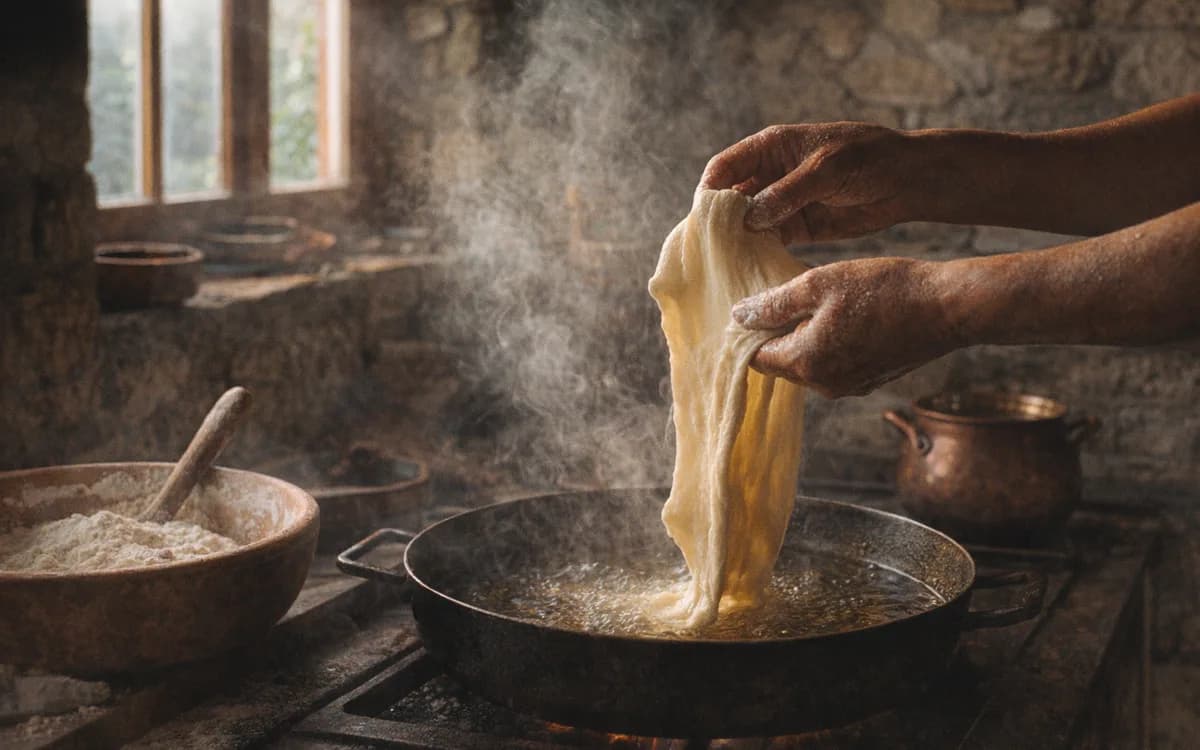
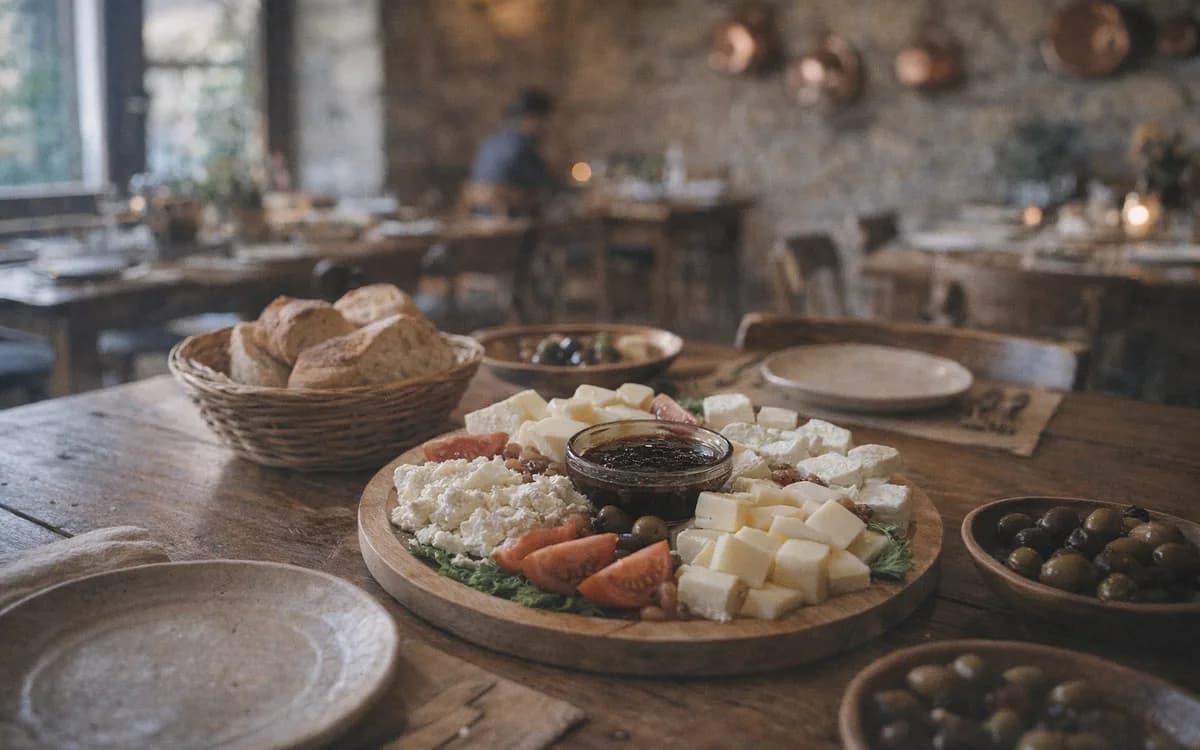
An Albanian breakfast is a table, not a plate. Bread that was baked that morning, a bowl of white cheese and one of gjizë, a dish of honey, a jar of homemade jam, tomatoes and cucumbers cut thick, olives, a few boiled or fried eggs, and something warm from the pan: petulla, the fried dough of village mornings, or a wedge of byrek left from the day before and reheated in the oven. Coffee is Turkish coffee, small and strong. In the mountains there is also a pot of çaj mali, the wild sideritis tea that grows on the slopes above the villages.
Nobody is expected to eat all of it. You take a little of several things, you sit for longer than you planned, and the second coffee arrives without being ordered. That pace is the point. At Bujtina Çupa breakfast is served from 07:30 to 09:30, and the guests who linger until the end of it are usually the ones who understand the country best by the time they leave.
What is on the table, dish by dish
Bread. Every Albanian breakfast starts with bread, and in the highlands it is still often baked at home. Ours comes out of the wood-fired oven that also does our byrek and slow dishes, so it arrives with a crust that a bakery loaf never gets.
White cheese and gjizë. Djathë i bardhë is the brined white cheese, salty and firm, eaten in slices with bread and tomato. Gjizë is fresh curd, soft and mild, closer to ricotta, spooned onto bread with honey or eaten with a pinch of salt. Both appear at almost every Albanian breakfast; our guide to Albanian cheeses explains the difference and where kaçkavall fits.
Petulla. Small rounds of yeasted dough fried until puffed and golden, eaten hot with honey, jam or gjizë. They are the breakfast children remember. If you want to make them at home, our petulla recipe is the one we use.
Byrek. Thin-layered savoury pie, with cheese, spinach or leeks. Yesterday's byrek, warmed in the oven, is a completely normal breakfast in Albania and arguably better than fresh. Our byrek recipe covers the dough and the fillings.
Eggs. Boiled, or fried in a little butter. In the villages, the eggs are from the yard.
Honey and jam. Honey is usually local and dark; jam is homemade from figs, plums, quince or sour cherries depending on the season and the household.
Tomatoes, cucumbers, peppers, olives. Sliced, unadorned, with salt. In summer the tomatoes carry the meal on their own.
Yogurt and dhallë. Thick yogurt at the table, and in hot weather a glass of dhallë, the salted yogurt drink. It is more a lunch drink than a breakfast one, but nobody objects. There is a whole article on dhallë if you are curious.
Turkish coffee. Kafe turke, boiled in a small pot, served in a small cup, drunk slowly. It is the one thing every Albanian breakfast has in common from Shkodër to Sarandë.
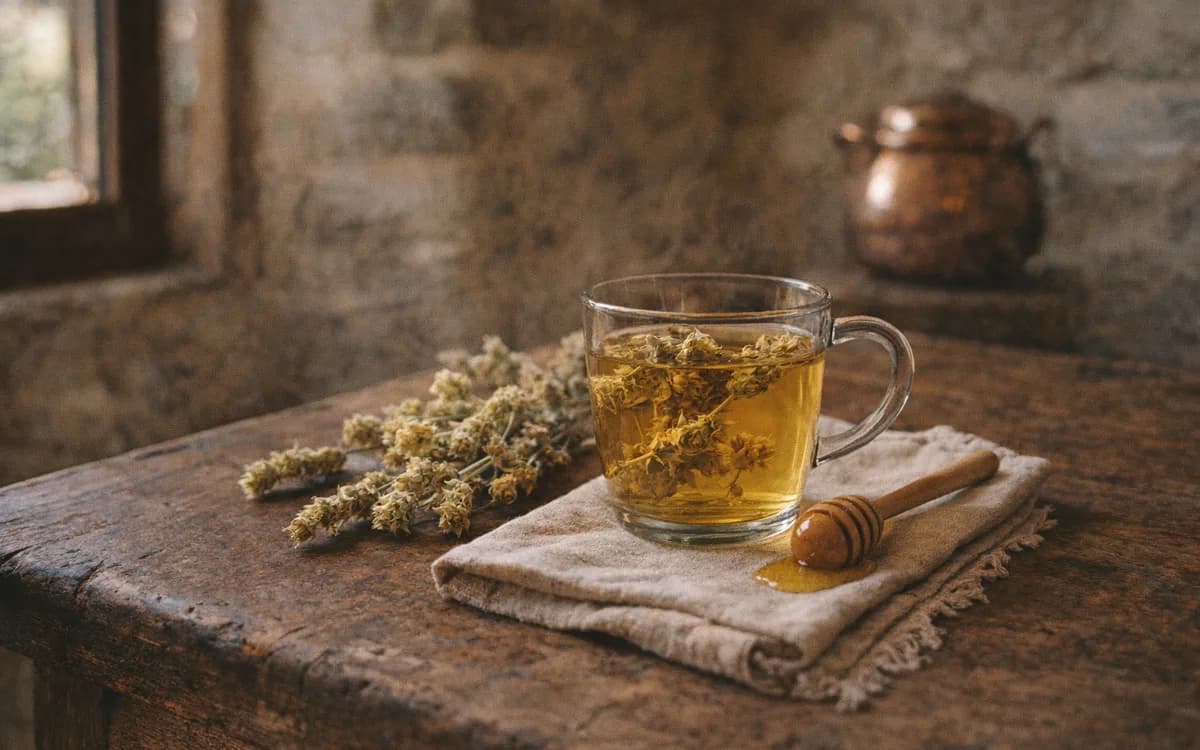
Mountain tea. Çaj mali, wild sideritis picked in summer and dried, is the highland alternative to coffee and the drink most guests take home with them. We wrote about where it grows and how it is brewed.
The morning raki
Visitors are sometimes surprised to see a small glass of raki on a breakfast table. It is not a hangover cure and it is not for tourists; in the villages a single small glass with morning coffee, especially in winter, is an old habit among older men. Guests are offered it as a courtesy and are entirely free to decline. If you accept, sip it; it is not a shot. Our raki guide explains what you are drinking and how strong it is.
North and south, city and village
Breakfast changes with the map. In Tirana and the coastal cities a weekday breakfast is often just coffee and a byrek from the corner bakery, eaten standing. In the south, feta-style cheese and olive oil lead. In the north and in the Mat valley where we are, the table is heavier: more dairy, more bread, petulla more often, honey from the village hives, and çaj mali as a matter of course. Weekend breakfasts everywhere stretch toward eleven o'clock.
Guesthouse breakfasts, ours included, lean toward the village version because that is what the kitchen and the garden produce. Hotels in the cities serve a buffet that borrows from all of it.
Breakfast at Bujtina Çupa
We serve breakfast every day from 07:30 to 09:30, in the stone dining room in winter and on the terrace facing the Mat valley in the warm months. Bread and byrek come from the wood-fired oven, vegetables and herbs from our own garden, cheese and gjizë from producers in the valley, honey from local hives. There is always Turkish coffee, filter coffee for those who want it, and çaj mali.
If you are heading out early for a hike, tell us the evening before and breakfast will be ready when you are; if you are not a morning person, the last coffee is poured closer to ten than to nine. Breakfast is included in the room rate for every one of our nine rooms, and non-residents passing along the Rruga e Arbërit are welcome to stop in during the same hours.
Want to eat it here? Book a stay and the bread will be in the oven before you are awake.
Frequently asked questions
What do Albanians typically eat for breakfast?
Bread, white cheese and gjizë, honey or jam, tomatoes and cucumbers, olives, eggs, and often petulla or byrek, with Turkish coffee or mountain tea. Weekday city breakfasts are lighter, usually coffee and a byrek.
What is petulla?
Petulla are small rounds of yeasted dough fried until golden, eaten hot with honey, jam or fresh curd cheese. They are the classic Albanian village breakfast.
Is byrek a breakfast food in Albania?
Yes. Byrek is eaten at any time of day, and a slice warmed from the previous day is a very common breakfast, especially in towns where bakeries sell it by the piece from early morning.
Do Albanians really drink raki at breakfast?
Some older villagers take one small glass with morning coffee, especially in winter. It is a courtesy when offered to guests, never an obligation, and it is sipped, not downed.
What time is breakfast served at Bujtina Çupa?
From 07:30 to 09:30 every day, included in the room rate, with bread from the wood-fired oven, garden vegetables, local cheese and honey, Turkish coffee and mountain tea. Early departures can arrange an earlier breakfast the evening before.