In this article
What Is Albanian Mountain Tea (Çaj Mali)?
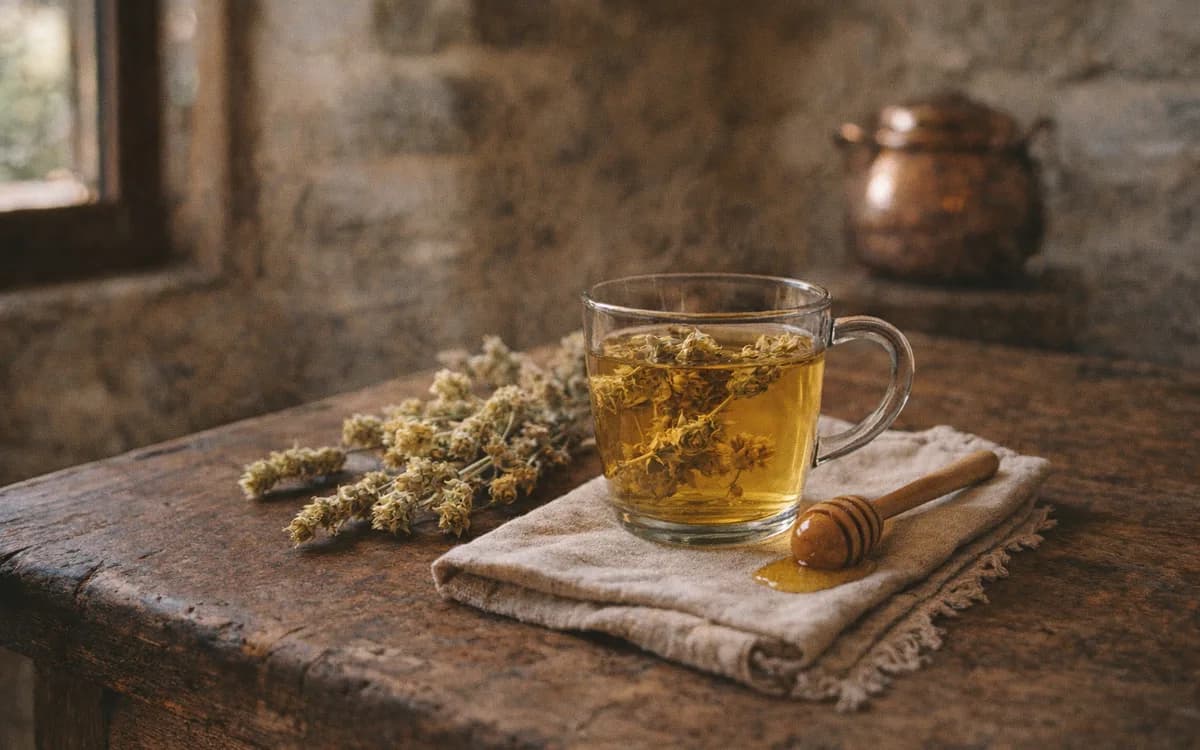
Pale green-grey stems, small yellowish flowers, and a dry floral scent often arrive before the cup: Albanian mountain tea, known here as çaj mali, is one of the simplest drinks you will meet in a rural Albanian home or guesthouse. The name means mountain tea, and it usually refers to an herbal infusion made from dried flowering stems of plants in the Sideritis genus. Travelers may also see it written as caj mali, hear it called Sideritis tea Albania, or find it sold simply as mountain tea in a paper bundle at a market.
The bundle looks modest. A few stems tied together. A scent that is grassy and lightly floral before the water touches it. Once brewed, the tea turns golden and clear, with a softer body than black tea and no tannic bite.
A herb with many local names
Albania has many mountains and many local habits, so it is better not to pretend there is only one exact plant, one exact name, or one correct way to drink it everywhere. Local sellers may use the same common name for herbs gathered from different mountain areas. What matters at the table is freshness, clean drying, and a gentle hand with the kettle.
At our table in Klos, we treat çaj mali as part of daily hospitality rather than a medical subject. It is a warm herbal drink, a pause, and a way to sit for a few minutes before breakfast ends, before dinner begins, or after a walk in the hills.
Why Çaj Mali Belongs on a Klos Guesthouse Table
We welcome guests in Fshat, on Rruga e Arbërit, near Klos in Dibër County. Our family guesthouse is built in the traditional style of an Albanian stone castle, with the mountains close enough to shape the appetite of the day. A drink like çaj mali fits this place because it asks for very little: hot water, dried stems, a cup, and time.
In Albanian homes, a guest is rarely left with an empty table. The welcome may be bread and cheese. On another morning, coffee. When rain cools the valley, a warm herbal tea can say enough before anyone begins to talk. That habit is not a performance. It is practical kindness, the kind that says, sit down first, then we will talk.
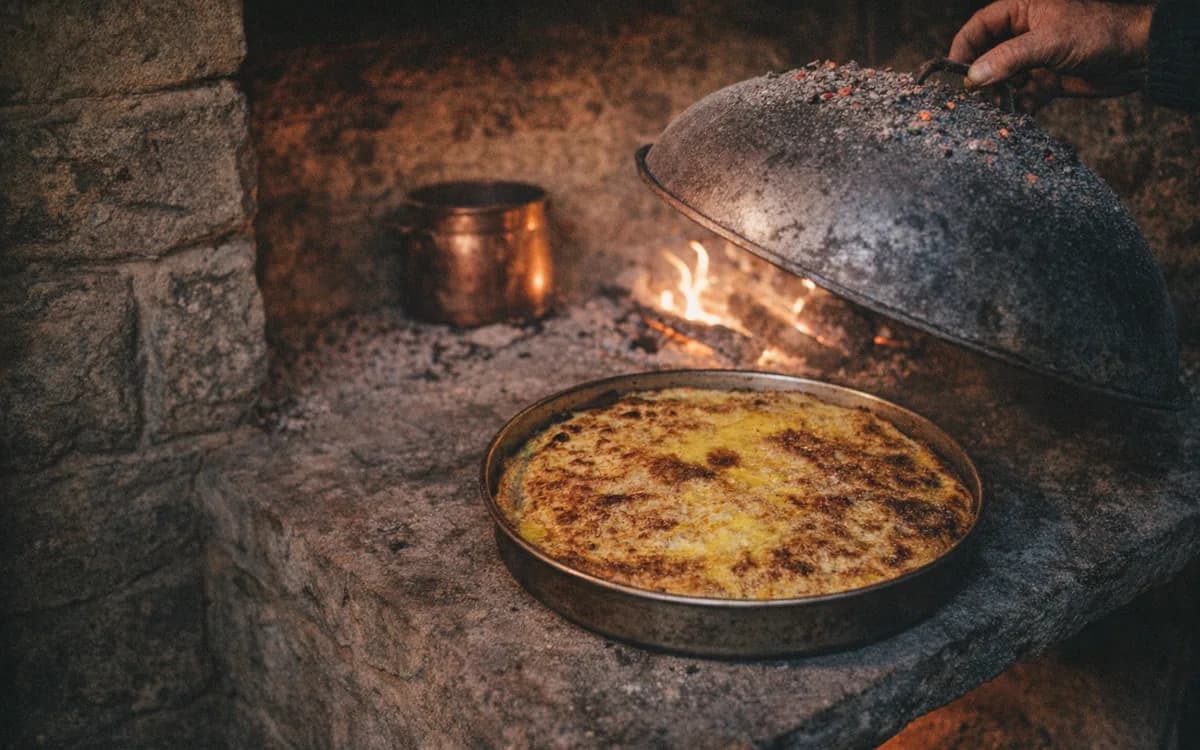
Our restaurant is open to hotel guests and outside visitors, with breakfast from 07:30 to 09:30, lunch from 12:00 to 16:00, and dinner from 18:00 to 22:00. Around those hours, tea belongs naturally beside the foods that already know the table: warm bread, local cheese, honey, eggs, and dishes from the wood-fired oven.
See our kitchen for the dishes and meal times that shape the table around the tea.
Hospitality before performance
There is no need to dress Albanian herbal tea in ceremony. The beauty is in the ordinary details. Steam on a cool morning. The dry stems floating at the top of the cup. A spoon of honey waiting until the tea has steeped. The silence that comes after a long road, especially now that Rruga e Arbërit and the Murriz Tunnel have made the Tirana to Dibër corridor much faster and easier than it used to be.
A Klos guesthouse tea is not about rushing to the next view. It is about letting the valley slow you down for a few minutes.
How to Brew Çaj Mali Gently
Good çaj mali is easy to prepare, but it does not like harsh treatment. If you boil it hard for too long, the aroma can flatten and the cup may taste rougher than it should. We prefer a gentle steep, the same way we prefer slow food from the oven: enough heat, enough patience, no hurry.
A simple brewing method
-
Shake or lightly rinse the dried stems if they look dusty.
-
Place a small handful, or 1–2 dried stems per cup, into a teapot or heatproof cup.
-
Heat water until it has boiled, then let it sit for a short moment so it is just off the boil.
-
Pour the hot water over the stems and cover the pot or cup.
-
Steep for about 5–8 minutes, then taste.
-
Add honey after steeping if you want sweetness. Lemon is optional. Nothing at all is also correct.
-
If the first cup tastes clean and fragrant, steep the same stems once more for a lighter second cup.
This method gives the herb room to open slowly. The flowers and leaves release their scent without being pushed too hard. If you like a stronger cup, add a little more herb next time rather than boiling the same stems aggressively.
What good mountain tea should taste like
A good cup of mountain tea is light, floral, grassy, and slightly sweet in its own way. Bitterness usually means the tea has been pushed too far, as with over-brewed black tea. Damp, musty, or stale aromas are a warning. The dried stems should be dry but still recognizable, with small flowers and leaves visible rather than crushed into anonymous powder.
Freshness matters more than a dramatic label. When you buy a bundle, lift it near your nose. If the scent is clean and herbal, you are close. If it smells like a closed cupboard after rain, leave it.
What to Pair with Albanian Herbal Tea: Breakfast, Bread, and After-Hike Food
Albanian mountain tea pairs best with simple food. Heavy sauces can cover its light scent, while bread, cheese, honey, and warm dough leave enough space for the tea to be noticed.
At breakfast
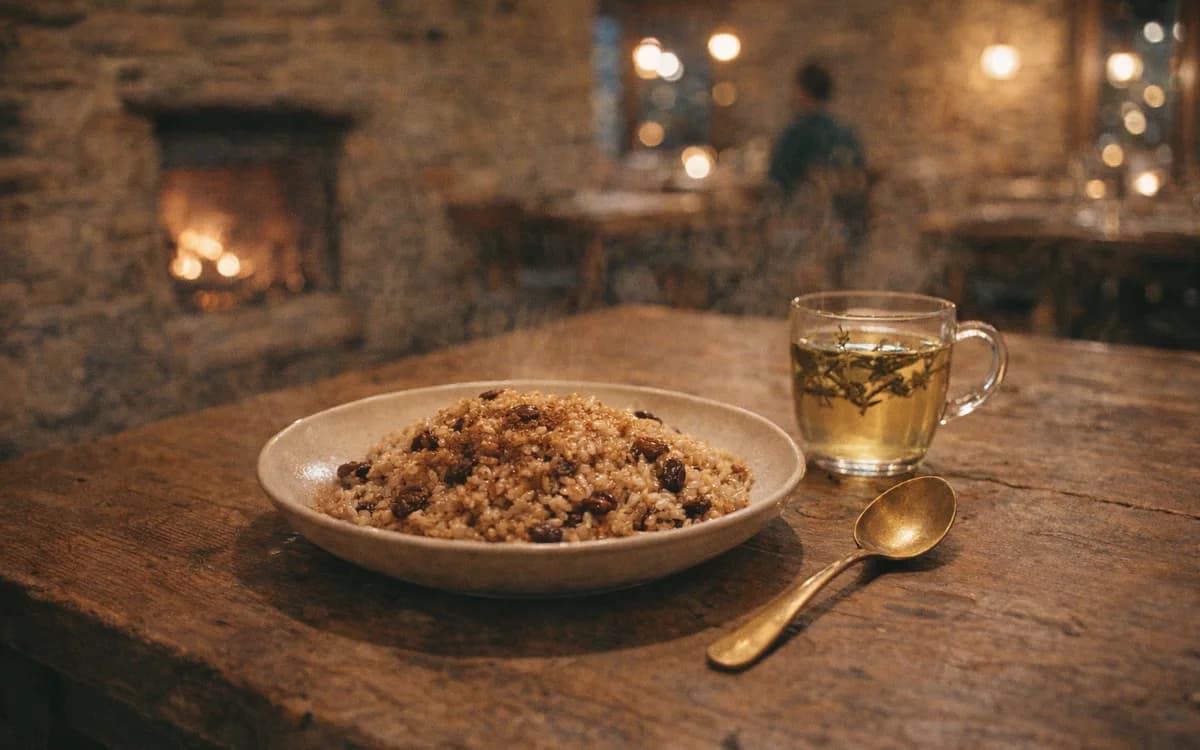
At breakfast, çaj mali is a good caffeine-free choice beside coffee. It suits warm bread, butter, white cheese, honey, seasonal fruit, eggs, and petulla, the fried dough many Albanians remember from family mornings. The tea warms the hands without taking over the plate.
At Bujtina Çupa, our kitchen also works with the stronger flavors of the region: Byrek Bujtine, Lakror me miell misri, and breads from the wood-fired oven. With these, mountain tea can be a gentle counterpoint. It clears the palate rather than competing with butter, cheese, or corn flour.
If you prefer a fuller table, start with tea and breakfast, then let the day become what it wants to be. Some guests stay close to the terrace. Others drive through the Mat Valley or ask us about a guided walk.
After a mountain walk
After a hike, tea alone is not enough. Water matters. Salt matters. Real food matters. But a warm cup of çaj mali can feel easy to drink when the body is tired and the appetite has not fully returned.
For guests coming back from Hiking Rruga e Arbërit, our full-day guided experience on the historic Arbër route, we like the idea of tea before the bigger meal. Then come the foods that restore energy: Supë perime, grilled vegetables, Tavë dheu, or a piece of byrek. Later, when dinner service begins at 18:00, the table can grow heavier with oven dishes or a shared Sofër tradicionale e madhe.
Explore hiking experiences if you want the trail, the view, and the warm table after it.
Tea warms the moment. Food finishes the work.
Mountain Tea Benefits Without Myths
Many people search for mountain tea benefits, and we understand why. When a drink has been used for generations in mountain homes, it is easy for stories to grow around it. We prefer to speak carefully.
What can be said safely
Çaj mali is a naturally caffeine-free herbal infusion. That makes it useful for many guests in the evening, especially those who want something warm after dinner without drinking coffee. It is aromatic, hydrating as part of normal daily drinking, and gentle in flavor.
Many Albanians drink it because it feels soothing. They choose it after meals, during cool weather, or before sleep because the cup is warm and the scent is calm. Those are cultural and practical reasons, and they are enough. A drink does not need to promise miracles to be worth serving.
Sideritis plants have been studied, and you may find articles online discussing traditional uses and possible compounds in the herb. Still, a guesthouse table is not a clinic. We do not claim that mountain tea cures colds, anxiety, inflammation, digestive disease, or any other medical condition.
What not to claim
Do not treat Albanian mountain tea as a guaranteed immune remedy, sleep cure, stomach treatment, or replacement for medical advice. If you are pregnant, taking medication, managing a health condition, or unsure whether an herb is suitable for you, ask a qualified medical professional before relying on it.
This distinction matters. Local habit has value. So does evidence. At the table, we can honor both by enjoying the tea for what it clearly is: warm, fragrant, caffeine-free, and part of the everyday language of welcome.
Buying or Bringing Çaj Mali Home from Albania
If you want to bring çaj mali home from Albania, look for a clean bundle rather than the biggest one. Good dried mountain tea should have visible stems, leaves, and flowers. It should smell fresh and herbal. It should be dry, not soft with moisture, and it should not show signs of mold or dust from poor storage.
How to recognize a good bundle
-
Clean fragrance - the scent should be grassy, floral, and dry.
-
Intact stems - flowers and leaves should still be visible.
-
No dampness - avoid bundles that feel wet, heavy, or musty.
-
Clear sourcing - buy from reputable local sellers, markets, or hosts who can tell you where the herb came from.
Ask a seller or host where the tea was gathered, how it was dried, and whether they identify the plant as Sideritis. A careful answer is a good sign. So is a bundle that looks clean and whole rather than crushed into dust at the bottom of a plastic bag.
We do not encourage travelers to pick wild herbs without knowledge. Some mountain plants face pressure from overharvesting, and it is easy to confuse species if you are not trained. Respectful buying supports better habits and keeps the mountains from becoming only a souvenir shelf.
At home, store the tea dry and away from sunlight. A paper bag works if the herb is fully dry and the room is not damp. A clean jar also works, as long as no moisture is trapped inside. For travel, dried tea is usually light and easy to pack, but you should check your destination country’s customs rules for dried plant material before you fly.
The best bundle will still carry a memory: the table where it was poured, the road into Klos, the first sip after rain, the quiet after a mountain walk.
Ready to taste çaj mali where the kettle is never far from the table? Book your stay and we will keep the tea warm after the road or the trail.
Frequently asked questions
Is mountain tea the same as çaj mali?
Yes. Çaj mali means mountain tea in Albanian and commonly refers to a herbal infusion made from dried Sideritis stems and flowers.
Does çaj mali contain caffeine?
Çaj mali is naturally caffeine-free, so many travelers drink it in the evening or after meals instead of coffee or black tea.
How long should çaj mali steep?
Çaj mali usually steeps for about 5–8 minutes in hot water just off the boil. Longer steeping gives a stronger, more herbal taste.
What are the benefits of mountain tea?
Many people drink mountain tea because it is warm, aromatic, caffeine-free, and soothing. It should not be treated as a cure or a substitute for medical advice.
Can travelers bring çaj mali home from Albania?
Travelers often buy dried çaj mali as a light food souvenir, but they should check their destination country’s customs rules for dried plant material.
.jpeg&w=3840&q=75)