In this article
- Kabuni Recipe: What Makes This Albanian Rice Dessert Different
- Ingredients for Traditional Kabuni
- How to Make Kabuni Step by Step
- Kabuni Albania: Winter Dessert, Festival Dish, Guest Table Sweet
- Serving Kabuni With Tea, Raki, or a Mountain Supper
- Make-Ahead Tips and Common Kabuni Mistakes
- A Guesthouse Note on Adapting Kabuni Today
- Frequently asked questions
Kabuni Recipe: What Makes This Albanian Rice Dessert Different
This kabuni recipe belongs to the colder months, when rice, butter, sugar, raisins, cinnamon, and cloves can turn a simple pot into a warm Albanian rice dessert. In our mountain kitchen in Klos, we think of kabuni as a quiet sweet after supper: fragrant, generous, but not heavy like a cream pudding.
Kabuni is traditional, but it is not one single fixed formula. Some households make it very rich for celebration meals. Some keep it lighter for an ordinary winter evening. The version below is practical for home cooks, with water as the easiest base and notes for a deeper broth-based variation.
Sweet pilaf, not creamy pudding
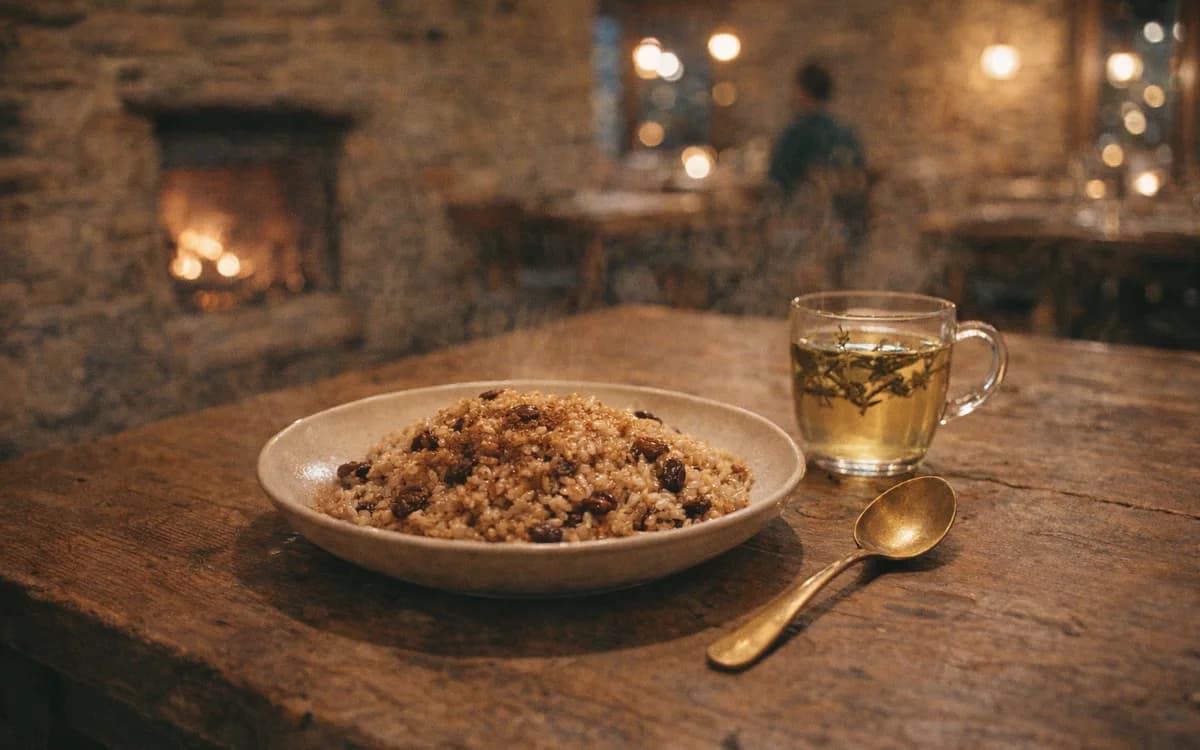
The first thing to know is texture. Kabuni should not be stirred into a soft dairy porridge. The rice grains stay visible, tender, and glossy, closer to a sweet pilaf than to rice pudding. Butter coats the grains, syrup gathers lightly around them, and cinnamon perfumes the top.
That separate-grain texture is why rinsing matters, why the heat should stay gentle, and why the pot needs a rest before serving. If you expect custard, kabuni will surprise you. If you expect sweet rice with spice and a little shine, you are close.
Where kabuni fits on the Albanian table
Kabuni is often connected with winter, family tables, and guest meals, especially because of its warm spices and dried fruit. It does not need to be served in a large portion. A small bowl after savory food is enough.
At Bujtina Çupa, our restaurant serves lunch from 12:00–16:00 and dinner from 18:00–22:00, so we know the rhythm of a meal that ends slowly. After dishes such as Tavë dheu, Byrek Bujtine, or Pule fshati me jufka, a cinnamon rice dessert should feel like a finish, not a second dinner.
Ingredients for Traditional Kabuni
For 6 modest servings, use:
- 1 cup short- or medium-grain rice - rinsed until the water runs mostly clear
- 3 tablespoons butter - enough to coat the rice and give aroma
- 1/2 to 2/3 cup sugar - adjust to taste
- 2 cups warm water or delicate broth - add a little more only if needed
- 1/2 cup raisins - soaked briefly in warm water, then drained
- 1 cinnamon stick or 1/2 teaspoon ground cinnamon - for the pot
- 2 cloves - whole cloves are easier to remove
- Pinch of salt - small but necessary
- Ground cinnamon for serving - the final dusting is part of the dish
The rice should absorb flavor without collapsing. We prefer a grain that softens but still holds its shape. Long-grain rice can work, but it may feel too dry if the liquid is not watched carefully. Very starchy rice can turn mushy unless it is rinsed well.
See our kitchen for the traditional dishes we serve beside seasonal sweets.
The broth question
Older festive kabuni recipes may use lamb or mutton broth. This gives the dessert a savory depth that can surprise people who only know milk-based sweets. If you try it, the broth must be light, clean, and not salty. A greasy broth will make the dessert feel heavy.
For an everyday kabuni, water is completely fine. Some cooks add a small splash of milk for softness, but milk is not the main character here. The cinnamon, butter, raisins, and rice should still lead.
Spices and sweetness
Cinnamon and cloves are the heart of the aroma. Use cinnamon in the cooking liquid if you like a rounder flavor, then add fresh ground cinnamon over the top just before serving. Old cinnamon gives color but little perfume, so smell it before you trust it.
Caramelized sugar is optional. It gives kabuni a deeper color and a toasted flavor, but it can burn quickly. If you are making kabuni for the first time, plain sugar is easier. Once you know the rice texture, try the caramel method.
How to Make Kabuni Step by Step
1. Rinse, toast, and flavor the rice
Rinse the rice in several changes of cool water. When the water looks mostly clear, drain the rice well. Do not skip the draining; wet rice thrown into butter will steam instead of toast.
Melt the butter in a heavy pot over medium-low heat. Add the drained rice and stir gently for 3 to 4 minutes, until the grains look glossy and separate. They should not brown hard. You are coating them, warming them, and building a light nutty base.
If you are using plain sugar, add it after the rice has been coated in butter, then add warm water or broth. Add the cloves, a pinch of salt, and the cinnamon stick if using one. Stir once to settle everything.
If you want the caramelized sugar version, melt the sugar separately in a small pan until amber. Add warm liquid carefully, a little at a time. It will steam and may splutter, so keep your face and hands away from the pan. When the caramel has dissolved into the liquid, pour it over the buttered rice.
2. Simmer with sugar, spices, and raisins
Bring the pot to a low simmer, then reduce the heat. Kabuni should cook calmly. If it boils hard, the liquid evaporates before the rice softens, and the bottom can catch.
Cover the pot slightly ajar for the first part of cooking. After 8 to 10 minutes, add the soaked and drained raisins. They should swell and soften, not burst into the rice. Stir gently once, then cover again.
Cook until the rice is nearly tender and most of the liquid has been absorbed. The surface should look moist, not soupy. If the grains are still hard and the pot is dry, add a few spoonfuls of warm water, cover, and continue on low heat.
Use your senses. The rice should look shiny. The raisins should be plump. The cloves should be present but not sharp. When you lift the lid, the cinnamon aroma should be clear.
Join our cooking class if you want to learn traditional Albanian methods with our family kitchen team.
3. Rest before serving
Turn off the heat and keep the pot covered for 10 to 15 minutes. This rest is not wasted time. It lets the syrup settle, the steam finish the rice, and the grains separate.
Remove the cloves and cinnamon stick if you used whole spices. Fluff the kabuni lightly with a fork. Do not beat it with a spoon. Strong stirring breaks the rice and pushes the dessert toward porridge.
Serve warm or at room temperature. Spoon it into small bowls or shallow plates and dust the top generously with ground cinnamon. Extra raisins are welcome. Crushed nuts can be added if you like, but they are not necessary.
Kabuni Albania: Winter Dessert, Festival Dish, Guest Table Sweet
Searches for kabuni Albania often lead to short descriptions, but the dish makes more sense when you imagine how it is served. It belongs to the part of the meal when voices are lower, the table is still warm, and nobody is rushing to stand up.
Kabuni suits autumn and winter because its ingredients feel stored and sturdy: rice, dried grapes, butter, sugar, cloves, cinnamon. There is no need for summer fruit or elaborate decoration. The perfume does most of the work.
Why it suits cold evenings
A good Albanian winter dessert should warm without tiring the guest. Kabuni does that well. It has enough butter to feel comforting and enough spice to feel festive, but it is still based on rice, not cream or layers of pastry.
Here in Fshat, on Rruga e Arbërit in Klos, Dibër County, cold evenings arrive with a different kind of silence. A dessert like kabuni fits that pace. It can be made ahead, rested, and brought to the table when everyone is ready.
Home versions and festive versions
A simple water-based kabuni is best for home cooking. It is lighter, easier to control, and still carries the cinnamon flavor people remember.
A broth-based kabuni feels more ceremonial. Some cooks also finish the dish in a low oven after simmering, which dries the surface slightly and helps the grains hold. If you use that method, keep the oven gentle and watch the raisins so they do not scorch.
Serving Kabuni With Tea, Raki, or a Mountain Supper
Kabuni can be served warm, at room temperature, or gently reheated. If reheating, add a spoonful of water, cover the pot, and warm it slowly. Do not fry it hard in the butter left at the bottom.
For presentation, keep it modest. A shallow plate shows the cinnamon better than a deep bowl. Add the cinnamon just before serving, because the fresh aroma is part of the pleasure.
How we would serve it in Klos
After a savory mountain supper, we would serve kabuni in small portions. It pairs well with plain coffee or mountain tea, especially when the meal before it has included grilled meat, clay-pot food, or bread from the wood-fired oven.
Guests often remember Albanian sweets through details rather than size: the smell of cinnamon, the shine of butter on rice, the steam from tea, the pause after dinner. That is enough.
What to drink with kabuni
Mountain tea is the softest pairing. It lets the cinnamon and raisins stay forward. Plain coffee works too, especially if you prefer a bitter edge beside the sugar.
For adults who want a stronger village-style ending, a small glass of raki can fit. At our bar, we serve Raki Rrushi, Raki Kumbulle, and Raki Thane, alongside house-region wines and beers. With kabuni, keep the pour small. The dessert is gentle, and the drink should not overpower it.
Make-Ahead Tips and Common Kabuni Mistakes
Kabuni is best the day it is made or the next day. It can be refrigerated for a short time, covered well, but the rice will firm as it cools. Bring it back gently with a little water and low heat.
Do not add a lot of liquid to finished kabuni to fix texture. It will not become fresh again; it will become uneven. Better to warm it slowly and accept a firmer next-day dessert.
If the rice turns mushy
Mushy kabuni usually comes from too much liquid, too much stirring, or rice that releases a lot of starch. Rinse more thoroughly next time. Drain well. Once the rice is simmering, stir only when needed.
A heavy pot helps because it spreads heat more evenly. Thin pans can burn the bottom while the top grains stay undercooked.
If the rice stays hard
Hard rice often means the heat was too high and the liquid disappeared too quickly. Add warm water by the spoonful, cover the pot, and give it more time on low heat. Cold water can shock the cooking and slow everything down.
If the rice is hard but the bottom is already dark, move the unburned top into a clean pot before adding liquid. Do not scrape burned sugar or rice into the dessert.
If the flavor feels dull
Check three things: salt, butter, and cinnamon. A pinch of salt makes the sweetness clearer. Butter carries the spice. Fresh cinnamon brings the smell people expect from a cinnamon rice dessert.
If you burned the caramel, start again. Bitterness from scorched sugar cannot be hidden with more cinnamon.
A Guesthouse Note on Adapting Kabuni Today
We respect the richer festival versions of kabuni, especially those made with delicate meat broth and careful oven finishing. At the same time, many modern tables need a lighter sweet after a full meal. Both ideas can belong to Albanian cooking.
At Bujtina Çupa, opened in December 2024 as a family-owned guesthouse, we often think about how traditional Albanian sweets travel with people. A guest may taste something once in Albania and then try to recreate it months later in Europe or North America. The memory is rarely exact. It is cinnamon on the plate, warm rice, a raisin in the spoon, and the slow end of dinner.
Our guesthouse has 9 rooms, mountain views, a restaurant, and a bar, but the table is still the center of the welcome. If kabuni brings you closer to that feeling at home, make it simply first. Then, when you know the texture, make it richer.
Plan a winter table with us and book a stay in Klos.
Frequently asked questions
What is kabuni made of?
Kabuni is made with rice, butter, sugar, raisins, cinnamon, cloves, and water or light broth. Older festive versions often use lamb or mutton broth for a deeper flavor.
Is kabuni the same as rice pudding?
No. Kabuni is closer to a sweet rice pilaf: the grains stay separate and glossy, while rice pudding is usually creamy and milk-based.
Can kabuni be made without meat broth?
Yes. Water makes a lighter everyday kabuni, while delicate lamb or mutton broth gives the richer taste found in some traditional versions.
Should kabuni be served hot or cold?
Kabuni is best warm or at room temperature. It should rest before serving so the rice grains separate and the cinnamon aroma settles.
Why is cinnamon important in kabuni?
Cinnamon gives kabuni its signature warm aroma and is usually dusted over the top just before serving.