In this article
- What Is Shëndetlie? The Albanian Honey Walnut Cake Made for Guests
- Ingredients for Albanian Walnut Cake: Honey, Nuts, Butter, and Syrup
- Step-by-Step Shëndetlie Recipe
- Make-Ahead Timing: Why Shëndetlie Tastes Better the Next Day
- How to Serve Shëndetlie with Coffee, Mountain Tea, or Raki
- Common Mistakes, Family Variations, and Shendetlie Albania Searches
- Bringing Albanian Hospitality to the Table
- Frequently asked questions
What Is Shëndetlie? The Albanian Honey Walnut Cake Made for Guests
A good shëndetlie recipe is not only about honey, walnuts, and syrup. In many Albanian homes, shëndetlie is the cake you can make before anyone knocks at the door: sturdy, fragrant, already sliced, and ready to sit beside coffee while people settle into conversation.
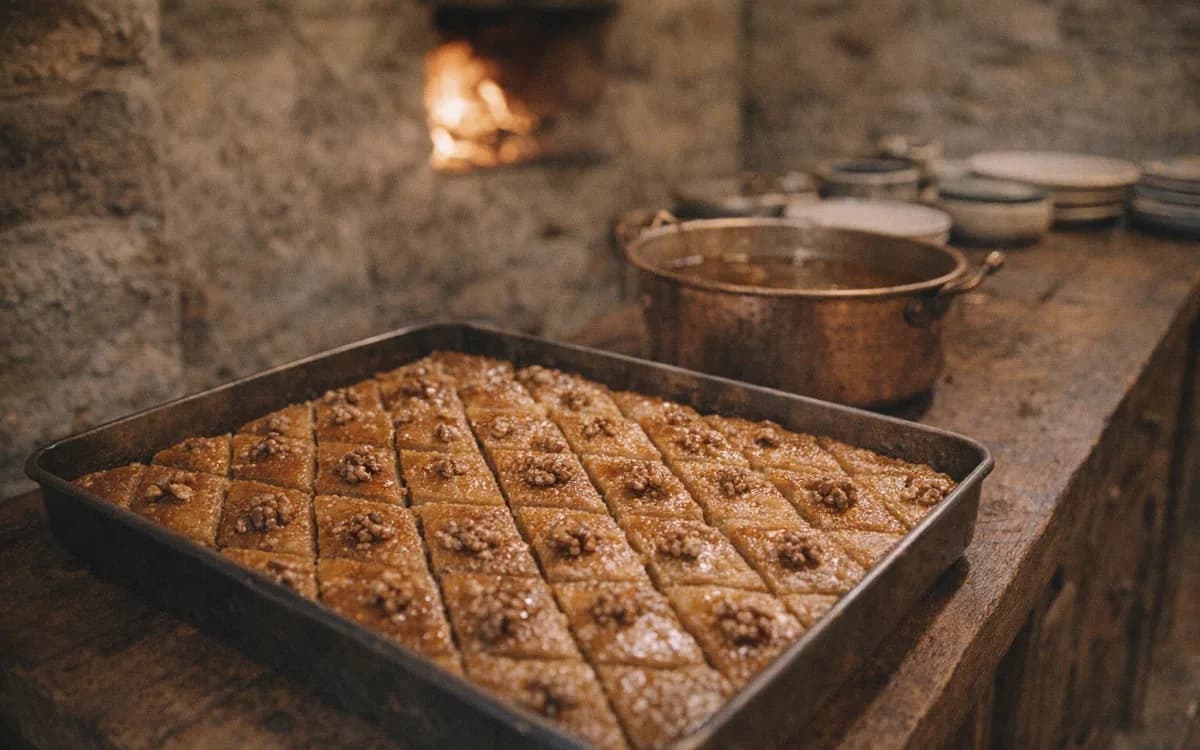
Shëndetlie is an Albanian dessert made from a baked honey-and-walnut batter that is soaked with a simple syrup. It is usually cut into diamonds or squares before the syrup is poured, so the sweetness reaches the center instead of sitting only on top. The crumb should be firm enough to hold in the hand, but tender once the syrup has rested through it.
The name is often connected with health, sweetness, and good wishes, and that is how the cake feels on a guest table. It is not fussy. It does not need cream, layers, or last-minute decoration. The flavor comes from toasted walnuts, warm honey, a little lemon in the syrup, and time.
Why it belongs on the guest table
Shëndetlie keeps well and slices cleanly after resting. That matters when guests arrive after a long drive, after evening service, or on a cold afternoon when coffee is already on the stove.
At Bujtina Çupa, our kitchen is better known for traditional plates like Pule fshati me jufka, Tavë dheu, and Byrek Bujtine, but the same Albanian instinct sits behind a dessert like this: prepare something honest, let it rest properly, and serve it without rushing the table.
Ingredients for Albanian Walnut Cake: Honey, Nuts, Butter, and Syrup
For one medium tray of Albanian walnut cake, you need simple pantry ingredients. Family recipes vary, so treat this as a reliable house-style method rather than the only correct way.
- Flour - 300 g, about 2 1/2 cups, gives the cake its body.
- Walnuts - 180 g, about 1 1/2 cups chopped, bring flavor, texture, and a slight bitterness that balances the syrup.
- Eggs - 3 large eggs help the crumb set.
- Sugar - 120 g, about 2/3 cup, sweetens the batter before syrup.
- Honey - 120 g, about 1/3 cup, gives the cake its warm aroma.
- Butter or neutral oil - 120 g melted butter, or about 1/2 cup oil, depending on your family method.
- Baking soda or baking powder - 1 teaspoon helps the cake rise without becoming airy like a sponge.
- Cinnamon or lemon zest - optional, but useful in colder months.
- Salt - a small pinch keeps the sweetness clear.
For the syrup, use 350 g sugar, 300 ml water, 1 tablespoon honey, and a strip of lemon peel or 1 tablespoon lemon juice. This makes a glossy syrup that moistens the cake without drowning it.
A honey walnut cake depends on good nuts. Fresh walnuts should smell sweet and nutty, not oily, dusty, or sharp. If your walnuts taste bitter before baking, they will taste stronger after baking. Toasting them lightly is helpful, but do not darken them too much.
Warm thick honey for a few seconds so it pours easily into the batter. A darker honey gives a deeper, almost caramel note. A lighter honey makes a gentler Albanian dessert, especially if you are serving it with tea.
See our kitchen for the traditional dishes we cook daily at Bujtina Çupa.
The syrup balance
The syrup should sweeten, soften, and shine. It should not make the cake collapse. Lemon juice or peel keeps it from tasting flat, and a short boil is enough. If syrup boils too long, it turns heavy and can become grainy as it cools.
Step-by-Step Shëndetlie Recipe
This method gives a tray of shëndetlie that can be served the same day after a long rest, but it is best the next day. Use a metal or ceramic baking tray around 23 x 33 cm, or a similar medium pan. If your pan is smaller, the cake will be taller and may need more time in the oven.
1. Mix a thick walnut batter
Heat the oven to 180°C, or 350°F. Butter the pan well, or line the base with baking paper if your tray tends to stick.
In a large bowl, whisk the eggs and sugar until the mixture looks lighter and smoother. Add the melted butter or oil, then the honey. Stir until the honey disappears into the mixture. If the honey is cold and stiff, warm it gently first; do not add it boiling hot to the eggs.
In a second bowl, mix the flour, baking soda or baking powder, salt, and cinnamon or lemon zest if using. Add the dry ingredients to the wet mixture in two additions. Stir gently. The batter should be thick, heavier than a cake batter for layers, and soft enough to spread with a spatula.
Fold in the chopped walnuts at the end. Do not beat hard after adding the flour. A tender shëndetlie comes from mixing enough, then stopping.
Spread the batter evenly in the prepared tray. Smooth the top with the back of a spoon.
2. Bake until the top is deeply golden
Bake for 30 to 40 minutes, depending on the tray and oven. The top should be deep golden, the edges should pull slightly from the pan, and a skewer pushed into the center should come out without wet batter. A few moist crumbs are fine.
This step matters. If the cake is underbaked, the syrup will make the center heavy. Let the color guide you as much as the clock.
When the cake comes out of the oven, wait 10 minutes. Then cut it while still warm, using a sharp knife. Diamonds are traditional and beautiful, but squares are easier for a first batch. Cut almost to the bottom of the pan so the syrup has a path into every piece.
In our Traditional Cooking Class at Bujtina Çupa, guests learn the feel of Albanian doughs and batters by hand, from byrek to bread baked in the wood-fired oven. Shëndetlie asks for that same attention: look at the color, feel the thickness, and do not hurry the rest.
Ask about our cooking class if you want to learn traditional Albanian kitchen methods while staying with us.
3. Pour the syrup slowly and let it rest
While the cake bakes, make the syrup. Put the sugar, water, honey, and lemon peel or juice into a small pot. Bring to a boil, then simmer for 5 to 7 minutes, just until clear and slightly glossy. Remove the lemon peel if you used it.
For the best texture, use contrast. Pour hot syrup over a warm cake, or warm syrup over a cooled cake. Do not pour boiling syrup over a cake that is still roaring hot from the oven. Too much heat on both sides can make the crumb break down.
Pour the syrup slowly. Start along the cut lines, then the edges, then the center. Stop for a minute and let the cake drink before adding more. It may look like too much syrup at first, but much of it will settle as the cake rests.
Leave the tray uncovered until the steam has gone. Once cool, cover it lightly and rest at least 4 hours. Overnight is better. By morning, the syrup will have moved through the crumb, the walnuts will taste rounder, and the pieces will lift more cleanly from the tray.
Make-Ahead Timing: Why Shëndetlie Tastes Better the Next Day
Shëndetlie is made for hosts because it rewards planning. Bake it in the evening, add the syrup, let it cool fully, cover it overnight, and serve it the next day without turning on the oven again.
That rhythm suits Albanian hospitality. The host can focus on coffee, tea, and greeting people instead of measuring flour while guests are already seated. At our guesthouse in Fshat, on Rruga e Arbërit near Klos in Dibër County, the best meals are rarely rushed; they move from savory dishes to something sweet at the pace of the table.
For short storage, keep shëndetlie covered at room temperature in a cool kitchen. If the room is warm, or if you are keeping it longer than a day or two, refrigerate it. Bring chilled pieces back toward room temperature before serving, because cold honey and butter mute the aroma.
How to cut it cleanly
Follow the cut lines you made before syrup. Use a sharp knife and wipe the blade between cuts. If the top sticks, wait longer. A rested shëndetlie should not fight you.
For a guest plate, cut smaller pieces than you would for a Western layer cake. Syrup desserts are rich, and a modest diamond beside coffee feels more generous than a large piece left unfinished.
How to Serve Shëndetlie with Coffee, Mountain Tea, or Raki
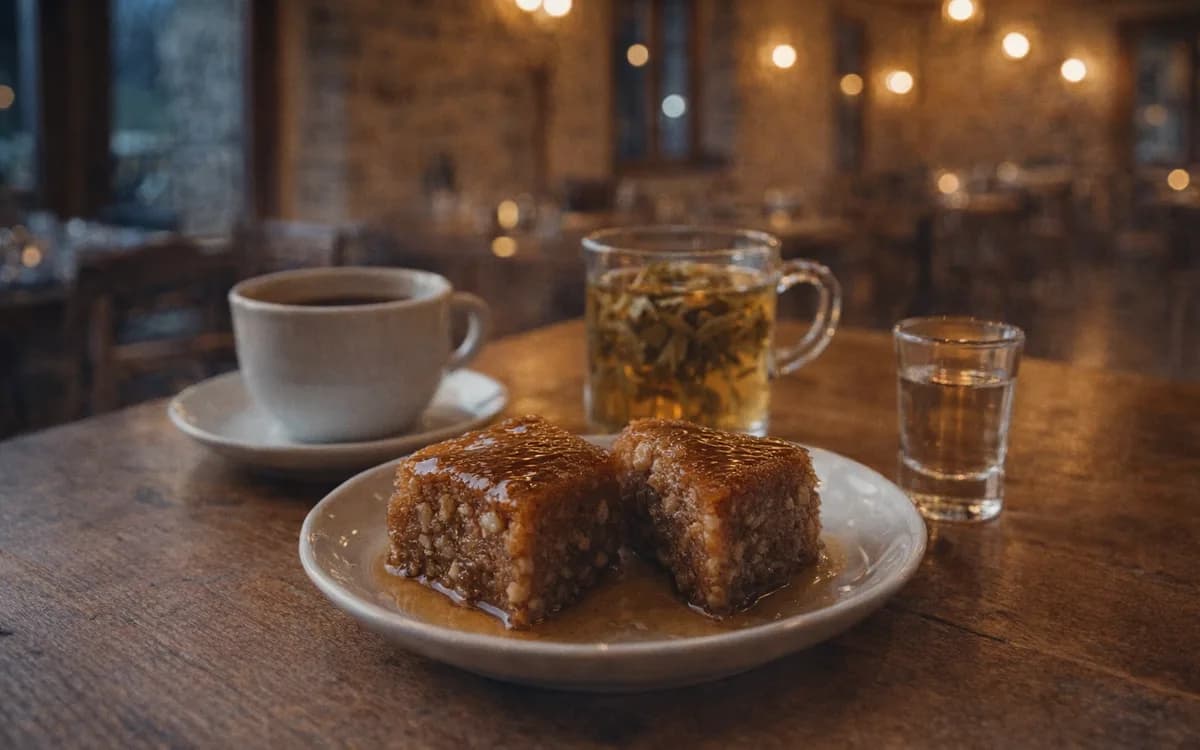
As a coffee dessert Albania knows well, shëndetlie belongs in small pieces with a strong cup and no pressure to stand up quickly. Bitter coffee balances the syrup. The walnuts give the mouth something to hold onto after the sweetness.
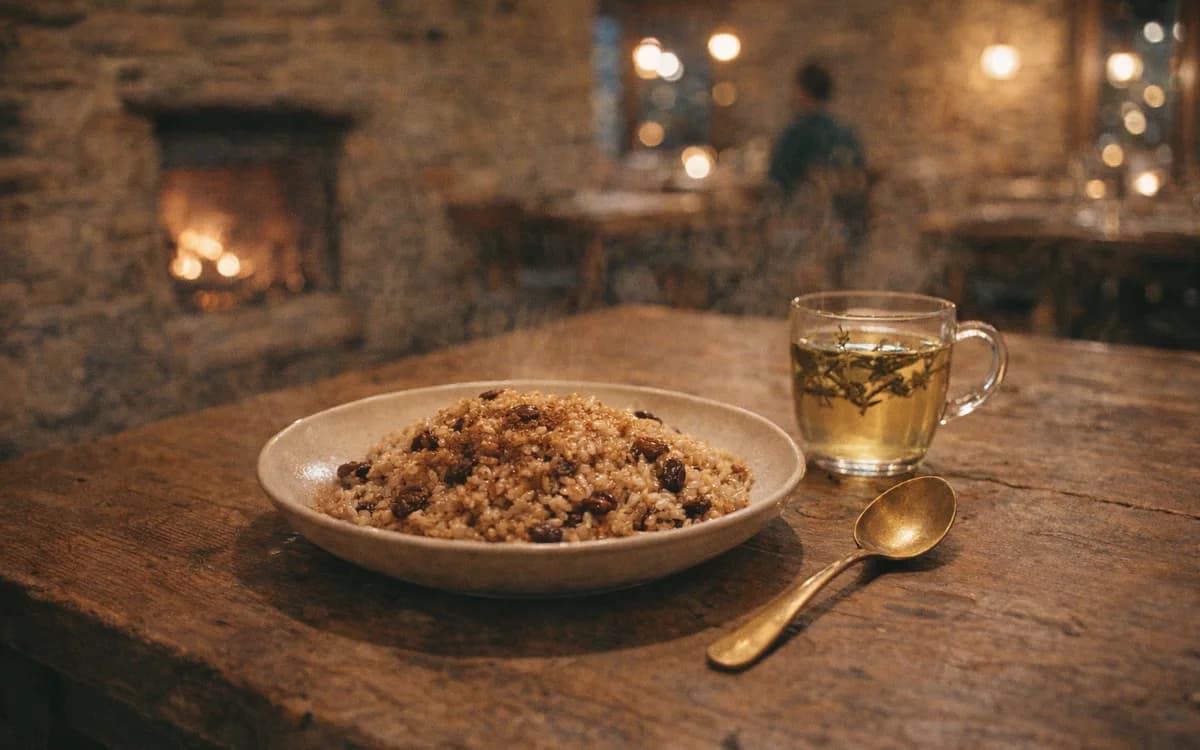
In cooler months, serve it with çaj mali, Albanian mountain tea. The herbal warmth softens the honey flavor and makes the dessert feel lighter after a meal. If you add lemon to the syrup, the tea will notice it.
In the evening, a small glass of raki can also fit the table, but not as a breakfast pairing. At our bar, we serve Raki Rrushi, Raki Kumbulle, and Raki Thane, along with house-region wines and coffee. A small pour after dinner is enough; shëndetlie is already rich.
Serving portions for guests
Place pieces on a simple plate and let the shape show. Extra chopped walnuts can be scattered lightly if you want more texture. A strip of citrus peel beside the plate is enough fragrance. This cake does not need a heavy sauce.
If you are serving after a full Albanian meal, especially after slow dishes or grilled meats, cut the pieces small. At Bujtina Çupa, dinner service runs 18:00 – 22:00, and by the end of the evening people often want something sweet, but not something that asks for silence.
What not to serve it with
Avoid very sweet drinks, because they make the syrup feel heavy. Avoid reheating syrup-soaked pieces too. Room temperature is best: soft enough for the honey to open, firm enough for the walnuts to keep their bite.
Common Mistakes, Family Variations, and Shendetlie Albania Searches
When people search for shendetlie Albania, they often find cakes that look different from one another. Some are darker. Some are pale. Some are cut into diamonds, others into squares. That is normal. Home recipes carry family preference.
Some families use more honey in the batter. Some add cinnamon, cloves, or lemon zest. Some prefer butter for a rounder flavor, while others use oil for a softer crumb that keeps well. A few make a thicker syrup, and others keep it lighter so the walnut flavor leads.
The important thing is to understand what went wrong if a batch disappoints you.
If the cake is dry
The syrup may have been too little, too thick, or poured too quickly in one place. Next time, cut deeper lines before pouring. Add the syrup in stages, especially along the edges and through the center cuts.
A dry cake can also come from too much flour. Measure by weight if you can. If using cups, spoon the flour into the cup and level it, rather than scooping hard from the bag.
If the cake is too wet
The cake may have been underbaked before the syrup was added. Look for a deep golden top and edges pulling slightly from the pan. A pale cake usually needs more time.
Too much heat can also cause trouble. If both cake and syrup are boiling hot, the crumb may turn soft and heavy. Use contrast, then rest longer before judging. Shëndetlie often seems too wet in the first hour and just right the next morning.
If the syrup is grainy
The syrup may have boiled too long or cooled with sugar crystals on the side of the pot. Keep the boil short. Add lemon juice or peel. Do not stir aggressively once the syrup is clear.
If the walnuts taste bitter
The walnuts were probably old, over-toasted, or stored too warm. Taste them before baking. Good walnuts are the backbone of this cake; stale ones cannot hide behind honey.
After your first batch, write notes. More lemon. Less cinnamon. Smaller pieces. Longer bake. That is how a recipe becomes your family’s version.
Bringing Albanian Hospitality to the Table
Shëndetlie is practical, but it does not feel plain. It waits well. It cuts well. It lets a host welcome people without leaving the table every few minutes.
That is why we like desserts like this in a mountain dining room. After plates of Sofër tradicionale e madhe or a warm dish from the oven, a small piece of honey walnut cake beside coffee can carry the evening gently. The smell of walnuts cooling in the kitchen does not need much explanation.
Bujtina Çupa opened in December 2024 as a family-owned guesthouse built in the traditional style of an Albanian stone castle. We are still a young house, but our table follows an older habit: when someone arrives, something should be ready to share.
Want to taste Albanian food at a quiet mountain table after a shared meal? Book a stay and let our kitchen welcome you in season.
Frequently asked questions
What is shëndetlie made of?
Shëndetlie is usually made with flour, eggs, sugar, honey, walnuts, butter or oil, and a simple syrup poured over the baked cake.
Is shëndetlie the same as baklava?
No. Baklava is layered filo pastry with nuts and syrup, while shëndetlie is a baked walnut cake soaked with syrup.
Can shëndetlie be made the day before guests arrive?
Yes. Shëndetlie tastes better after resting overnight because the syrup settles evenly into the cake and the slices hold their shape.
Should syrup be poured hot or cold on shëndetlie?
Use contrast: pour hot syrup over a warm or cooled cake, or warm syrup over a cooled cake. Avoid combining boiling syrup with a very hot cake.
How should shëndetlie be served?
Serve shëndetlie in small squares or diamonds at room temperature with strong coffee, mountain tea, or a small glass of raki in the evening.