In this article
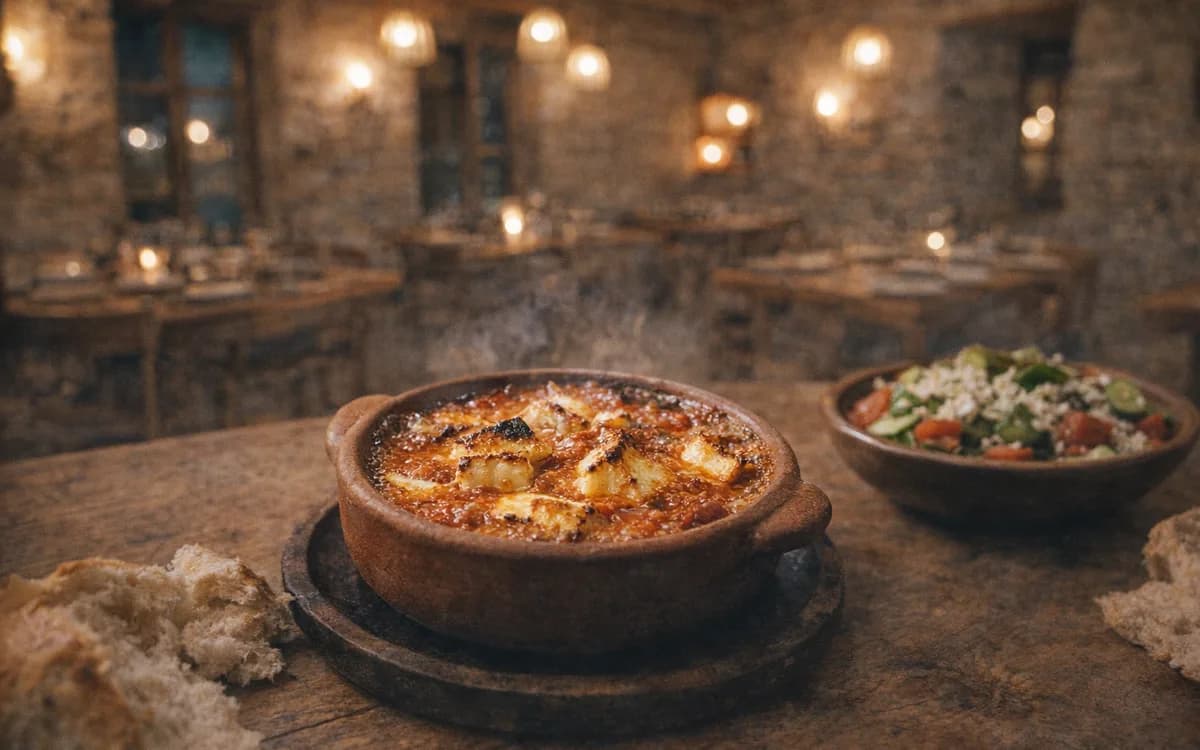
A good tavë dheu recipe should arrive at the table still bubbling. The sauce clings to the sides of the clay dish, the cheese browns in small patches, and bread waits close by because leaving that sauce behind would be a small mistake.
At Bujtina Çupa, in Klos, Dibër County, Tavë dheu is one of the traditional dishes on our kitchen menu. We serve it as cool-weather comfort food: rich, spoonable, and best eaten slowly while the clay dish is still warm.
What Is Tavë Dheu?
Tavë dheu means an Albanian clay-pot bake, and the name belongs to the dish and the vessel together. Tavë is the baking dish; dheu points to earth or clay. In Albania, the little earthenware pot is not decoration. It changes how the food cooks and how it reaches the table.
The version many travelers meet in restaurants is tavë dheu me mëlçi — clay-pot bake with liver. The liver is usually cooked with onion, pepper, tomato, garlic, butter, and white cheese until the sauce becomes thick enough to scoop with bread. In other kitchens, the same idea may be made with veal, lamb, beef, or a mix of liver and meat.
The final texture should not be thin like soup. It should sit somewhere between an Albanian clay pot stew and a baked casserole: rich, soft, browned at the edges, and hot enough that everyone at the table waits a minute before the first spoonful.
It is a close cousin of fërgesë, and in some regions the liver versions of the two overlap or even share a name. The difference is emphasis: fërgesë starts from the pepper, tomato and cheese base, while tavë dheu is defined by the meat and the clay bake.
Why the clay pot matters
Clay holds steady heat. A small clay dish keeps the sauce bubbling after it leaves the oven, and its shallow sides help create the browned rim that many people remember from Albanian restaurants.
If you do not have Albanian clayware, use small ovenproof ceramic dishes, ramekins, or a shallow cast-iron pan. Avoid a deep pot if you can. The deeper the dish, the less browning you get.
Ingredients for a Traditional Albanian Tavë
This home version serves 4 as a main dish, or 6 as part of a larger table.
For tavë dheu me mëlçi:
- 500 g calf or lamb liver, trimmed and cut into small pieces
- 2 tablespoons olive oil
- 1 tablespoon butter, plus a little extra for the top
- 1 large onion, finely sliced
- 1 red pepper, finely sliced or diced
- 2 garlic cloves, minced
- 2 tablespoons tomato paste, or 2 small grated tomatoes
- 1 teaspoon sweet paprika
- 1 tablespoon flour
- 150 ml water or unsalted stock
- 150 g crumbled white cheese, feta, or gjizë — crumbly fresh cheese
- Salt and black pepper
- Chili flakes, optional
- Chopped parsley, optional, for serving
For the veal version: replace the liver with 600 g veal, cut into small cubes, and add 100–150 ml extra stock for simmering.
Use calf or lamb liver if you want the classic restaurant flavor. Trim away membranes, pat the pieces dry, and do not cook them too long before baking. Liver becomes grainy when it is overhandled.
Veal is gentler. It makes an Albanian veal casserole that feels familiar to guests who do not enjoy offal, but it needs more time. Brown it well, then simmer it until nearly tender before it goes into the oven.
Cheese matters too. In Albania, local white cheeses and gjizë can be softer and less salty than feta. If feta is what you have, season lightly at first and taste before adding more salt.
Clay pot substitutes
Small clay dishes are best, but a shallow casserole or cast iron pan works well at home. If your clay pot has instructions from the maker, follow them. Some clay dishes need gradual heating, and a cold clay dish should not be shocked in a very hot oven.
The goal is simple: a wide enough surface for bubbling sauce and browned cheese.
Tavë Dheu Recipe Step by Step
Heat the oven to 200°C. If you are using clay dishes that need gradual warming, place them in a cooler oven first and let them heat slowly.
-
Prepare the liver or veal. Pat the meat dry and cut it into even, bite-sized pieces. Season lightly with black pepper and a small pinch of salt. Go carefully with salt if your cheese is feta.
-
Soften the vegetables. Warm the olive oil and butter in a pan over medium heat. Add the onion and pepper, then cook for 8–10 minutes until soft and sweet. Do not rush this stage. The sauce gets much of its depth from vegetables that soften without scorching.
-
Brown the meat. For liver, raise the heat and sear the pieces quickly, about 1 minute per side. They should color outside but stay tender inside because they will bake again. For veal, brown the cubes in batches so they fry instead of steaming; this may take 8–10 minutes.
-
Build the sauce. Add the garlic, tomato paste or grated tomatoes, paprika, and optional chili flakes. Stir for 1–2 minutes. Sprinkle over the flour and stir again so it cooks into the fat and vegetables.
-
Add liquid. Pour in 150 ml water or unsalted stock, stirring until the sauce thickens. For veal, add the extra stock and simmer gently for 20–25 minutes, or until the meat is almost tender. For liver, a short simmer of 3–4 minutes is enough.
-
Fold in the cheese. Add the crumbled white cheese or gjizë near the end. Stir gently so some of it melts into the sauce and some remains in small pieces. The sauce should coat the spoon. If it runs like broth, simmer it a little longer.
-
Bake in clay dishes. Divide the mixture between 4 small clay dishes, ramekins, or one shallow casserole. Dot the top with a little butter. Bake for 15–20 minutes, until the sauce bubbles at the edges and the cheese browns in spots.
-
Rest briefly. Let the tavë sit for 5 minutes before serving. Clay holds heat fiercely. The dish will still be bubbling while the bread is being passed.
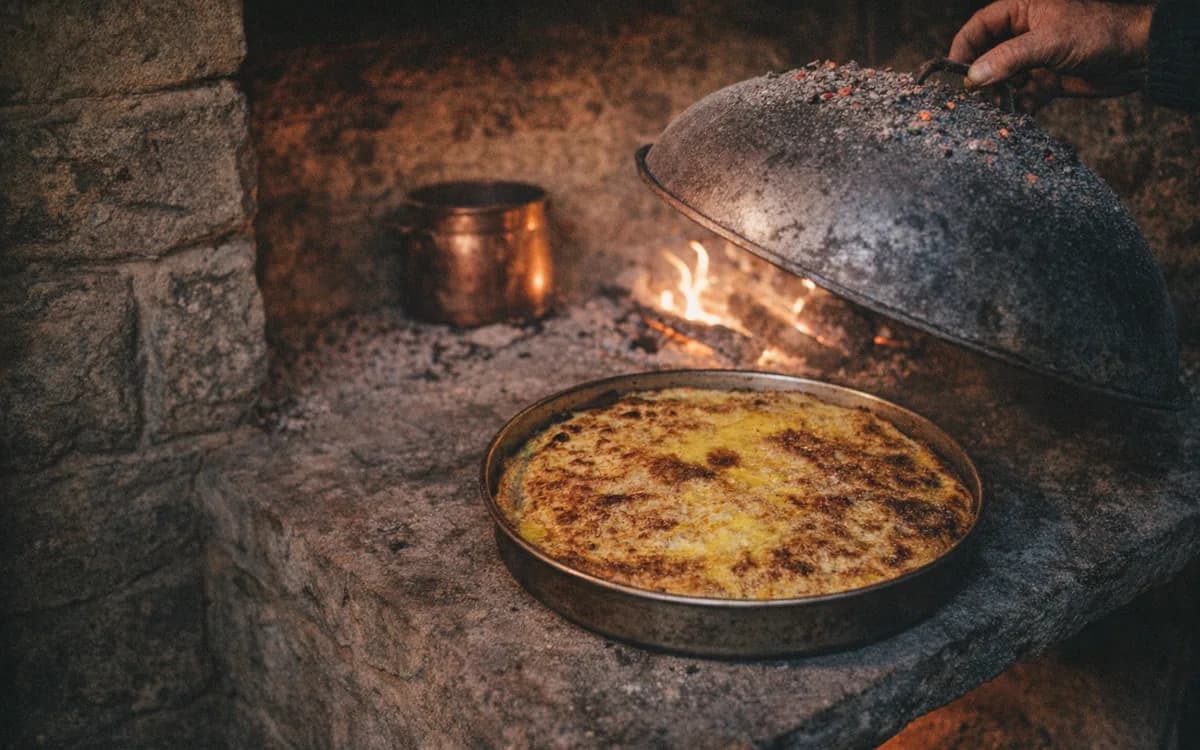
In our guesthouse kitchen, the wood-fired oven gives dishes like bread, byrek, and slow bakes a deeper edge. Your home oven will still make a good tavë dheu if the sauce is thick before baking and the dish is shallow enough to brown.
If you visit us for the Traditional Cooking Class, a 3–4 hour hands-on cooking class for hotel guests, the day’s menu changes with the season and the group. The same principles remain: cook the base patiently, respect the ingredient, and let the oven finish the dish.
Suggested method for liver
For tavë dheu me mëlçi, cut liver into small pieces so every spoonful includes sauce and meat. Sear quickly. If liver spends too long in the pan before baking, it tightens and loses its softness.
Keep the seasoning modest until the cheese is added. Feta can bring plenty of salt on its own.
Suggested method for veal
For veal tavë, brown the meat in batches. Crowding the pan creates steam, and steamed veal will not give the sauce the same depth.
After browning, simmer the veal with stock until it nearly gives under a spoon. The oven should thicken and brown the dish, not do all the tenderizing from the beginning.
Tavë Dheu Me Mëlçi, Veal Tavë, and Fërgesë: What Changes?
Tavë dheu me mëlçi is the version many people associate with Albanian restaurants: liver, cheese, tomato, pepper, and onion baked in a clay dish. It has a deep, mineral flavor and cooks quickly.
Veal tavë is milder. It takes longer, but the result is softer and easier for guests who enjoy a meat casserole without the stronger taste of liver. If you are cooking for a mixed table, veal is often the safer first version.
Fërgesë me mëlçi overlaps with tavë dheu because it may also use liver and a pepper-cheese sauce. The difference is emphasis. Fërgesë can be pan-cooked or baked, and the sauce is the center. Tavë dheu is defined by the individual clay dish, the oven heat, and the browned edges that arrive at the table still hissing.
For a meatless cousin, our guide to fërgesë with peppers, tomatoes, and cheese is the better place to begin. It carries the same Albanian love of peppers and cheese, but it is not the same dish.
Which version should you cook first?
Choose liver if you want the boldest traditional flavor and the shortest cooking time. Choose veal if you want a slower, gentler Albanian veal casserole for guests who avoid offal.
For vegetarians, make a fërgesë-style base without meat. Serve it proudly, but do not call it tavë dheu.
Troubleshooting: Thick Sauce, Tender Meat, No Burnt Cheese
If the sauce is watery, simmer it longer before baking. A small spoon of flour cooked into the vegetables also helps, but it must be stirred well so it does not taste raw.
If liver tastes tough, it was probably cooked too long before the oven or cut too thin. Sear it quickly, keep the pieces bite-sized, and let the clay dish finish the cooking.
If the tavë tastes too salty, the cheese is usually the reason. Add more tomato, use unsalted stock, or serve plain yogurt on the side to soften the salt.
If the cheese burns before the sauce bubbles, move the dish lower in the oven or cover it loosely for the first 10 minutes. Remove the cover at the end so the top can color.
To cook ahead, make the meat and sauce base earlier in the day, then spoon it into clay dishes and bake just before serving. Leftovers should be cooled quickly, refrigerated, and reheated until hot. Liver is best eaten the same day; veal keeps its texture better for a second meal.
How to Serve Tavë Dheu Like an Albanian Guesthouse Dish
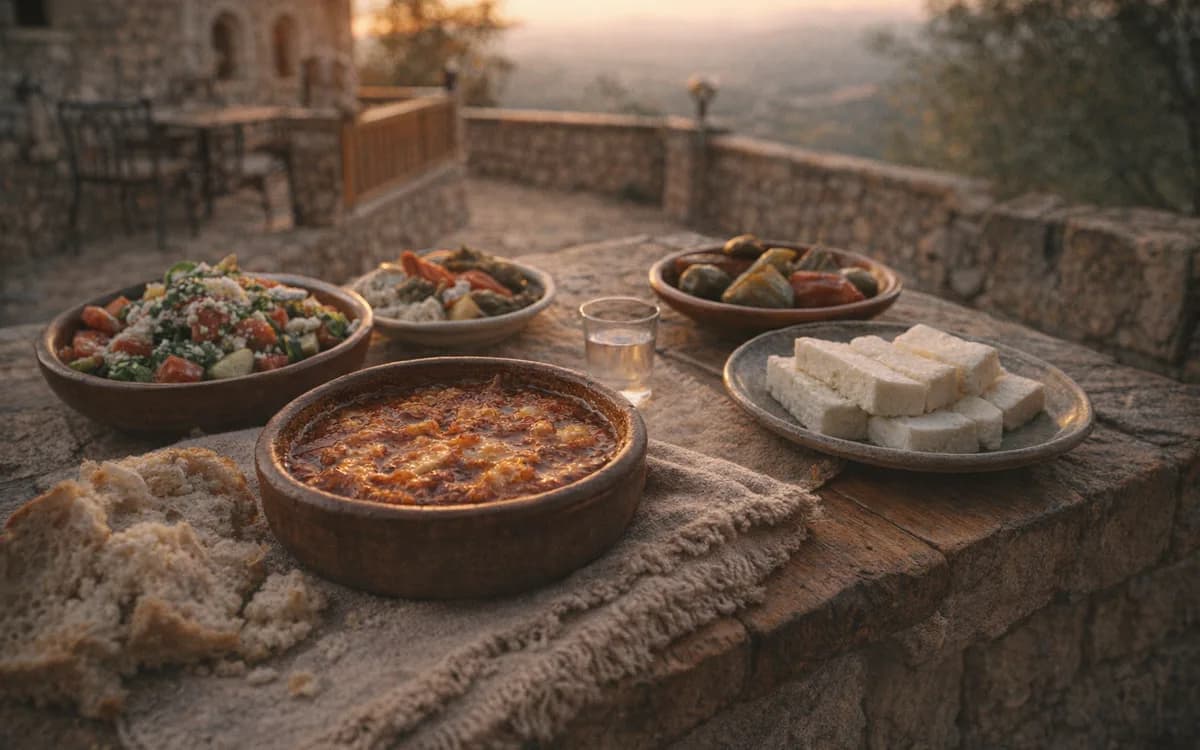
Serve tavë dheu directly in the clay dish, with a warning: the dish stays hot long after it leaves the oven. Put bread on the table before the tavë arrives. The sauce is the point.
A sharp salad cuts the richness well. We like the same logic behind Sallatë fshati, Turshi shpie, and grilled vegetables on our menu: freshness, acidity, and crunch beside something warm and creamy. Boiled potatoes, roasted peppers, or a light cabbage salad also fit.
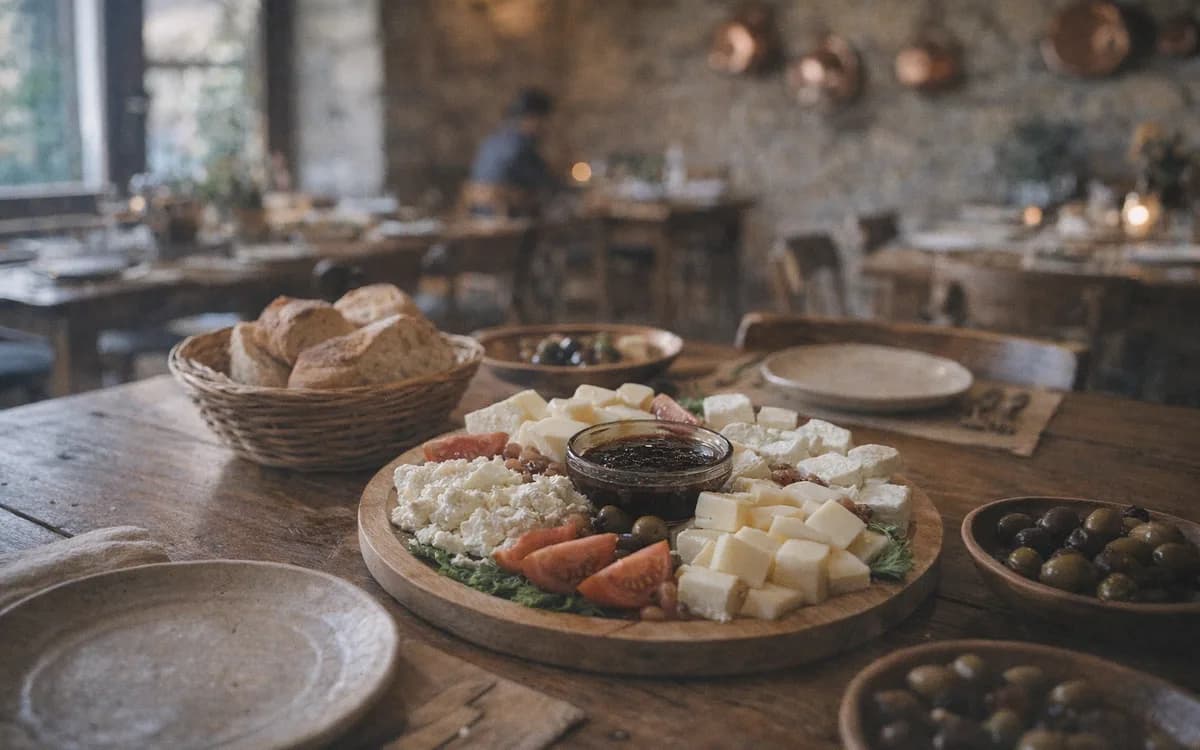
For a fuller Albanian table, add small plates before the clay dish: cheese, olives, pickles, or byrek. Our guide to Albanian meze and raki pairings gives more ideas for building that kind of meal without making the table too heavy.
Tavë dheu belongs especially to autumn and winter. It tastes right after a cold walk, after a long mountain drive, or during dinner service from 18:00–22:00 when the evening settles over our terrace in Klos. Bujtina Çupa is 35–40 minutes from Tirana via Rruga e Arbërit, so this is the kind of dish many guests choose when they want the road to end with something hot.
What to drink with it
A small glass of raki works well with rich liver and cheese. At the bar, we serve Raki Rrushi, Raki Kumbulle, and Raki Thane, alongside house-region wines and red wines that also suit the veal version.
For a non-alcoholic table, serve dhallë or plain yogurt. Both soften salt, heat, and the richness of the baked cheese.
Want to taste tavë dheu where the clay dish reaches the table still bubbling? Come sit down in our kitchen — we will keep the bread close for the sauce.
Frequently asked questions
What is tavë dheu made of?
Tavë dheu is usually made with liver or veal, onions, peppers, tomatoes, garlic, cheese, and butter baked in a small clay dish.
Is tavë dheu the same as fërgesë?
Not quite. They are close cousins and the liver versions overlap in some regions, but fërgesë centers on the pepper, tomato and cheese base, while tavë dheu is defined by the clay-pot bake with liver or veal.
Can tavë dheu be made without liver?
Yes. Veal, beef, or lamb can replace liver, but the meat should be browned and simmered until nearly tender before baking.
Do you need a clay pot for tavë dheu?
A clay pot gives the best heat and browned edges, but a small ceramic baking dish, ramekin, shallow casserole, or cast-iron pan also works.
What do Albanians serve with tavë dheu?
Tavë dheu is usually served with bread, salad, pickled vegetables, and sometimes a small glass of raki.