In this article
- What Albanian Meze Means at a Mountain Table
- The Classic Albanian Appetizers That Belong With Raki
- Best Raki Pairings: How to Match Each Bite
- How to Pace Albanian Raki Food Without Overdoing It
- What Makes Klos Food Different From Coastal Meze
- Planning a Guesthouse Meze Evening in Klos
- Frequently asked questions
What Albanian Meze Means at a Mountain Table
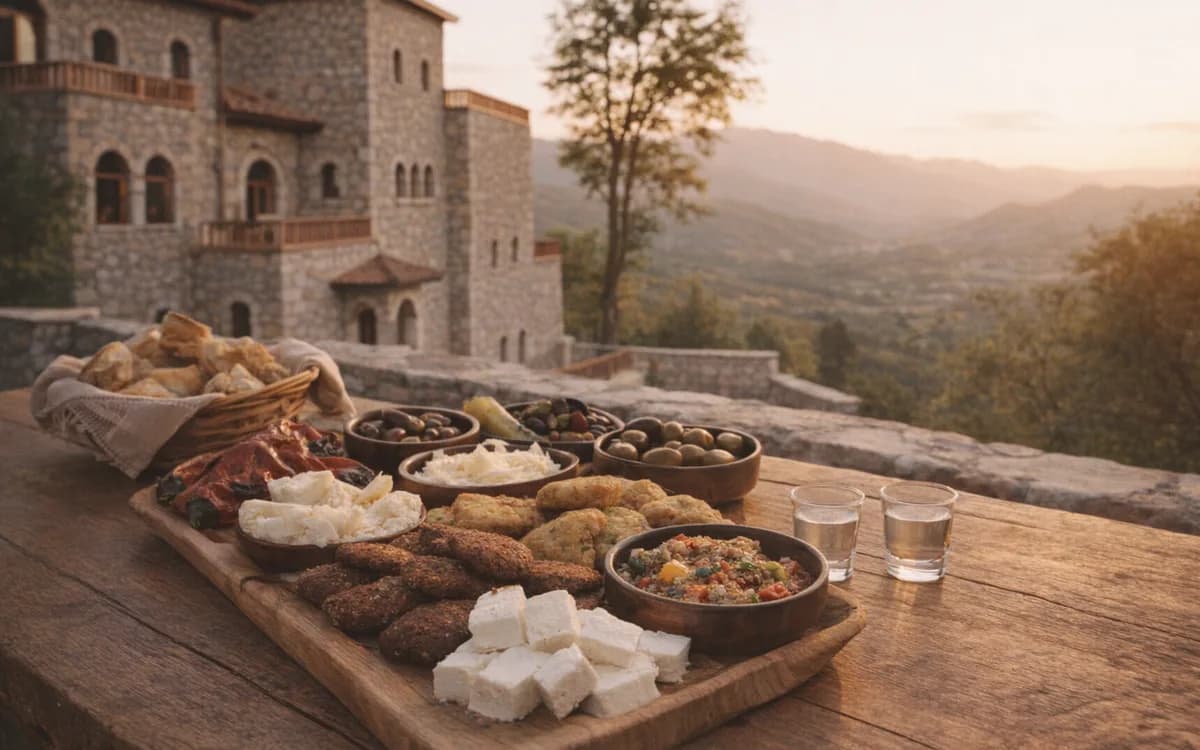
Albanian meze is the way a table begins before anyone speaks about the main meal. In the Klos mountains, it is not a formal course with one correct list of dishes. It is a spread of small plates placed in the middle: cheese, bread, pickles, vegetables, perhaps something grilled, and a small glass of raki that asks you to slow down.
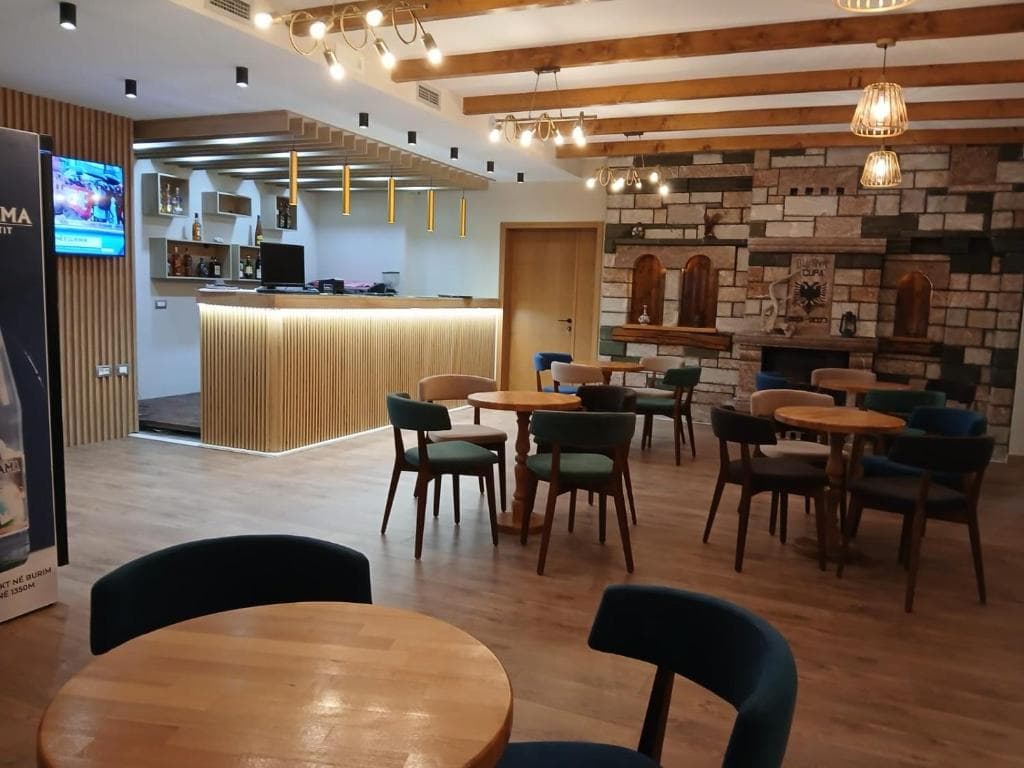
At Bujtina Çupa, in Fshat on Rruga e Arbërit near Klos, we think of meze as a welcome. The table follows the season and the kitchen. In summer, tomatoes and cucumbers come forward. In autumn, roasted peppers, preserved vegetables, and richer warm bites begin to feel right. Some evenings are simple. Some become a long conversation with one more plate arriving from the kitchen.
This is also where mikpritja, Albanian hospitality, shows itself most naturally. Not through ceremony. Through abundance, small refills, and the feeling that nobody is watching the clock.
Meze is shared, not plated individually
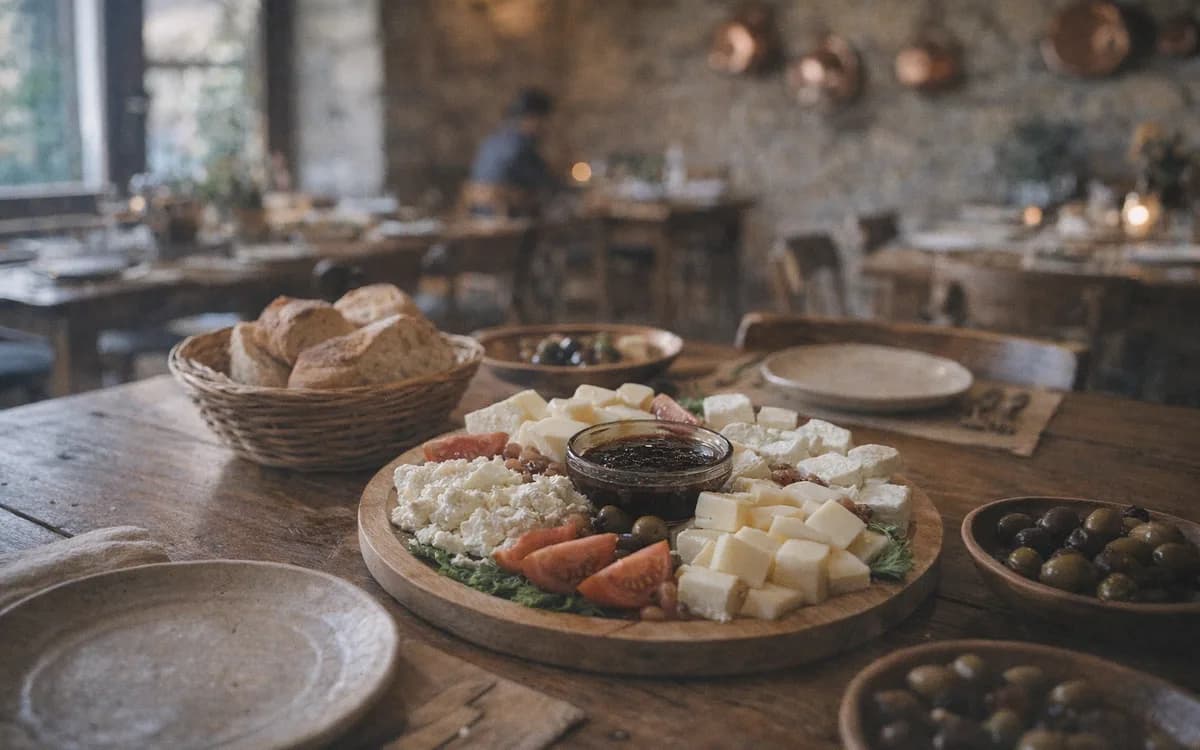
A mountain meze table is shared. The dishes sit in the center, and everyone takes a little at a time. You do not need to build a full plate at once. Take a piece of cheese, tear bread, taste a pickle, return to the conversation, then reach again when the next sip of raki warms the mouth.
That rhythm matters. Meze leaves space for the rest of the evening, especially if dinner follows during our 18:00 – 22:00 service.
The Classic Albanian Appetizers That Belong With Raki
The best Albanian appetizers with raki are usually salty, tangy, creamy, smoky, or warm. They do not fight the drink. They soften it, refresh the mouth, and keep the first glass from feeling too sharp.
In a rural guesthouse setting, the table often begins with dairy and bread. Cheese is central because salt and fat make raki feel rounder. A little acid from pickles keeps the palate awake. Grilled vegetables or small meat bites bring smoke and warmth later, when the first cold plates have already opened the appetite.
At our restaurant, the exact spread changes with the season and what the kitchen is preparing, but our menu gives good examples of the flavors that belong on this kind of table: Djathë dhie for goat cheese, Djathë dele for sheep cheese, Gjizë fshati with butter and eggs, Kaçkavall me flakë në furrë, Turshi shpie, Perime zgare, and Qofte shtëpie.
See the dishes we serve in our kitchen.
Cheese, gjizë, and warm bread
White cheese, goat cheese, sheep cheese, and fresh curd are the quiet anchors of meze. Gjizë is soft and milky, good with warm bread because it spreads into the crumb rather than sitting apart from it. Kaçkavall, when warmed or baked, brings a deeper salty flavor and a little chew.
Bread is not filler at this table. It carries cheese, catches oil from vegetables, softens a sip of raki, and gives your hands something to do while the evening opens. When bread comes from a wood-fired oven, as it does in our kitchen for breads and pies, it brings its own flavor: warm crust, smoke, and the kind of smell that makes people reach before the plate lands.
Pickles, olives, and sharp vegetables
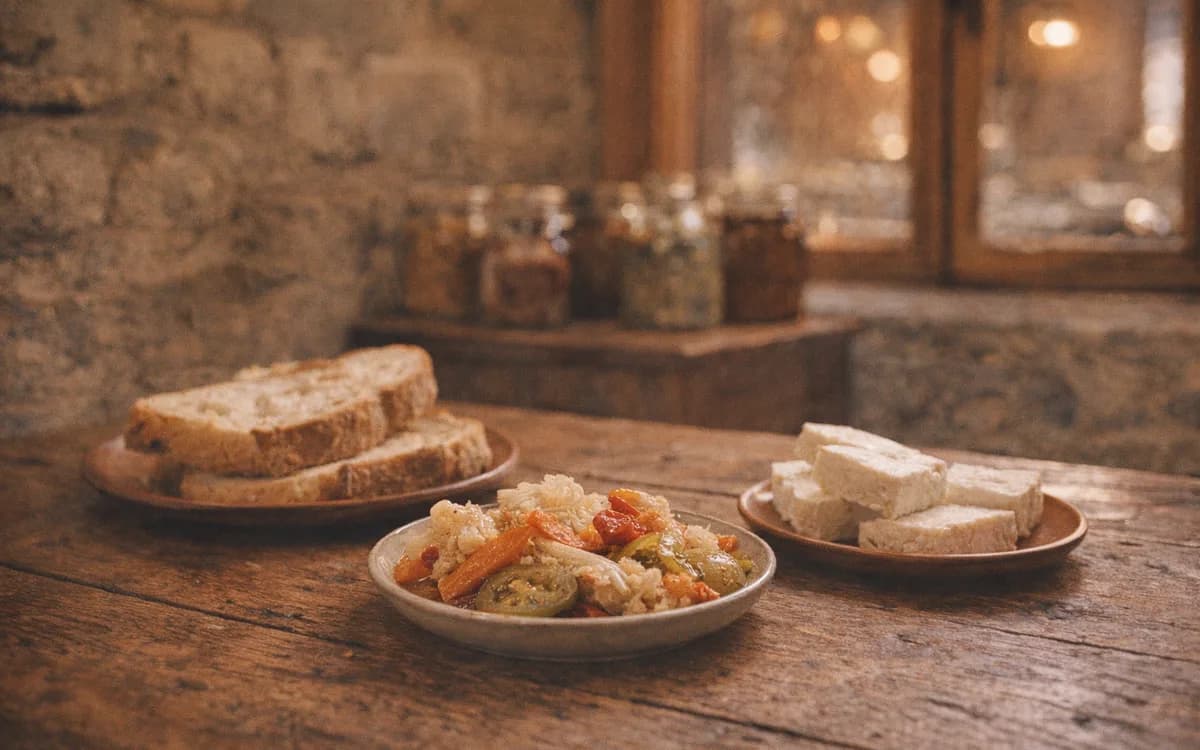
Pickles are small, but they do heavy work. A bite of cucumber, cabbage, pepper, or another preserved vegetable cuts through cheese and clears the mouth after raki. Olives do something similar, with salt instead of sharpness.
At our table, Turshi shpie, homemade pickles, are the kind of plate guests return to without noticing. One bite after cheese. One bite after raki. One bite before something grilled. This is how the spread stays lively.
Grilled bites and seasonal plates
Grilled vegetables, roasted peppers, mushrooms when available, and small meat bites bring warmth after the cold meze has done its job. Perime zgare, grilled vegetables, fit especially well in summer and autumn, when peppers, eggplant, and tomatoes have enough flavor to stand on their own.
For guests who want something heartier, Qofte shtëpie gives the table a richer note. If the evening is moving toward a full dinner, we may suggest saving room for traditional dishes such as Tavë dheu or Pule fshati me jufka, village chicken with jufka noodles.
Best Raki Pairings: How to Match Each Bite
Good raki pairings do not need to be complicated. Raki is strong, clear, and direct, so the food should give it structure. Salt, fat, acid, smoke, and bread each help in a different way.
At Bujtina Çupa, the bar serves Raki Rrushi, grape raki, Raki Kumbulle, plum raki, and Raki Thane, cornelian cherry raki made from the small wild thana berries. The raki distillery on our property is also part of our Vineyard & Garden Tour, where guests can see how closely this drink belongs to the land around the guesthouse.
You can see what we pour at the bar.
Raki is sipped, not thrown back like a dare. A small glass can last a long time when there is food on the table. Take one sip, then a bite. Let the heat settle. Talk. Drink water. Then return to the plate.
Salty cheese with the first glass
Start with cheese. Salt wakes the appetite and makes the first sip feel less fiery. Goat cheese or sheep cheese works especially well because it has enough character to stand beside raki without becoming heavy.
Fresh gjizë is gentler. It suits guests who want to begin softly, especially with warm bread. Sweet foods are better saved for later; at the start, they can make raki feel sharper.
Pickles when the raki is strong
When the pour feels strong, reach for pickles. Acid is the cleanest answer to raki heat. A small bite of Turshi shpie between sips freshens the mouth and keeps the flavors from becoming tiring.
This is one reason pickles stay on the table instead of being cleared too early. They are not decoration. They are part of the pace.
Grilled food when the evening slows down
Grilled bites belong a little later. Smoke and fat need time, and they taste best after the cold plates have already made you hungry. A piece of grilled pepper, a forkful of warm vegetables, or a small qofte can carry the evening from first glass into dinner.
If you are ordering a larger meal after meze, keep these bites small. The pleasure is in tasting many things, not finishing everything quickly.
How to Pace Albanian Raki Food Without Overdoing It
Albanian raki food works best when you treat the drink with respect. Raki is generous, but it is also strong. The right pace is simple: small sips, steady food, water nearby, and no hurry to empty the glass.
A host may offer another pour. You can accept, or you can decline warmly. A smile and a hand over the glass are understood in many Albanian homes and guesthouses. Hospitality does not mean pressure; the point is to enjoy the table together.
A simple rhythm for visitors
Begin with a sip of raki. Follow with cheese or bread. Move to pickles and vegetables when you want freshness. Save grilled bites for the moment when conversation has settled and the evening feels slower.
Drink water between pours. Leave room if dinner is coming. At Bujtina Çupa, lunch is served from 12:00 – 16:00 and dinner from 18:00 – 22:00, so meze can be part of a midday table or the beginning of a long mountain evening.
Do not feel you must finish every dish as soon as it arrives. A living table has plates that stay, hands that return, and small tastes that make sense only after the next sip.
What Makes Klos Food Different From Coastal Meze
Klos food belongs to the mountains, and that shapes the meze table. We do not say it is better than coastal food. It is different because the weather, farms, and old habits are different.
On the coast, meze often leans toward seafood, lighter olive-oil plates, and a drinking rhythm shaped by warm sea air. In Klos and the Mat Valley, dairy, bread, preserved vegetables, grilled meat, and heartier seasonal produce have a stronger place. The evenings can cool quickly, even after a hot day, so warm bread or grilled vegetables feel natural beside the glass.
Rruga e Arbërit has also changed how travelers reach our valley. From Tirana, the drive to our guesthouse is now about 35–40 minutes via this route, helped by the Murriz Tunnel, which opened to traffic in March 2025. That means guests can taste mountain food without planning a long transfer deep into northern Albania.
Season decides the plate
Summer gives the meze table brightness: tomatoes, cucumbers, peppers, herbs, and cool dairy plates. Autumn brings roasted peppers, jars of preserved vegetables, mushrooms when the season allows, and richer dishes from the oven or grill.
This is why we like guests to ask what is good that day. The best answer is often not a printed phrase. It is what the kitchen is proud to serve that week.
Planning a Guesthouse Meze Evening in Klos
If Albanian raki food is something you want to experience properly, give it one unhurried evening. Do not squeeze it between driving plans. Do not treat it as a quick tasting before leaving for the next town. Meze and raki make the most sense when nobody needs to stand up too soon.
Before you sit down, ask what is seasonal. Ask for a small meze spread if you want to taste several plates instead of choosing one starter. Tell us if you prefer vegetarian food or lighter plates; many meze dishes are naturally vegetarian, from cheese and gjizë to pickles, olives, grilled vegetables, bread, and salads.
Guests staying overnight have the easiest rhythm. Our guesthouse has 9 rooms, including Deluxe Double, Triple, Deluxe Triple, and Family Room options, and every room has a mountain view. After raki, you should not be thinking about mountain roads or who will drive. You should be thinking about one more piece of bread, the last roasted pepper, and whether dinner should be light or generous.
What to ask before you sit down
Ask what came from the garden or local farms that day. Ask whether the kitchen recommends cheese first, grilled vegetables, or something warm from the oven. If you want to continue into dinner, say so early; dishes such as Mish keci në saç need to be ordered ahead.
A good guesthouse meze is flexible. It can be a small opening before Tavë dheu, a vegetarian spread with bread and vegetables, or a longer table that turns into the evening meal.
Why staying overnight changes the meal
When you stay with us, the table can move at its natural speed. You can begin with meze, sip slowly, eat dinner later, and finish in the bar or on the terrace without watching the road.
Direct booking also gives guests 10% off compared with booking through OTAs, with free cancellation and our best price guarantee. That leaves more room in the evening for the part of travel that cannot be rushed: sitting down, tasting what is local, and letting the table do its work.
Frequently asked questions
What is Albanian meze?
Albanian meze is a spread of small shared plates such as cheese, bread, pickles, vegetables, and grilled bites, often served with raki before or alongside a meal.
What food goes best with Albanian raki?
Salty cheese, warm bread, pickled vegetables, olives, grilled peppers, and small meat or mushroom bites pair best because they balance raki’s heat and strong fruit character.
Do Albanians drink raki as a shot?
Raki is usually sipped slowly from a small glass, especially when served with meze. Food, water, and conversation are part of the rhythm.
Is Albanian meze vegetarian-friendly?
Many Albanian meze plates are vegetarian, including cheese, gjizë, bread, olives, pickles, tomatoes, cucumbers, peppers, eggplant, and yogurt-based dishes.
When is the best season for meze in Klos?
Summer and autumn are especially good for meze in Klos because tomatoes, peppers, cucumbers, herbs, roasted vegetables, and preserved foods are at their best.
Ready to taste a Klos meze table slowly, with raki, bread, cheese, and no hurry to leave? Book your stay.