In this article
- What Is Turshi Albania and Why Is It on Winter Tables?
- The Vegetables Albanians Pickle: From Peppers to Lakër Turshi
- How Turshi Is Made: A Practical Turshi Recipe Framework
- How Albanian Pickles Are Served with Beans, Meat, Bread, and Raki
- What Travelers Should Know Before Tasting Turshi in Albania
- Why Winter Preserves Still Matter in Albanian Mountain Homes
- Frequently asked questions
What Is Turshi Albania and Why Is It on Winter Tables?
Turshi Albania is the taste of vegetables saved for colder days: peppers, cabbage, cucumbers, carrots, green tomatoes, and other firm produce preserved in salt brine or vinegar. In Albanian homes, turshi means pickled vegetables, but the word carries more than a recipe. It carries autumn work, clean jars, full cellars, and the promise that the winter table will still have color and crunch.
At our table in Klos, Dibër County, a small plate of pickles is never only decoration. It sits beside warm bread, beans, potatoes, grilled meat, cheese, and sometimes a glass of raki. One sharp bite wakes up the mouth after something rich. One crisp pepper or cabbage leaf makes a simple meal feel complete.
Recipes change from house to house. Some families like a strong vinegar bite. Others prefer a slower, salt-brined sourness. Some jars are full of mixed vegetables, while others are devoted to cabbage or peppers alone. That variety is part of the pleasure.
The taste: sour, salty, crisp
Good turshi should taste bright. Sour, yes. Salty, yes. But not dull, tired, or harsh. The best Albanian pickles keep their snap, so the bite feels fresh even in January.
When travelers first taste turshi in Albania, they sometimes expect sweet supermarket pickles. Our winter pickles are usually different. They are sharper, simpler, and made to sit beside food that needs balance: beans, meat from the grill, oven dishes, corn bread, and village cheese.
The Vegetables Albanians Pickle: From Peppers to Lakër Turshi
The most common pickled vegetables Albania serves in winter are the ones that stay firm and useful after the garden has slowed down. Peppers are loved because they hold their shape and take salt well. Green tomatoes bring a clean, tart bite. Cucumbers stay familiar and crisp. Carrots add sweetness and color. Cauliflower keeps its crunch. Eggplant appears in some homes. Cabbage is one of the great winter anchors.
Lakër turshi means pickled cabbage. It may be kept in large leaves, cut into wedges, or shredded for the plate. Its sour leaves stand up well beside rich or starchy food, which is why it feels so natural with beans, roasted meat, potatoes, and bread.
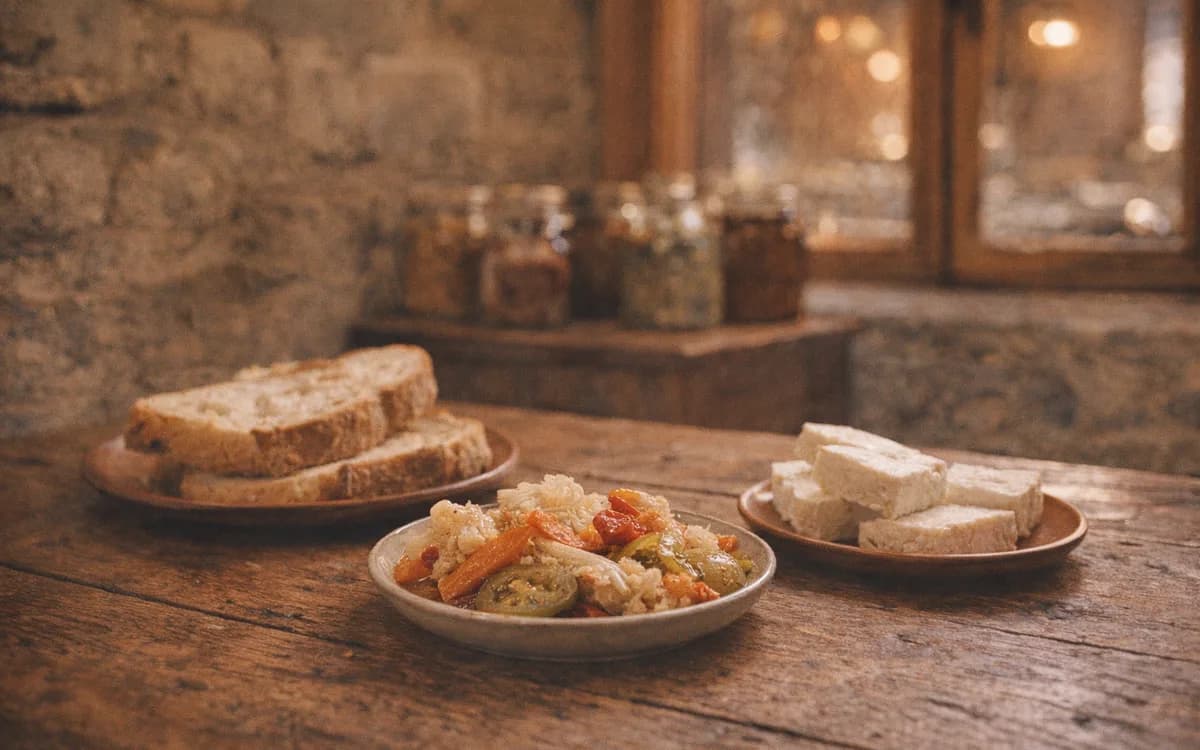
Mixed jars are also common. A family may pack what the late harvest gives: a handful of small peppers, a few green tomatoes, carrot sticks, cauliflower florets, garlic cloves, bay leaves, peppercorns, and sometimes dill or celery leaf. The brine may turn cloudy in a fermented jar. Stems and leaves press against the glass. The colors soften, but the promise remains: there will be something bright to eat when the fields are quiet.
Mixed jars versus single-vegetable pickles
Mixed jars are practical. They make use of small harvests and give the winter table a little of everything. A plate can hold a carrot, a pepper, a cucumber, and a piece of cauliflower, each with its own texture.
Single-vegetable pickles are more focused. A jar of peppers tastes like peppers. A barrel of cabbage becomes lakër turshi with depth and strength. Cucumbers stay clean and direct. Neither way is more correct; the pantry decides.
What lakër turshi adds to a meal
Lakër turshi brings firmness and acidity. With a bean stew, it cuts through the softness. With grilled meat, it refreshes the mouth between bites. With bread, it gives salt and snap. This is why pickled cabbage is not just stored food. It is winter seasoning served by the forkful.
How Turshi Is Made: A Practical Turshi Recipe Framework
A turshi recipe is usually a framework, not a strict national formula. Albanian households adjust by vegetable, weather, storage space, and taste. The basic work is steady: wash the vegetables, trim away damaged parts, cut them if needed, pack them tightly into clean jars or larger containers, cover them with brine or vinegar mixture, and keep them cool while the flavor develops.
For salt-brined turshi, the vegetables sit under salty water. Over time, the flavor becomes sour through fermentation. This style can taste rounder and more alive than a quick pickle, but it asks for patience and care. The vegetables must stay below the liquid. A plate, weight, or clean pressing method helps keep air away from the surface.
For vinegar turshi, vinegar gives the sharpness more quickly. Some cooks prefer it because the acidity is clear from the beginning and the flavor is predictable. It tastes different from fermented turshi, but it belongs at the Albanian table too.
Cleanliness matters. Jars should be washed well. Vegetables should be fully covered by liquid. Storage should be cool. If a jar smells foul, feels slimy, or shows worrying mold, it should not be served. Good turshi smells sour and appetizing, not rotten.
Autumn is the main preserving season because gardens are generous then. Still, a small batch can be made whenever firm vegetables are available. The spirit is the same: save what is good now for a table that will need brightness later.
A simple brine method to understand
A brine method begins with salt and water. The salt pulls flavor from the vegetables and helps create the conditions for sourness. The vegetables should be packed tightly enough that they do not float freely, then covered completely.
The waiting is part of the method. The taste changes day by day: first salty, then lightly sour, then deeper. In a cold mountain kitchen, that change can feel slow, but winter food teaches patience.
A vinegar method for quicker pickles
A vinegar method is more direct. Vinegar, water, salt, and sometimes a little seasoning are heated or mixed, then poured over the prepared vegetables. The pickles become sharp faster, which helps cooks who want a clear result without a long fermentation.
Both styles can be good. What matters most is the final plate: crisp vegetables, clean acidity, and a taste that makes the next bite of food better.
Learning it by hand
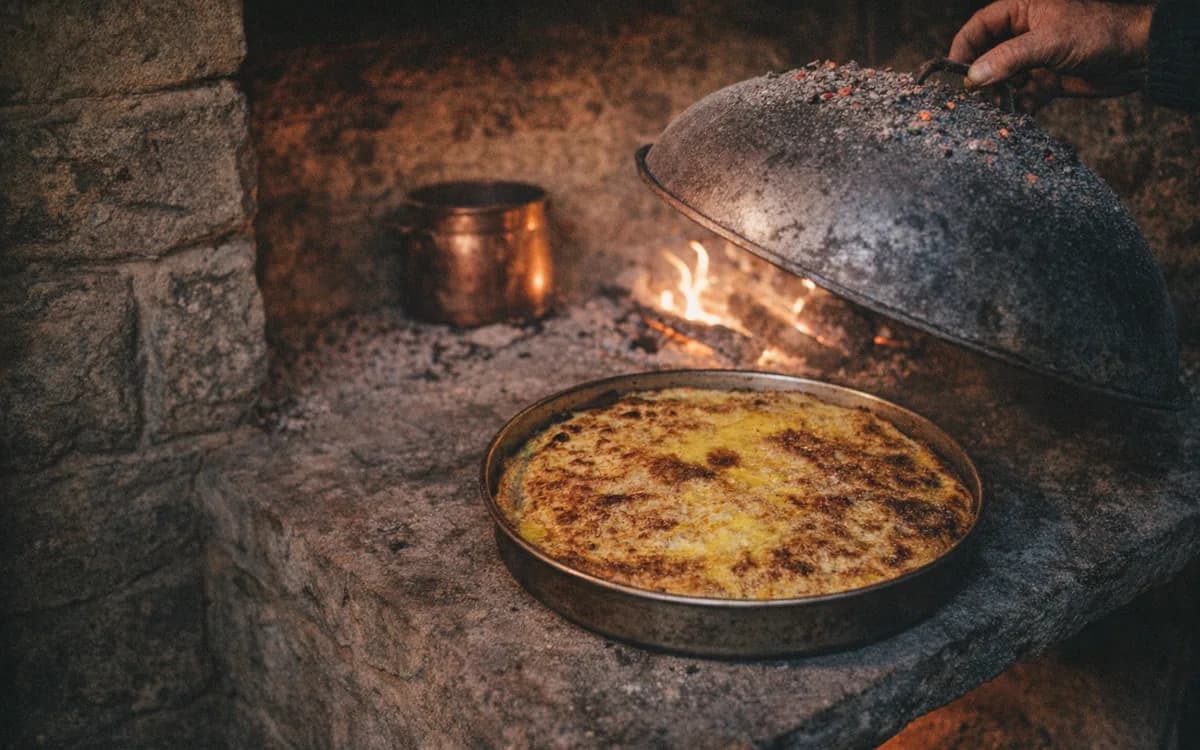
Preserving is easier to understand when you see the vegetables, touch the salt, smell the brine, and taste the change. At Bujtina Çupa, our Traditional Cooking Class lasts 3–4 hours and changes with the season. Guests may cook byrek, traditional meat dishes, or bread baked in our wood-fired oven, depending on the day and ingredients.
When autumn vegetables are ready, ask us what is possible. Some lessons begin with dough and fire. Some begin with the garden.
How Albanian Pickles Are Served with Beans, Meat, Bread, and Raki
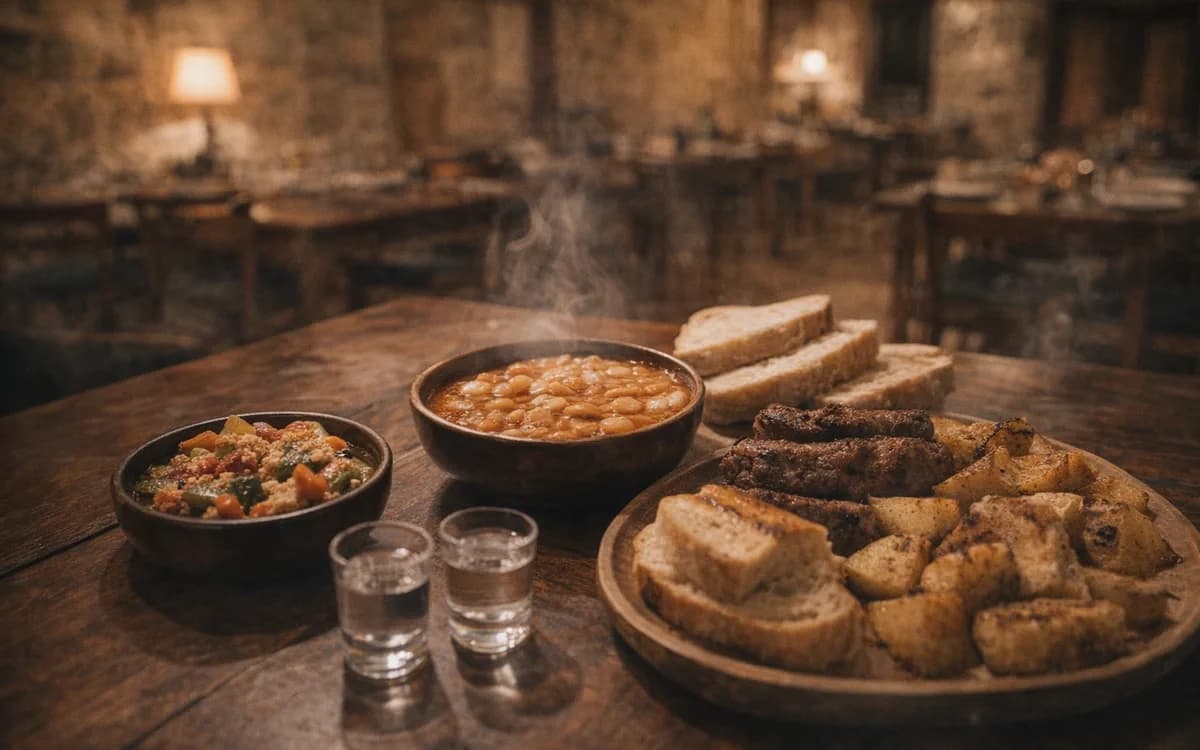
Albanian pickles are eaten with the meal, not saved for after it. Take a small piece, place it beside the main food, and let the sourness do its work. With fasule, the white bean stew many Albanians love in cold weather, turshi brings edge to the soft beans. With grilled meat, it cuts through fat. With potatoes, it adds life. With bread, it becomes a small bite of salt, sourness, and crunch.
At Bujtina Çupa, our menu already carries the foods that make pickles feel at home. Turshi shpie, our homemade pickles, appears among the sides. Byrek Bujtine brings house-style pie from the oven. Tavë dheu gives the table a traditional clay-pot dish. Pule fshati me jufka, village chicken with jufka noodles, is a generous order where a sour side can be exactly what the plate needs.
See our kitchen for the seasonal dishes we serve at Bujtina Çupa.
At a guesthouse table in Klos
Imagine a winter lunch after the morning cold has lifted: bread on the table, steam rising from beans, potatoes still warm, grilled meat resting, and a small dish of turshi within reach. Nobody needs a speech about balance. The food explains itself.
Our restaurant serves breakfast from 07:30 to 09:30, lunch from 12:00 to 16:00, and dinner from 18:00 to 22:00. In the colder months, that evening service is when preserved vegetables feel especially right. The garden is quiet, but the jars still speak for it.
With raki and meze
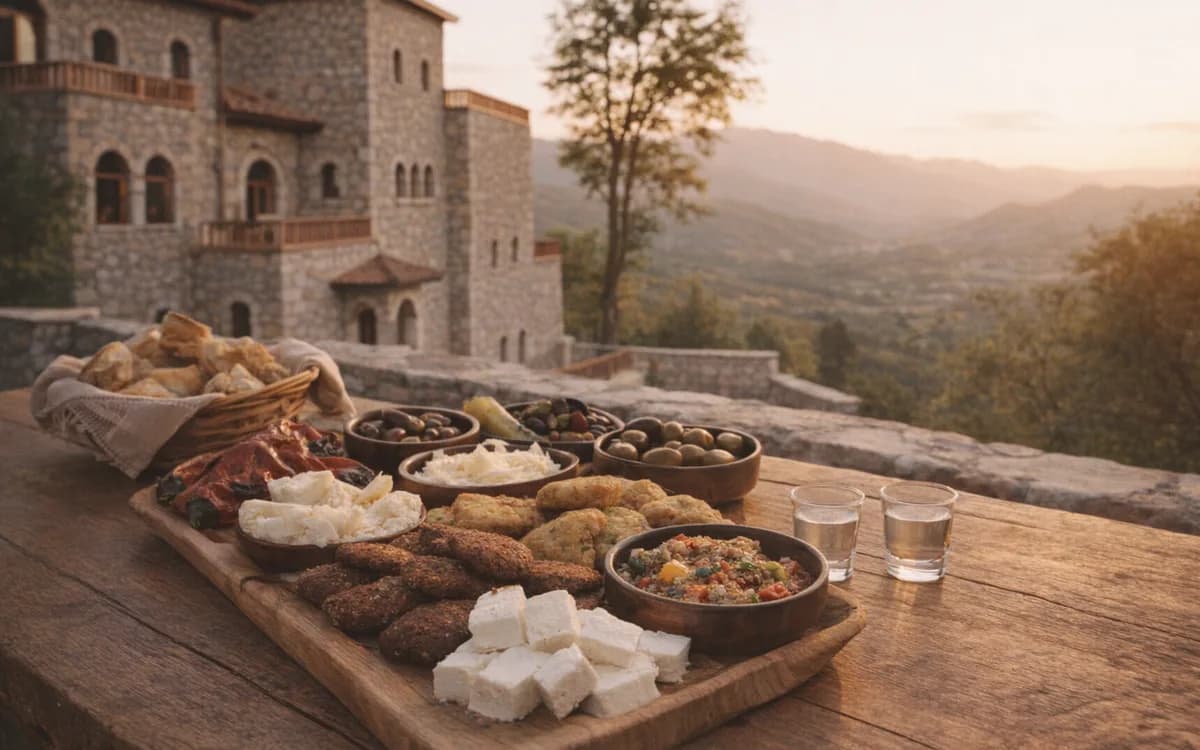
Turshi also appears naturally near meze, cheese, olives, and raki. The pickles are food first, not a garnish for the glass, but their salt and acidity make sense beside a slow drink and a shared plate.
At our bar, guests may find Raki Rrushi, Raki Kumbulle, and Raki Thane, along with local and regional wines. A small sour bite beside raki is an old kind of comfort, especially after a cold walk or a long drive through the valley.
Visit the bar to see the wines, beers, and raki we serve.
What Travelers Should Know Before Tasting Turshi in Albania
If you are tasting turshi for the first time in Albania, begin with a small piece. The plate is usually shared, so take what you will eat and leave the rest for others. Do not expect sweetness. Albanian pickles often lean sour and salty, especially in winter, because they are meant to sit beside hearty food.
Sourness varies. One jar may be mild and crisp. Another may be sharply fermented. A cabbage leaf can be strong enough to make you pause; a carrot may taste gentler. Homemade turshi is often a point of pride, so curiosity is welcome. Ask what vegetable it is, whether it was made at home, and what meal the family likes to serve it with.
If you avoid garlic, chili, vinegar, or certain seasonings, ask before eating. Most turshi is vegetable-based, but each household has its own habits. Travelers with strict dietary needs should also ask about preparation and shared utensils.
Cloudy brine can be normal in fermented pickles. A clean sour smell can also be normal. Sliminess, unpleasant odor, or visible spoilage is not. Trust the host, but also trust your senses.
How to ask about it at the table
Simple questions are enough. You can ask, “Which vegetable is this?” or “Is it homemade?” If you know a little Albanian, “Çfarë turshie është?” means “What kind of turshi is it?”
Then taste. Meals are not interviews. The best questions leave room for the table to continue.
Why Winter Preserves Still Matter in Albanian Mountain Homes
Winter preserves matter because they stretch autumn into the cold months. Before modern shops made everything available all year, families depended on jars, sacks, barrels, and shelves: beans dried for stew, peppers saved for later, cheese kept carefully, jams cooked down, cabbage soured, vegetables sealed under brine.
Those habits remain because they taste good. They are also thrifty, practical, and tied to family memory. A jar of turshi may remind someone of a parent’s kitchen, a village courtyard, a cold morning, or the work of washing and packing vegetables before the first hard frost.
In our valley, winter can make the table feel more important. The day starts quietly. Bread matters. Warm food matters. A pickle plate, opened months after the vegetables were gathered, shows that someone planned for this meal long before the guest arrived.
That is a small act of hospitality. Not loud. Not expensive. Just a clean fork, a shared dish, and a sharp bite beside something warm.
Preserving as hospitality
When a host opens winter preserves, they are offering time as much as food. The work was done earlier: choosing firm vegetables, preparing jars, watching the brine, saving the best flavors for later.
Turshi is small on the table, but it carries a large story. It tells of gardens, cold months, patient hands, and meals that need contrast. If you understand that, you understand why Albanian pickles keep returning to the winter table.
Frequently asked questions
What does turshi mean in Albania?
Turshi means pickled vegetables, usually preserved in salt brine or vinegar. It is served as a sour side dish with winter meals, especially beside beans, meat, bread, potatoes, and cheese.
What is lakër turshi?
Lakër turshi is pickled cabbage. It is one of Albania’s common winter preserves and may be served as leaves, wedges, or shredded pieces with hearty food.
Is Albanian turshi fermented or made with vinegar?
Albanian turshi can be fermented in salty brine or preserved with vinegar. The method depends on the household, the vegetable, the region, and the flavor the cook wants.
When do Albanians make turshi?
Albanians usually make turshi in autumn, when late vegetables are abundant and families prepare food for winter. Small batches can also be made at other times if firm vegetables are available.
How should travelers eat turshi in Albania?
Take a small piece with the main meal and use it as a bright, sour counterpoint. It is especially good with beans, grilled meat, bread, cheese, potatoes, and small raki plates.
Want to taste how Albanian winter flavors come together? Join our cooking class, cook with the season, and sit down with us to share the meal.