In this article
What is Albanian raki?
Albanian raki is a clear fruit brandy, distilled at home or in small village stills from fermented grapes, plums, mulberries or cornelian cherries. It is usually between 40 and 50 percent alcohol, it is served in a small glass at room temperature, and it is the first thing you are offered when you walk into an Albanian home. At Bujtina Çupa the glass that greets you comes from the copper still behind our own kitchen.
Guests searching for it often type "rakia" or expect the anise flavour of Turkish rakı. Albanian raki has neither. It tastes of the fruit it came from, clean and warming, with no sugar or aniseed added. If you know Italian grappa or Greek tsipouro, you are in the right family.
What Albanian raki is made of
The fruit decides everything, and every region has its favourite:
- Raki rrushi (grape raki) is the everyday raki of central and southern Albania. It is made from the pressed skins and juice left after the wine harvest, so it arrives in October and November when the vineyards are picked. Clean, slightly floral, the benchmark against which every other raki is judged.
- Raki kumbulle (plum raki) is what most mountain villages in Dibër and Mat actually distil, because plums grow where vines struggle. Softer and rounder than grape raki, with a faint stone-fruit sweetness on the finish.
- Raki mani (mulberry raki) comes from the white mulberry trees planted along village roads. Richer and slightly earthy, it is the raki old men in the north will tell you is the real one.
- Raki thane (cornelian cherry raki) is made from the small red thana berries picked wild in late summer. It is rarer, more work to make, and priced accordingly; ours is the one bottle on the bar list that costs more than a coffee.
You will also meet quince, fig and even walnut-infused raki, but the four above cover what most families keep in the cellar.
How strong is raki?
Commercial Albanian raki is bottled at 40 to 45 percent. Home-distilled raki, which is most of what you will drink in the Mat valley, commonly runs 45 to 50 percent, and a first run from the still can be stronger before it is cut back with water. Albanians judge strength the old way: shake the bottle and watch how long the beads of bubbles hold on the surface.
That strength is why nobody drinks it fast. A 50 ml glass sipped over an hour of talk is the normal dose, not a shot.
How raki is made in a village still
Raki season starts when the fruit does. The process our neighbours in Fshat follow has not changed in generations:
- Fermentation. Crushed fruit ferments in barrels for two to three weeks. Nothing is added except, for grapes, the skins and stems that carry the wild yeast.
- First distillation. The fermented mash goes into the kazan, a copper pot still heated over a wood fire. The first litres that come off, the head, are set aside; they carry the harsh alcohols nobody should drink.
- Second distillation. Careful makers run the heart of the first pass through the still again. Double-distilled raki is smoother and the reason a good bottle leaves no headache.
- Resting. Most raki is drunk young, within the year. Some families leave a demijohn in a cool cellar for a season to soften it.
The still at Bujtina Çupa is a working one, not a museum piece. It is where our raki rrushi and raki kumbulle are made, and it is a stop on our vineyard and garden tour, which walks the terraced vines, the organic garden and the distillery in about two hours and ends with a tasting.
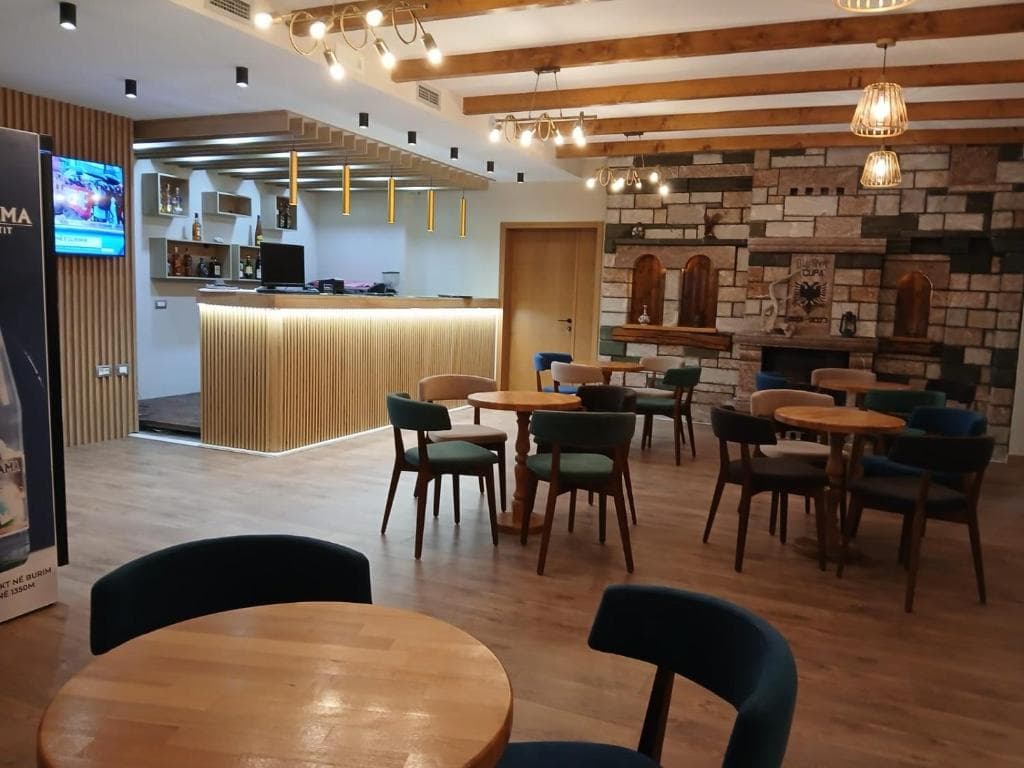
The raki you will find at our bar
Our bar keeps the three rakis the Mat valley drinks, at village prices:
- Raki rrushi, grape, €0.70 a glass
- Raki kumbulle, plum, €0.70 a glass
- Raki thane, cornelian cherry, €2 a glass
Alongside them are wines from our own terraced vineyard and a short list of southern Italian bottles. If you cannot decide, ask for one of each and drink them in that order: grape first, then plum, then thane, whose colour and depth are best appreciated last.
How Albanians drink it
Raki comes with rules, and learning them is half the pleasure.
The toast. Glasses are raised and touched before the first sip. Gëzuar! is the everyday toast; Për shëndetin! (to health) and Për miqësinë! (to friendship) follow as the evening goes on. Look the person in the eye when the glasses meet.
The first sip is slow. Raki is not a shot. Sip, put the glass down, talk. A host will refill an empty glass without asking, so leave a little at the bottom when you have had enough.
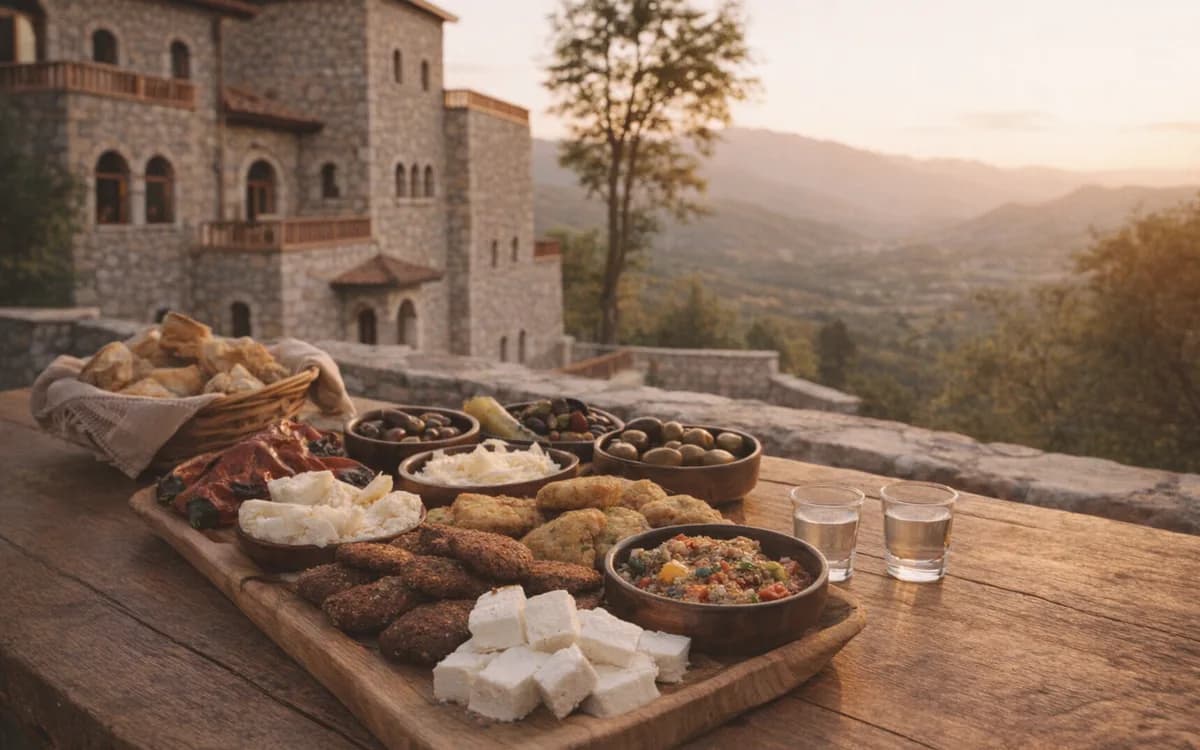
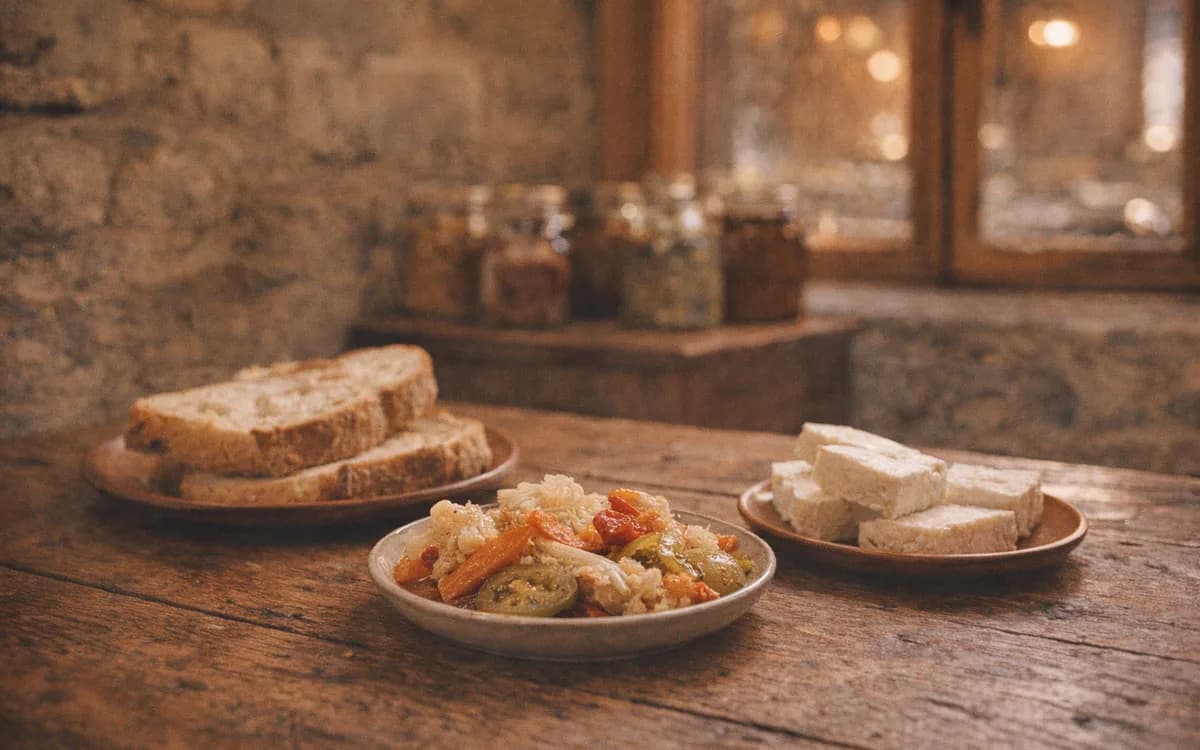
Always with meze. Raki is never poured without something to eat beside it: white cheese, olives, a plate of grilled peppers, warm bread. Our own guide to Albanian meze and raki pairings goes dish by dish through what we put on the table with each type.
Morning raki exists. In the villages a small glass with coffee before work is not unusual, especially in winter. You are not expected to join in, but nobody will be surprised if you do.
Where to taste raki near Klos
The honest answer is: at any table you are invited to. Outside of that, the distillery visit on our vineyard tour is the one place near Klos where you can see the kazan, taste straight from the still and ask the person who made it what fruit went in. In late October, when the grape raki is being run, the whole valley smells of it.
Bottles to take home are easy to arrange; most producers will fill a glass bottle for you, and we can point you to the families we buy from. Check your airline's limits for spirits over 40 percent before you pack it.
Ready to taste it where it is made? Book a stay and we will pour the first glass ourselves.
Frequently asked questions
What is Albanian raki made of?
Most Albanian raki is distilled from grapes (raki rrushi) or plums (raki kumbulle). Mulberry (raki mani) and cornelian cherry (raki thane) are also traditional, and quince or fig raki appear in some regions. Nothing is added: no sugar, no aniseed.
How strong is Albanian raki?
Bottled raki is 40 to 45 percent alcohol. Home-distilled raki, which is most of what is served in villages, is usually 45 to 50 percent and can be stronger from the first run of the still.
Is Albanian raki the same as Turkish rakı or Greek ouzo?
No. Turkish rakı and Greek ouzo are flavoured with anise and turn cloudy with water. Albanian raki is an unflavoured fruit brandy, closer to Italian grappa or Greek tsipouro, and stays clear when water is added.
What does "gëzuar" mean?
Gëzuar is the standard Albanian toast, roughly "be joyful" or "cheers". Glasses are touched and eye contact is kept while saying it.
Can I visit a raki distillery in Albania?
Yes. Bujtina Çupa has a working copper still that is part of its vineyard and garden tour, about 35 to 40 minutes from Tirana on the Rruga e Arbërit. The tour ends with a tasting of the house rakis.