In this article
- What Is Jani me Fasule?
- Why Albanian Bean Stew Belongs to Cold Days
- The Ingredients That Give Fasule Its Village Flavor
- How Fasule Is Served at a Village Table
- A Simple Home-Cook Method for Albanian Bean Stew
- Eating Fasule After a Mountain Day in Klos
- What to Know Before You Order or Cook Fasule
- Frequently asked questions
What Is Jani me Fasule?
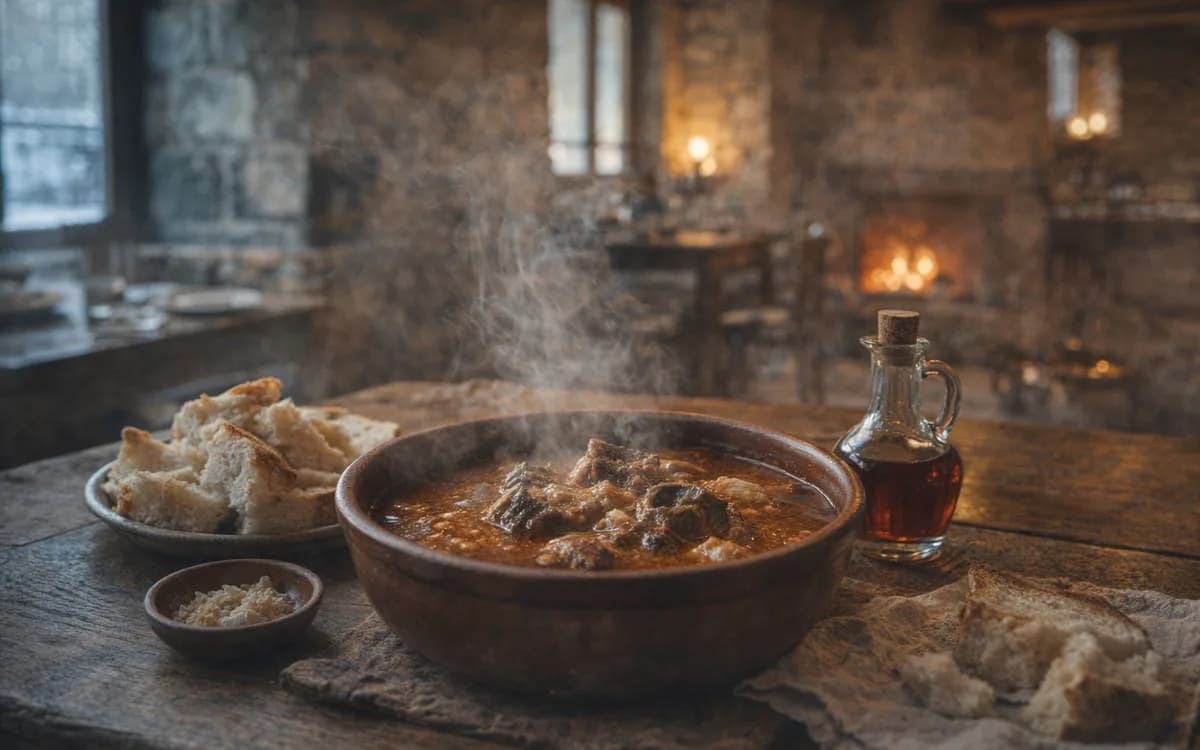
When steam fogs the bowl and bread waits beside it, Jani me fasule is a slow-simmered Albanian bean stew made with white beans, onion, oil, paprika, and a red broth that thickens as it rests. Some families keep it loose, closer to Albanian white bean soup. Others cook it down until the spoon moves through it slowly. Both belong to the same table.
The name is plain and useful. Fasule means beans. In different parts of Albania, you may also hear people say grosh for a similar village bean soup. The words change by region, by family, and sometimes by the person standing at the stove.
This is not a showy dish. Fasule Albania style is everyday food: filling, patient, and warm enough for a wet jacket day. It is the pot that can feed a family, welcome one more guest, and still taste better tomorrow.
A good bowl has soft beans that hold their shape, a broth colored red-orange by paprika and tomato, and enough liquid for bread to gather what stays at the bottom.
In many Albanian homes, the bread is not decoration beside the bowl. It is part of how the stew is eaten.
Why Albanian Bean Stew Belongs to Cold Days
Dried beans suit cold weather because they ask for time, not fuss. They store well through the season, cook into a generous pot, and give the kind of steady comfort people want after rain, wind, or a long walk. That is why Albanian bean stew feels so close to autumn and winter Albanian food.
In mountain homes, fasule often begins before the appetite is sharp. Beans soak overnight. The pot starts early. The kitchen warms slowly. By the time the day darkens, the smell is already there: onion softened in oil, paprika waking in the heat, beans turning creamy without losing themselves.
We do not think of this as poor food or rich food. It is practical food. It is food with memory because many Albanians have eaten it at home, at school, in village kitchens, and at simple traditional restaurants where the daily pot matters more than a printed description.
No one household owns the correct version. One cook may use more tomato, another may lean on paprika and skip most of it. Chili appears in some kitchens and not in others. A winter pot might stay meat-free, or it might take a piece of smoked meat for depth. The best versions have one thing in common: they are not rushed.
The Ingredients That Give Fasule Its Village Flavor
The base of jani me fasule is modest. Dried white beans. Onion. Oil or another cooking fat. Paprika. Tomato or tomato paste. Salt and black pepper. Many cooks add garlic. Some add a bay leaf, parsley, dried mint, carrot, celery, or a little chili. The seasoning should support the beans, not cover them.
That is why the quality of the beans matters. Freshly dried beans cook more evenly and become creamy without breaking apart too soon. Very old beans can stay stubborn for hours, no matter how carefully you treat them. When a pot of fasule disappoints, the problem is often not the cook but the beans.
A clay pot holds heat beautifully, and Albania has many clay-pot dishes in its food memory. At our table in Klos, Dibër County, guests may know Tavë dheu (traditional clay-pot dish) from traditional menus: another dish where heat, vessel, and patience shape the flavor. Fasule can be made in clay, but it does not demand it. A heavy-bottomed pot at home works well if the flame stays gentle.
White beans, not shortcuts
Soaked dried white beans give fasule its traditional body. The broth becomes part of the dish because starch leaves the beans slowly and thickens the liquid. This is what canned beans cannot fully copy.
Canned beans can still make a quick weeknight version. We understand that. But if you want the old village texture, start with dried beans, cover them well with water, and give them the night.
The red base
The color comes from onion cooked until sweet, then paprika and tomato stirred in carefully. Do not burn the paprika. It turns bitter quickly. The heat should be low enough for the onion to soften, the tomato to lose its raw edge, and the oil to take on that warm red color before the beans return to the pot.
How Fasule Is Served at a Village Table
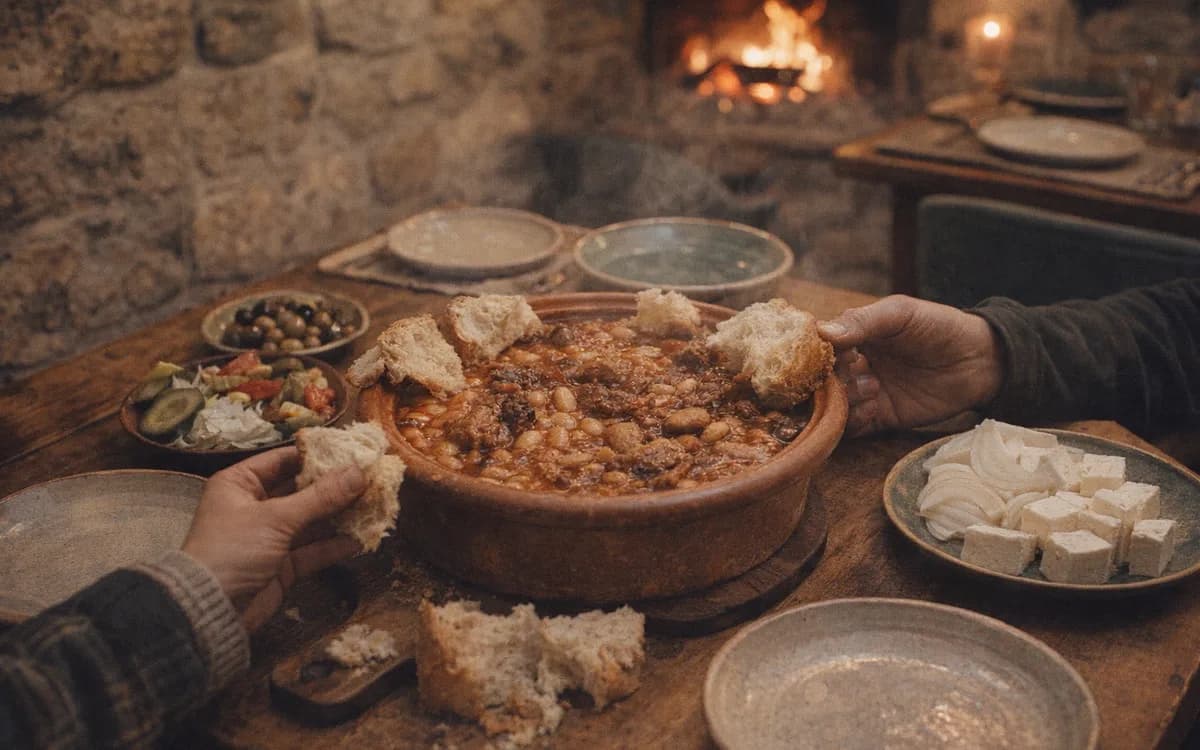
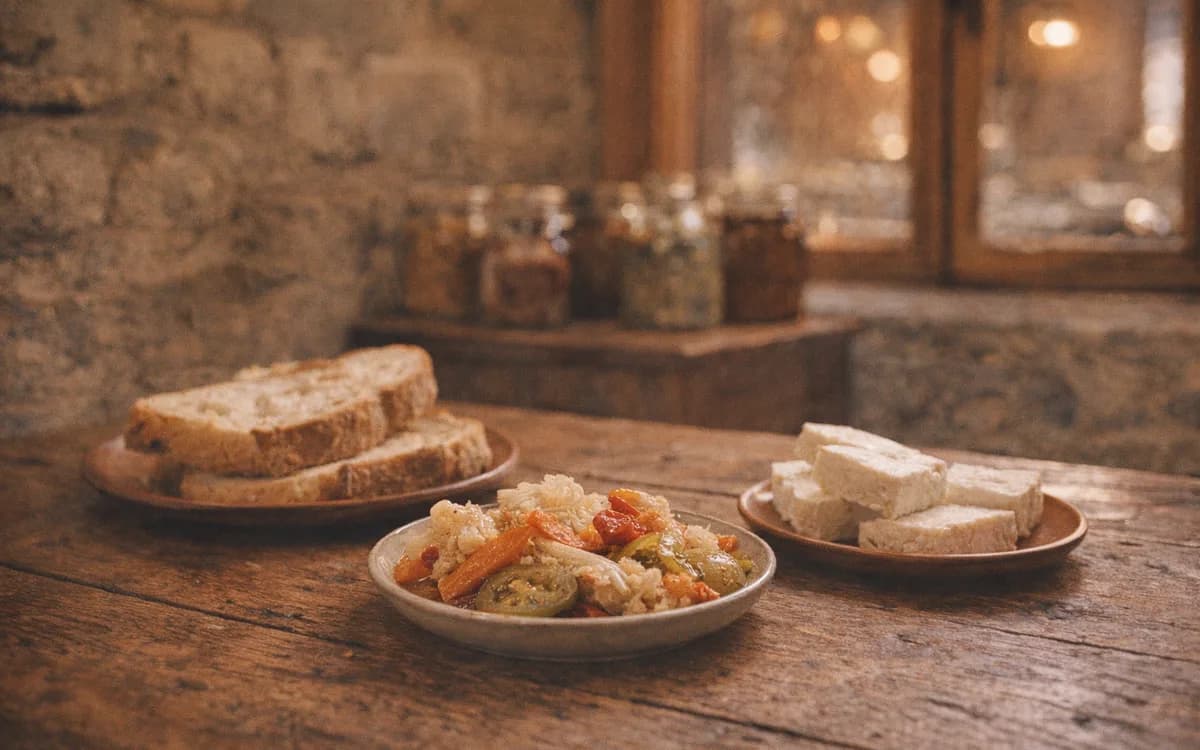
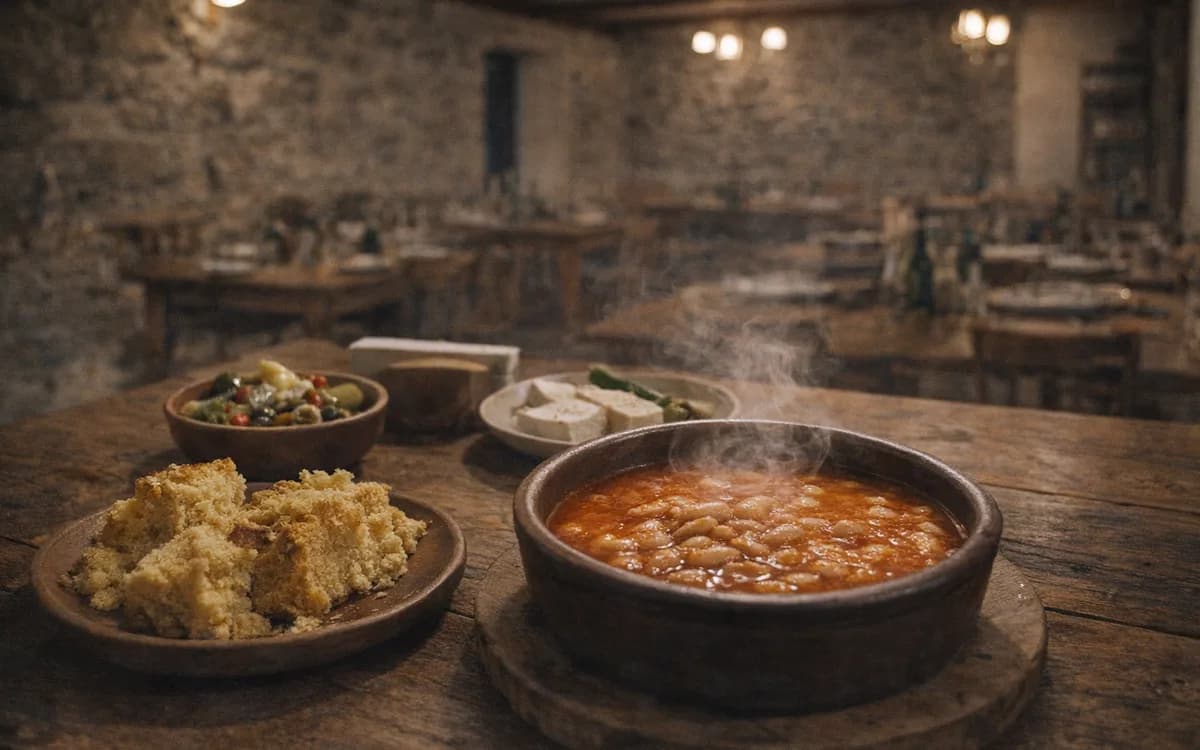
Fasule is rarely alone. Around the bowl you will often find bread, pickled vegetables, white cheese, raw onion, olives, and perhaps chili for those who want more heat. In winter, the bright sharpness of turshi (homemade pickles) cuts through the soft richness of the beans.
On our table, that might mean a bowl of beans set down with Turshi shpie (homemade pickles), a wedge of Byrek Bujtine (house byrek), and Bukë misri me shellire (corn bread with sesame) close enough for everyone to reach. The point is not to crowd the stew. It is to make the meal feel like a village table: warm bread, something sharp, something salty, and enough food for one more chair.
See our kitchen for the traditional dishes we serve through the season.
What to eat with fasule
Bread comes first. Tear it by hand, dip it into the broth, and use it to gather the last beans from the bowl. A spoon does the work, but bread finishes the meal.
Pickles come next. Cabbage, peppers, cucumbers, or mixed winter vegetables bring salt and acidity. White cheese adds sharpness. Raw onion gives bite. Olives sit naturally beside all of it. Some adults may choose water, local wine, or a small glass of village raki, but the stew itself should stay at the center.
What not to overcomplicate
There is no need to plate fasule as if it were trying to be something else. Its beauty is the full bowl, the ladle returning, the bread passed across the table. A little oil shining on top is welcome. A few fresh herbs are fine. But the dish should still look like what it is: beans cooked slowly until they become supper.
A Simple Home-Cook Method for Albanian Bean Stew
You do not need a strict recipe card to understand the method. You need a sequence: soak, simmer, season, rest.
For the quickest picture, soak the beans overnight, then simmer them gently until they are almost tender. In a separate pan, cook onion slowly in oil, wake the paprika for a moment, and add tomato paste until the base turns sweet and red. Combine the beans with that base, loosen with hot water, and let the pot finish slowly. Rest it before serving, then bring bread and pickles to the table.
Ingredients for 4
- 300 g dried white beans
- 1 large onion, chopped
- 3 to 4 tablespoons oil
- 1 tablespoon sweet paprika
- 1 to 2 tablespoons tomato paste
- 1.2 to 1.5 liters water, plus more hot water as needed
- Salt and black pepper
- Optional: 2 garlic cloves, dried mint, or a little chili
For a home pot of jani me fasule for 4 people, start with about 300 g dried white beans, 1 large onion, 3 to 4 tablespoons oil, 1 tablespoon sweet paprika, 1 to 2 tablespoons tomato paste, and about 1.2 to 1.5 liters water, adding more hot water if you like it soupier. Salt near the end. Optional additions are 2 garlic cloves, a pinch of dried mint, or a little chili. After soaking, allow about 1.5 to 2 hours total cooking time, depending on the age of the beans.
Start by rinsing dried white beans and soaking them overnight in plenty of cold water. In the morning, drain them. In our kitchen, we like fresh water for a cleaner broth, though some home cooks keep the soaking water because that is how they learned it. Either way, cover the beans again and bring them to a gentle simmer.
Gentle matters. A hard boil can split the skins before the inside softens. Let the beans cook until they are nearly tender, then prepare the flavor base in another pan. Soften chopped onion in oil. Add garlic if you like. Stir in paprika and tomato or tomato paste. Let this cook slowly until the onion base smells sweet and the red color deepens.
Combine the beans and the red base. Add enough hot water to make the texture you want: more for soup, less for a thick stew. We keep the heat low here, the way we would for a pot that has to feed guests after the cold has come in with them. Add salt after the beans begin to soften, especially if your beans are older. Too much salt or acid too early can slow the softening.
The basic sequence
-
Soak the beans overnight.
-
Simmer them gently until nearly tender.
-
Cook onion, paprika, and tomato into a soft red base.
-
Combine beans and base, then simmer slowly.
-
Salt near the end and let the stew rest before serving.
The target finish is simple: beans soft but not collapsed, broth thickened, flavor rounded. If oil is lightly visible on top, that is normal. If the stew seems thin, let it rest. Beans continue to drink and release starch after the fire is off.
Common mistakes
Old beans are the first problem. If they have sat too long, they may need much more time and still cook unevenly. Buy from a place where dried beans move quickly.
Another mistake is rushing the onion base. Harsh heat gives sharp edges. Slow heat gives sweetness.
Too much tomato too early can also work against you. Tomato brings color and flavor, but acid can keep beans firmer while they cook. Let the beans soften first, then bring the tomato base into the pot.
Avoid hurrying it to the table the moment the flame is off. Fasule tastes fuller after resting, and often stronger the next day. When reheating, add a little water if it has thickened too much.
Eating Fasule After a Mountain Day in Klos
Food travelers sometimes arrive in Albania looking for the famous dishes first. We understand that. But after a cold day outside, the quiet bowl is often the one remembered.
Around Klos and the Mat Valley, a walk can change your appetite. The air is clean, the hills ask more from the legs than they seem to, and by evening the body wants warmth, salt, and something steady. Fasule answers without ceremony.
For guests staying with us, outdoor days can be shaped around the region. Hiking Rruga e Arbërit is one of our full-day experiences, with mountain views, a guided route, and a packed lunch. Since the Murriz Tunnel opened to traffic in March 2025, the Tirana to Klos road has become much easier; still, allow roughly 40 minutes to an hour depending on your start point, traffic, weather, and road conditions.
Plan a day outside with our hiking experiences before returning for evening service.
Back at the guesthouse, dinner runs from 18:00 to 22:00. We do not promise that fasule is simmering every night because our kitchen follows the season and the day. Ask us what is cooking. Some evenings it may be Pule fshati me jufka (village chicken with jufka noodles), some evenings Sofër tradicionale e madhe (large traditional platter), and some cold evenings the simplest pot is exactly what everyone wants.
What to Know Before You Order or Cook Fasule
Fasule changes from place to place. One bowl may be brothy enough to eat like soup. Another may be thick enough to hold the spoon upright for a second. Both can be correct if the beans are tender and the flavor is honest.
Many versions are vegetarian or vegan when cooked with oil and no meat, butter, or animal fat. Travelers should still ask, because some winter pots include smoked meat or another rich addition.
Pronounce it gently: jah-nee meh fah-soo-leh. You do not need perfect Albanian to enjoy it. You only need to know that the dish is humble, filling, and best eaten hot, with bread close by.
If you are cooking at home, make more than you think you need. Tomorrow's bowl may be better than tonight's.
Frequently asked questions
A few questions about the dish come up again and again, especially from guests cooking Albanian beans for the first time.
Is fasule the same as grosh?
They are closely related names for Albanian bean stew or bean soup. Usage changes by region and household, but both usually refer to slow-cooked white beans.
Does Albanian fasule always contain meat?
No. Many Albanian fasule recipes are meat-free, while some families add smoked meat, sausage, or animal fat for a richer winter version.
Do dried beans need to be soaked?
Soaking is strongly recommended. It helps the beans cook more evenly, shortens the simmering time, and gives the stew a better texture.
What is traditionally served with Albanian bean stew?
Fasule is commonly served with bread, turshi or other pickles, raw onion, and sometimes white cheese, olives, chili, wine, or raki depending on the household.
Can fasule be made ahead?
Yes. It often tastes better the next day after the beans and broth rest together. Reheat it gently and add water if it thickens too much.
Cold night in the Mat Valley? Book your stay and ask what is simmering in our kitchen when you arrive.