In this article
- Revani recipe at a glance: what Albanian revani should taste like
- Ingredients for Albanian semolina cake and why each one matters
- How to make revani: the hot cake and cold syrup method
- Texture cues for a moist semolina syrup cake
- How Albanians serve revani with coffee, tea or raki
- Make-ahead, storage and sherbet cake variations
- Frequently asked questions
Revani recipe at a glance: what Albanian revani should taste like
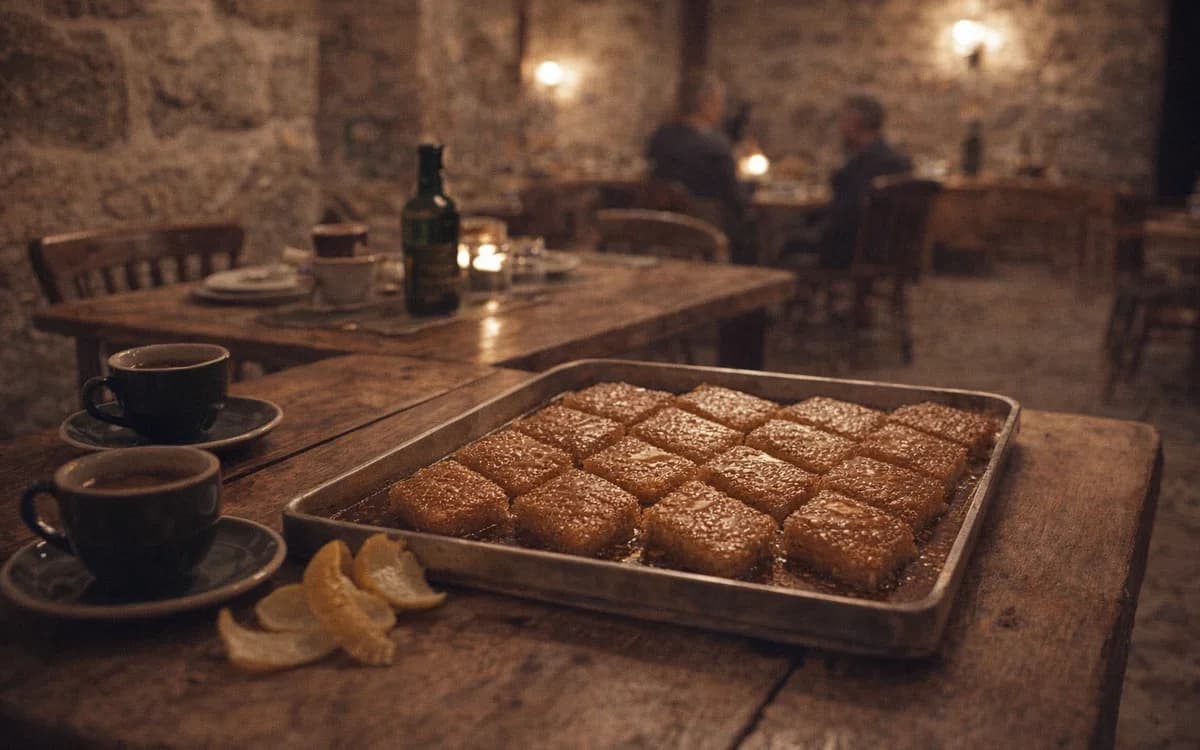
This revani recipe is the kind of Albanian semolina cake we like to cut into small diamonds after a long meal, when coffee is on the table and the syrup has had time to settle into every crumb. Revani is a simple cake made with semolina, eggs, yogurt or milk, and a sugar syrup called sherbet. The rule is simple: bake the cake hot, keep the syrup cold, pour slowly, and give the cake time to drink.
A good tray of revani should have a golden top, a tender crumb, and enough syrup to feel moist without collapsing. It is sweet, so the pieces stay modest. At an Albanian table, especially after lunch or dinner, revani is not usually served as a tall pastry-shop slice. It is cut small, shared from a tray, and eaten slowly with coffee, tea, or water.
Revani vs. ravani cake: same family, small local differences
You may also see it written as ravani cake. Across Albanian, Greek, Turkish, and Balkan kitchens, the spelling and ratios change from house to house. Some versions use more flour, some more semolina, some add coconut or nuts. Our version stays close to an Albanian home table: semolina-forward, lemon-scented, soaked with a clean syrup, and left unfrosted.
Ingredients for Albanian semolina cake and why each one matters
For one 23 x 33 cm pan, enough for about 20 small pieces, gather these ingredients.
For the cake:
- 4 large eggs
- 150 g sugar
- 200 g plain yogurt, or the same amount of milk
- 120 ml neutral oil, or 115 g melted butter
- 1 teaspoon vanilla extract
- Zest of 1 lemon
- 180 g fine or medium semolina
- 120 g all-purpose flour
- 2 teaspoons baking powder
- 1/4 teaspoon salt
- Butter or oil for the pan
For the sherbet syrup:
- 400 g sugar
- 480 ml water
- 1 tablespoon lemon juice
- 2 strips lemon peel
- 1 teaspoon vanilla extract, optional
Semolina is what makes revani different from an ordinary sponge cake. It gives the crumb a gentle grain and helps the cake absorb syrup without turning into paste. Fine semolina makes a smoother cake; medium semolina gives a slightly more traditional bite. Avoid coarse cornmeal or polenta. They look similar in the bag, but they do not bake or absorb syrup in the same way.
Yogurt gives the cake a soft crumb and a light tang. Milk works too, especially if that is what you have, but yogurt is our first choice for tenderness. Oil keeps the cake soft even after chilling. Butter gives a richer flavor, though it firms a little when cold.
At Bujtina Çupa in Fshat, Klos, our kitchen uses a wood-fired oven for breads, pies, and slow dishes like the ones on our Albanian table. For revani at home, a steady regular oven is easier to control. What matters most is not drama from the oven; it is timing, texture, and patience.
Choosing semolina for syrup cake
Use fine or medium wheat semolina. Fine semolina gives tidy, soft slices. Medium semolina leaves the cake a little more textured, which many families prefer. Do not replace all the semolina with flour, or you will lose the character of the cake.
Flavorings that suit revani
Lemon is the cleanest flavor for revani because it balances the sweetness of the syrup. Vanilla is gentle and common. Orange zest, coconut, chopped walnuts, or almonds can all work as household variations, but start with the plain lemon version first so you understand the cake.
How to make revani: the hot cake and cold syrup method
-
Make the syrup first. Put 400 g sugar, 480 ml water, 1 tablespoon lemon juice, and 2 strips lemon peel in a saucepan. Bring to a simmer, stirring until the sugar dissolves. Simmer for 8–10 minutes, until the syrup lightly coats a spoon but is still pourable. Remove the lemon peel, add vanilla if using, and let the syrup cool completely.
-
Prepare the pan. Heat the oven to 180°C. Butter or oil a 23 x 33 cm baking pan. A rectangular pan makes it easy to cut squares or diamonds. If your pan tends to stick, line the bottom with parchment.
-
Beat the eggs and sugar. In a large bowl, beat 4 eggs with 150 g sugar until pale and slightly thick. This step helps the cake rise and keeps the crumb from becoming heavy.
-
Add the wet ingredients. Whisk in 200 g yogurt, 120 ml oil, 1 teaspoon vanilla, and the zest of 1 lemon. If you are using milk instead of yogurt, add it at this stage. If you are using melted butter, let it cool slightly before mixing it in.
-
Combine the dry ingredients. In a separate bowl, whisk together 180 g semolina, 120 g flour, 2 teaspoons baking powder, and 1/4 teaspoon salt. Add the dry mixture to the wet mixture and fold gently until no dry patches remain. Stop as soon as the batter is combined.
-
Bake. Pour the batter into the prepared pan and smooth the top. Bake for 30–35 minutes, until the top is golden, the center is set, and the cake pulls slightly from the edges. A skewer should come out clean or with a few moist crumbs.
-
Cut and soak. While the cake is still hot, cut it into small squares or diamonds. Pour the cold syrup slowly over the hot cake in stages, waiting a minute between pours so the syrup can move into the cuts.
-
Rest. Leave the cake at room temperature for at least 3 hours before serving. For the cleanest pieces, cover it and let it rest overnight.
When guests visit us for a Traditional Cooking Class, the lesson changes with the season and the group; we teach hands-on dishes such as byrek, traditional meat dishes, and bread baked in the wood-fired oven. The same kitchen patience applies here. Revani rewards a cook who does not rush the syrup.
Why cold syrup goes on hot cake
Hot cake plus cold syrup gives the best absorption. The warm crumb opens to the syrup, while the cold syrup slows things down just enough to keep the structure. Hot syrup on hot cake can make the bottom heavy and soggy. Cold syrup on cold cake absorbs too slowly, especially if the surface has not been cut.
Cut before or after adding syrup?
Cut before adding syrup. Deep cuts let the syrup reach the center instead of sitting on the top. If you want neat diamonds, make diagonal cuts one way, then diagonal cuts the other way while the cake is still in the pan.
Texture cues for a moist semolina syrup cake
Revani is forgiving, but syrup cakes tell the truth. If the middle is dry, the cake may have baked too long, received too little syrup, or been soaked without deep cuts. It may also simply need more time. A tray that tastes dry after 30 minutes can taste right after several hours.
If the bottom is soggy, the cake was probably underbaked, the syrup was too hot, or too much syrup was added too quickly. The syrup should be thin enough to pour and thick enough to lightly coat a spoon. It should not be jam-thick.
If the crumb is dense, look at the mixing. Once the flour and semolina go in, fold gently. Overmixing wakes up the gluten in the flour and makes the cake tight. Old baking powder can also flatten the rise, so check the date before you begin.
If syrup sits on top, the cake may have cooled too much, the surface may not have been scored, or the syrup may be too thick. Warm the pan gently for a few minutes in a low oven, poke a few small holes with a skewer, and wait. Do not keep pouring more syrup until the first amount has had time to settle.
If the cake falls apart when you serve it, you cut too soon after soaking. Revani needs time. The semolina swells, the syrup evens out, and the pieces become clean.
How long should revani rest?
Three hours is the minimum. Overnight is better. For a guest table, we like making revani the day before, then cutting along the same lines once more before serving.
How sweet should sherbet syrup be?
The syrup should taste sweet, bright, and clean. Lemon keeps it from feeling flat. If you prefer a lighter cake, reduce the syrup slightly the next time, but do not remove too much or the center will stay dry.
How Albanians serve revani with coffee, tea or raki
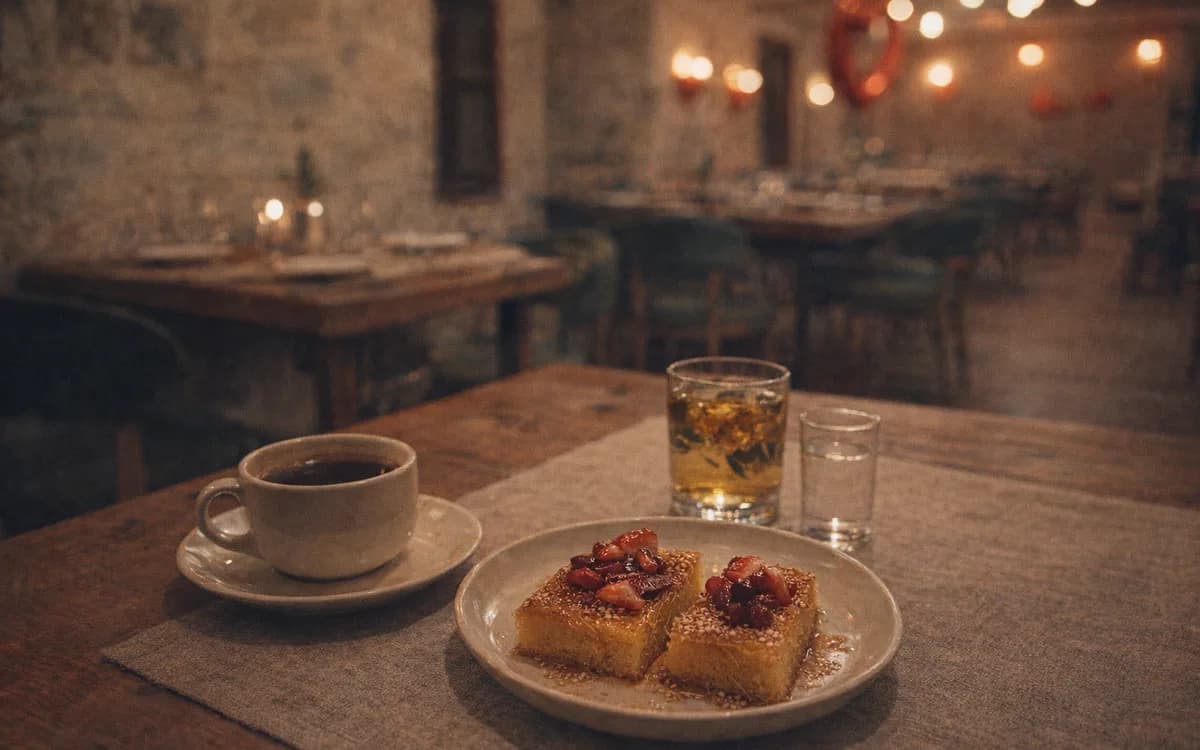
Revani belongs to the after-meal hour. At our guesthouse, dinner service runs from 18:00 to 22:00, and the sweetest part of the evening often comes after the plates are cleared, when the table slows down. A syrup cake like revani is served in small squares or diamonds, not oversized slabs.
Serve it at room temperature for the best texture. In summer, chilled revani is pleasant, but let it sit out for 10–15 minutes before serving so the crumb softens. A little lemon zest on top is enough. Chopped walnuts, coconut, or a spoon of yogurt on the side also fit, as long as the cake stays simple.
Strong coffee is the classic partner. Black tea works well too, and mountain tea gives a lighter finish. If you enjoy Albanian herbal tea, we have written more about çaj mali from the Klos table. For adults, a small glass of raki can sit beside the cake. At our bar we serve Raki Rrushi, Raki Kumbulle, and Raki Thane, each in small measures, the way a sweet ending should be.
Serving size matters
Because revani is a sherbet cake, smaller pieces feel right. Diamonds look generous on a tray and make sharing easy. If you are serving it after a heavy meal such as Pule fshati me jufka or Tavë dheu, cut the pieces even smaller.
Make-ahead, storage and sherbet cake variations
Revani is one of the best Albanian desserts to make ahead. Bake it, soak it, cover it, and let it settle. The next day, the syrup is more even, the semolina is softer, and the pieces lift from the pan with cleaner edges.
If your kitchen is cool, you can keep revani covered at room temperature for a short time. In hot weather, or for longer storage, refrigerate it. Bring it closer to room temperature before serving. The unsyruped cake freezes better than fully soaked revani, but leftovers can be frozen if wrapped well. After thawing, the texture will be softer.
Once you know the base recipe, try small changes. Orange zest can replace lemon. Coconut can be folded into the batter or sprinkled on top. Walnuts suit winter tables. Almonds give a lighter crunch. Some families make a milk-based syrup, while others reduce the sugar for a modern taste. Change one thing at a time, and keep the semolina base and hot-cake, cold-syrup method steady.
If you are exploring Albanian sweets beyond revani, shëndetlie brings honey and walnuts to the guest table, while kabuni is the cinnamon-scented rice dessert many Albanian families remember from celebrations.
Can revani be made the day before?
Yes. This is the best way to serve it neatly. Add the syrup the day before, cover the pan, and let the cake rest. Before serving, run the knife through the cuts again.
Holiday and guest-table variations
For winter gatherings, add chopped walnuts or a little orange zest. For spring and summer, lemon and coconut keep the cake brighter. For a holiday tray, cut smaller pieces so guests can taste revani beside other sweets.
Want a mountain meal before the coffee and cake? Book your stay with us in Klos — direct bookings receive 10% off, and our family will set the table with care.
Frequently asked questions
What is revani made of?
Revani is made with semolina, flour, eggs, sugar, yogurt or milk, oil or butter, baking powder, and a sugar-water syrup scented with lemon or vanilla.
Should syrup be hot or cold for revani?
For Albanian revani, cold syrup is usually poured over hot cake. The temperature contrast helps the crumb absorb the liquid without becoming mushy.
Why is my revani dry in the middle?
Revani turns dry when it is overbaked, not cut before syruping, given too little syrup, or served before the syrup has fully absorbed.
Can revani be made ahead of time?
Yes. Revani is often better the next day because the syrup has time to settle evenly through the semolina crumb.
Is revani the same as ravani cake?
Revani and ravani are closely related names for semolina syrup cake, with small differences in spelling, ratios, and flavorings across Balkan kitchens.