In this article
- What Is Japrak? Albanian Stuffed Vine Leaves at the Summer Table
- Ingredients for an Albanian Japrak Recipe
- How to Make Japrak Step by Step
- Fresh vs Brined Grape Leaves: What Changes in the Recipe
- Troubleshooting Japrak: Tough Leaves, Burst Rolls, and Mushy Rice
- How to Serve Japrak with Yogurt, Bread, and Summer Sides
- Make-Ahead, Storage, and Summer Meal Planning
- Frequently asked questions
What Is Japrak? Albanian Stuffed Vine Leaves at the Summer Table
This japrak recipe belongs to the cool side of an Albanian summer table: tender vine leaves wrapped around rice, herbs, onion, and sometimes minced meat, then served with thick plain yogurt and bread. The best leaves are young enough to fold without fighting back.
Japrak means Albanian stuffed vine leaves. Many travelers also search for dolma japrak, because the dish sits in the wider Balkan, Turkish, and Ottoman family of stuffed leaves and vegetables. In Albania, the name changes from house to house, but the pleasure is the same: small green rolls, cooked gently until the rice swells and the leaf turns soft.
It is true summer Albanian food. Vine leaves are tender, mint and dill are bright, and the finished rolls taste good warm, room temperature, or cool from the refrigerator. Some families add minced lamb or beef. Others keep the filling vegetarian with rice, onion, herbs, lemon, and olive oil.
Below is the way we explain japrak to home cooks: how to choose fresh or brined leaves, how much filling to use, how to roll without tearing, how to simmer gently, and how to serve japrak with yogurt.
Ingredients for an Albanian Japrak Recipe
For 4 to 6 people, start with about 35 to 45 vine leaves. You will also need 1 cup of short-grain or medium-grain rice, 1 finely chopped onion, 3 to 4 tablespoons olive oil or butter, a handful of fresh mint, a handful of dill or parsley, the juice of 1 lemon, salt, black pepper, and 300 to 400 g minced lamb or beef if you want a meat filling.
The rice is the body of the roll. It swells as it cooks, so the filling must look a little modest at first. Onion gives sweetness. Mint, dill, and parsley keep the filling fresh instead of heavy. Lemon balances the slight tannic edge of grape leaves. Kos, plain yogurt, softens the final plate and makes japrak feel right for hot weather.
Some cooks add a spoon of tomato paste or a little grated tomato to the filling. We like that in cooler weather. For summer, a cleaner herb-and-lemon filling lets the vine leaf speak more clearly.
Fresh vine leaves vs jarred leaves
Fresh leaves should be medium-sized, flexible, and unsprayed. Choose leaves that are soft enough to bend around your finger. Avoid large old leaves that feel leathery; they may stay tough no matter how carefully you cook them.
Jarred or brined grape leaves are useful for cooks outside Albania. Rinse them well under cool water, separate them gently, and taste one before salting the filling. Brined leaves can be salty enough to change the whole pot.
Meat or vegetarian filling
Meat gives japrak a richer family-table taste, especially with lamb. Beef works too. Vegetarian japrak is lighter, brighter, and excellent cold with yogurt and lemon.
Keep the rice quantity moderate in both versions. Too much rice makes dense rolls. Too much meat makes the filling firm. Japrak should hold together, but the center should stay tender.
How to Make Japrak Step by Step
The method is simple, but the small details matter. A good grape leaves recipe is less about rushing and more about keeping the leaf, rice, and heat in balance.
Preparing the grape leaves
If using fresh leaves, rinse them well and cut off the stems. Bring a pot of water to a boil, lower the leaves in batches, and blanch them only until they soften and change color. This may take less than a minute for young leaves. Lift them out and cool them in a bowl or on a tray.
Do not over-boil fresh leaves. They tear more easily when exhausted by heat.
If using jarred leaves, rinse them and unfold them patiently. Brined leaves often split along the veins if you pull too quickly. Set aside torn leaves; they are useful for lining the pot.
Preparing the filling
Warm the olive oil or butter in a pan. Add the onion and cook until soft, not brown. Stir in the rice so it shines with the oil. Add herbs, pepper, lemon, and a little salt. If you are using minced meat, mix it in well. Add a splash of water or grated tomato only if the mixture feels dry.
Do not fully cook the rice in the pan. It should begin the cooking, then finish inside the vine leaves. If it is cooked too far at the start, the finished japrak can turn mushy.
Rolling without tearing
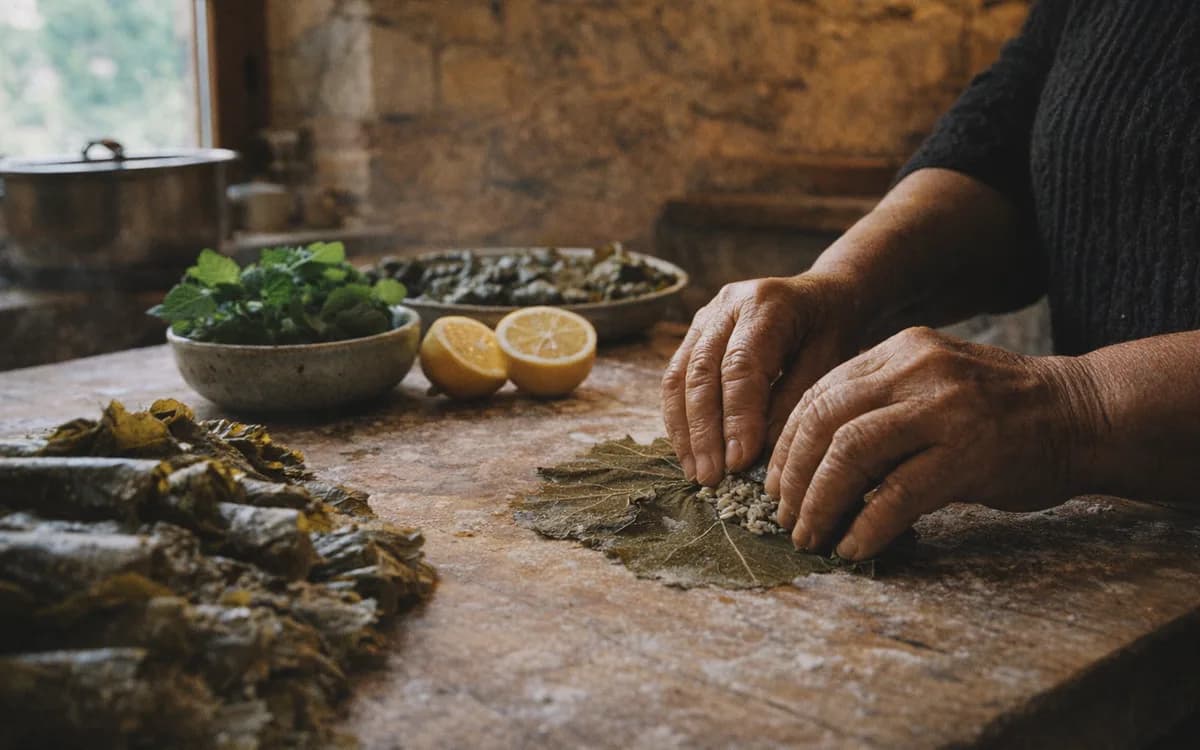
Lay one leaf shiny side down, with the vein side facing up. Place a small spoonful of filling near the stem end. Fold the bottom over the filling, fold the sides inward, then roll toward the tip.
Roll snugly, not tightly. Rice expands. A roll that feels perfect before cooking may burst if it has no room to grow.
Small tears are not a problem. Place the torn side down and pack that roll against the next one. If a leaf is very large, cut it in half along the central vein and make two smaller rolls.
Simmering, not boiling
Line the bottom of a wide pot with torn leaves or stems. Arrange the rolls seam-side down in tight circles. Add water or light stock just to cover them, a little olive oil, and lemon juice if you want a brighter finish. Place a small plate over the rolls to hold them steady.
Bring the liquid to a gentle simmer, then lower the heat. Do not boil hard. A rolling boil shakes the pot, opens the seams, and breaks the rolls.
Cook until the leaves are olive green and tender, the rice is soft at the center, and the pot smells of herbs rather than raw grain. Let the japrak rest for 10 to 15 minutes before serving so the rolls settle.
For hands-on practice, our cooking class can include traditional Albanian techniques in a 3–4 hour kitchen session arranged for guests.
Fresh vs Brined Grape Leaves: What Changes in the Recipe
Fresh grape leaves taste greener, lighter, and slightly tart. They are best in late spring and early summer, when the leaves are still young. If they are picked too late, they can become fibrous. Even long simmering will not make an old, tough leaf taste young again.
Brined leaves taste stronger and saltier. They are convenient, especially if you live far from vines or cook japrak outside the season. In Europe, look for jars in Balkan, Greek, Turkish, or Middle Eastern shops.
The recipe changes in two places. With fresh leaves, blanch briefly and salt the filling normally. With brined leaves, rinse well and reduce salt in the filling and cooking liquid. Taste before you commit. It is easier to add salt later than to rescue a salty pot.
Texture also changes. Young fresh leaves often roll beautifully. Brined leaves are already softened, but they can be fragile around the veins. Handle them like cloth, not paper.
Use only leaves you know are safe. Do not pick from sprayed vines, roadsides, or gardens where you cannot confirm how the plant has been treated.
Troubleshooting Japrak: Tough Leaves, Burst Rolls, and Mushy Rice
Tough leaves usually mean one of three things: the leaves were picked too late, they were not blanched enough, or the rolls have not simmered long enough. If the filling is cooked but the leaf still resists the fork, add a little hot water, cover the pot again, and keep the heat low.
Burst rolls often come from overfilling. Use less than you think. The rice needs space. Rolls also burst when they are rolled too tightly or boiled too hard. Pack the pot closely, use a plate as a weight, and let the simmer stay quiet.
Mushy rice comes from too much liquid or too long a cook. Add only enough water or stock to barely cover the rolls. Near the end, test one roll from the edge of the pot. If the rice is tender, stop cooking and let the pot rest.
Bland japrak needs brightness. Add more mint, dill, parsley, black pepper, onion, or lemon next time. If using brined leaves, adjust salt carefully because the leaf may season the dish more than you expect.
Dry japrak should not be punished with a second hard cook. Spoon over a little warm cooking liquid, olive oil, or yogurt at serving.
How tight should japrak be rolled?
Roll japrak firmly enough to hold its shape, but loose enough for rice to expand. The finished roll should feel compact, not squeezed. If your fingers leave deep marks in the roll, it is probably too tight.
How do you know japrak is done?
Japrak is done when the rice is tender in the center and the leaf cuts easily with a fork. The color should be a deeper olive green, and the filling should feel moist rather than wet. Resting the pot for 10 to 15 minutes helps the rolls hold together on the plate.
How to Serve Japrak with Yogurt, Bread, and Summer Sides
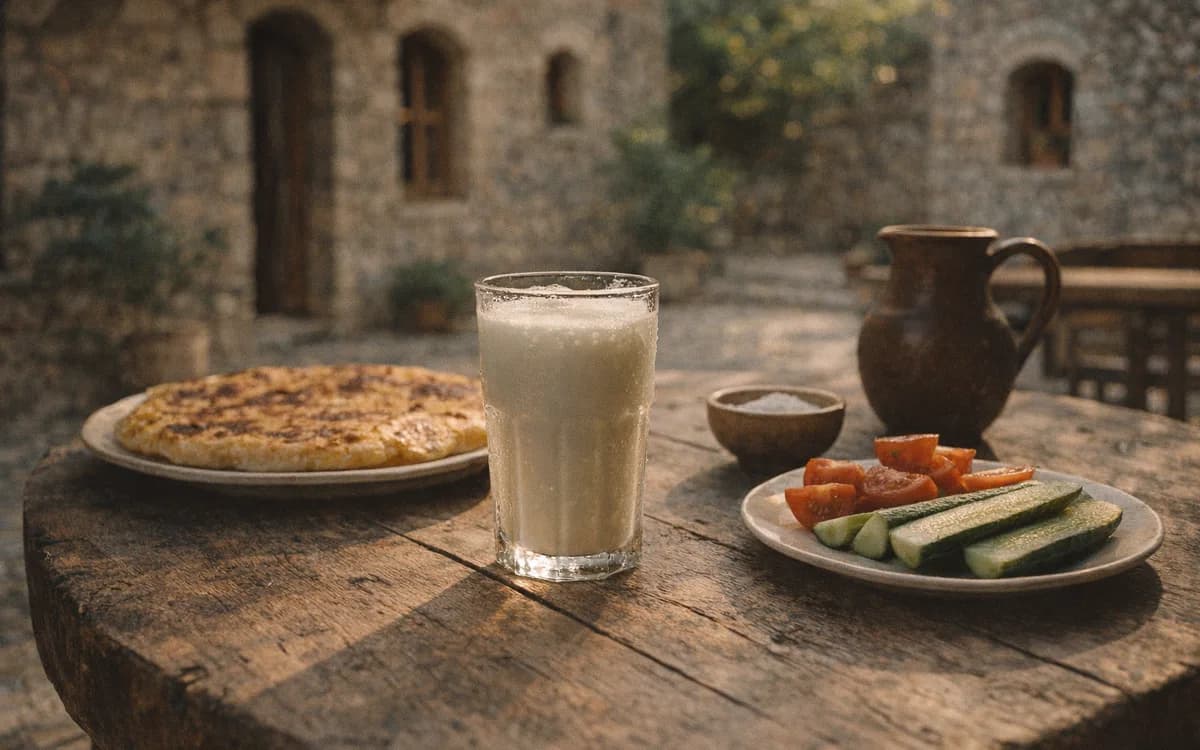
Japrak is rarely alone on an Albanian table. It belongs beside yogurt, bread, salad, cheese, and whatever else the season gives. At home, that may mean sliced tomatoes and cucumbers. At a longer table, it may sit near grilled vegetables, white cheese, olives, or a cold yogurt soup such as tarator.
Japrak with yogurt is simple. Spoon plain yogurt beside the rolls, not necessarily over them. That way the leaf and herb flavor stays clear, and each person can take as much yogurt as they like. A squeeze of lemon at the end makes cold japrak taste brighter.
Warm japrak is lovely straight from the pot, especially when there is meat in the filling. Room-temperature japrak is often the most practical for summer gatherings. Cold japrak is clean and refreshing, especially the vegetarian version with herbs and olive oil.
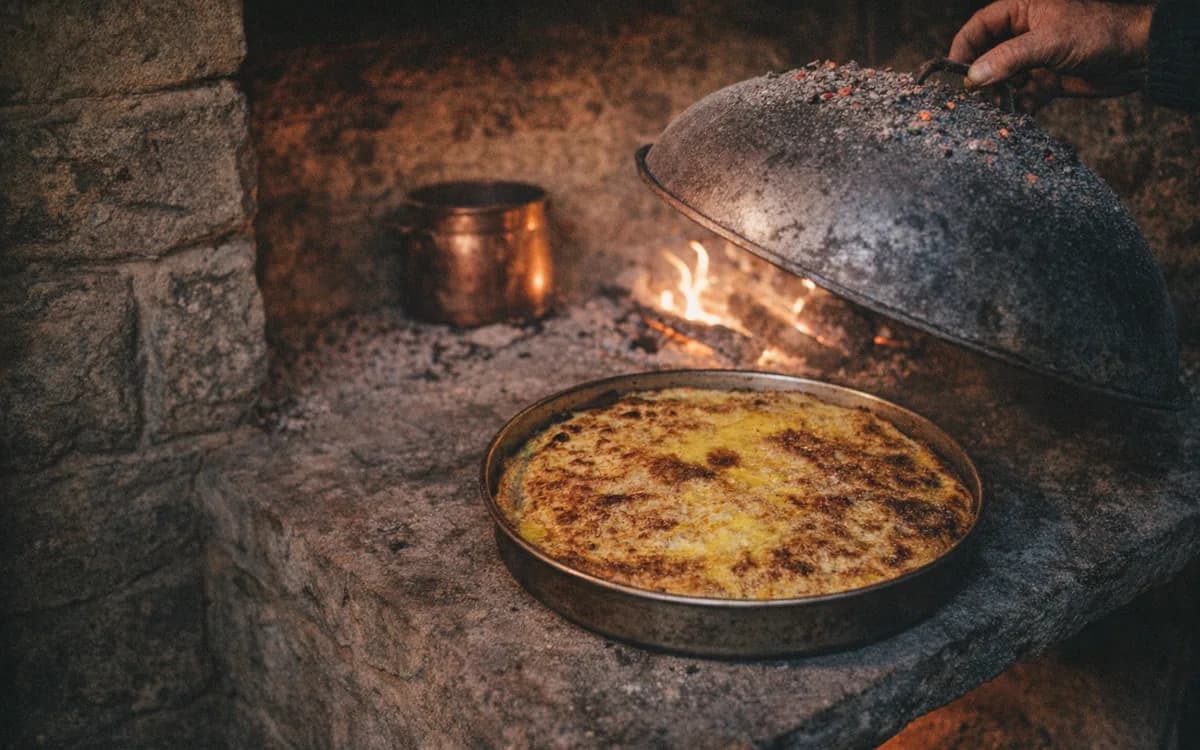
Bread matters too. In our kitchen at Bujtina Çupa, the wood-fired oven is used for breads, pies, and slow dishes, and that kind of bread is exactly what you want near a plate of stuffed vine leaves. It catches yogurt, lemony juices, and the last grains of rice.
You can see the seasonal dishes from our kitchen, including Albanian plates such as Byrek Bujtine, Tavë dheu, and Pule fshati me jufka.
If you want a drink, keep it gentle. Water is enough. A light white wine can work. In some village meals, a small glass of raki appears as part of a long table, but japrak does not need anything strong to make sense.
Here in Fshat, on Rruga e Arbërit in Klos, Dibër County, summer food is often about timing: tender leaves, fresh herbs, and a table that can wait while the pot rests.
Make-Ahead, Storage, and Summer Meal Planning
Japrak is an excellent make-ahead dish. The filling settles, the leaf flavor deepens, and the rolls become easier to serve neatly after resting. For guests, you can roll earlier in the day, simmer before everyone arrives, then let the pot cool gently until the meal.
Store japrak covered in the refrigerator for up to 3 days. Serve it cool, or reheat it slowly over low heat with a splash of water. Avoid aggressive microwaving; the edges dry and the rolls can split.
For a summer meal, make japrak the quiet center of the table. Add yogurt, bread, tomatoes, cucumbers, cheese, and perhaps grilled vegetables. If you are visiting Albania and want to taste the feeling behind dishes like this, come to the mountains while the herbs are still green.
Want to roll japrak with us while the summer herbs are still on the table? Join a cooking class in our kitchen — we will show you the fold, the simmer, and the yogurt on the side.
Frequently asked questions
Can I make japrak with jarred grape leaves?
Yes. Jarred grape leaves work well for japrak, but rinse them thoroughly and salt the filling lightly because the leaves are already brined.
Is japrak the same as dolma?
Japrak is the Albanian name commonly used for stuffed vine leaves. Dolma is the broader regional term for stuffed vegetables or leaves, so dolma japrak usually points to the same family of dishes.
Should Albanian stuffed vine leaves be served hot or cold?
Albanian stuffed vine leaves can be served warm, room temperature, or cool. In summer, they are especially good cool with plain yogurt and lemon.
Why are my grape leaves tough?
Grape leaves turn tough when they are picked too late, blanched too briefly, or simmered too little. Young leaves and low, steady cooking give the best texture.
Can japrak be vegetarian?
Yes. Vegetarian japrak is traditional in many homes and uses rice, onion, herbs, olive oil, lemon, and seasoning without minced meat.