In this article
- What Is Lakror në Saç?
- How Saç Cooking Changes the Crust
- Albanian Lakror Dough, Layers, and Mountain Fillings
- Basic Lakror Recipe Method in a Traditional Kitchen
- Eating Albanian Pie at a Guesthouse Table
- Can You Make Saç-Baked Lakror at Home?
- Where to Taste or Learn Lakror near Klos
- Frequently asked questions
What Is Lakror në Saç?
Lakror në saç is an Albanian pie cooked with heat from below and hot embers above. The pie itself is simple to name and slow to master: thin dough, a savory filling, careful sealing, and a covered bake that turns flour and garden produce into something crisp at the rim, tender inside, and made for sharing.
In many Albanian homes, lakror means a flat, wide pie, usually with a filling spread between thin layers of dough. It may be filled with leeks, greens, onions, pumpkin, or fresh curd cheese. In some regions it is close to byrek; in others, the name points to a local style, a local pan, or the way the pie is served.
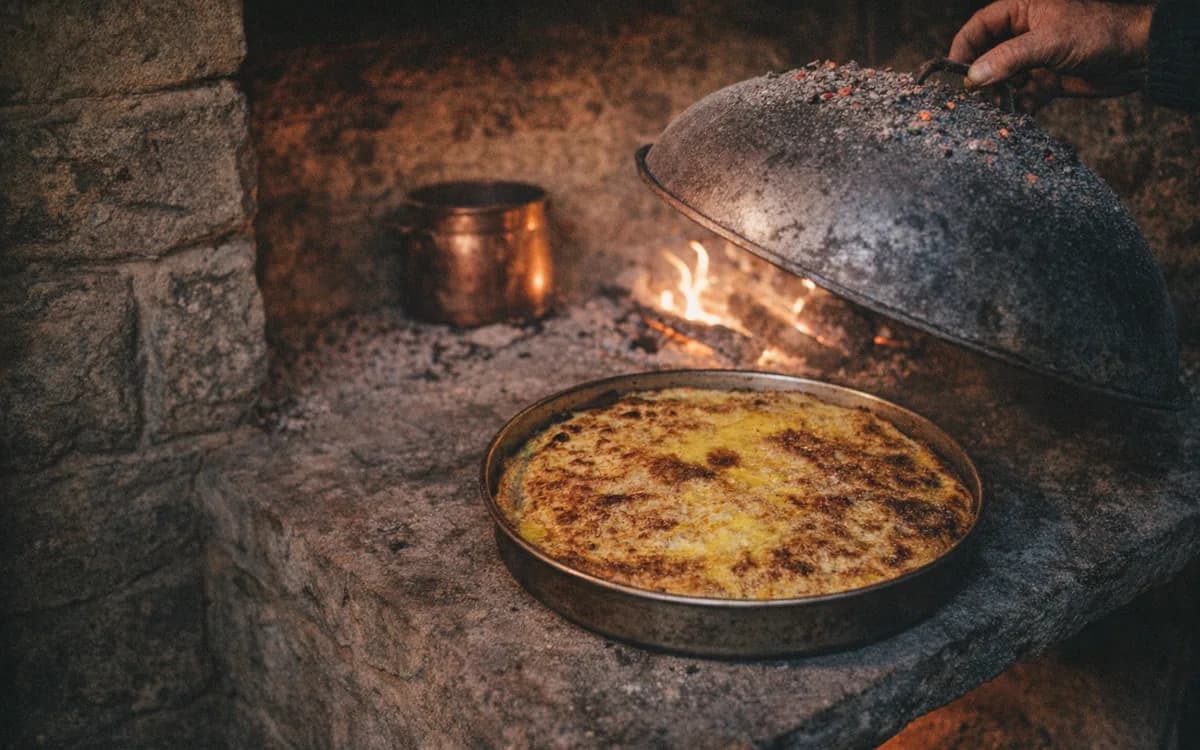
The second word matters just as much. Saç is the domed metal lid used for ember cooking. The pie sits in a shallow tray or pan. The lid goes over it. Embers are arranged on top, while steady heat works from below. This is why the ember-baked pie is both a dish and a method.
Lakror, byrek, and the question guests always ask
Guests often ask whether lakror and byrek are the same. The honest answer is: they are relatives, not twins. Both belong to the family of Albanian savory pies. Byrek is often layered and can be baked in many shapes and ovens. Lakror is usually flatter, wider, and more tied to a household or regional way of cooking. When it is baked under a saç, the fire becomes part of the recipe.
At Bujtina Çupa, our menu names both traditions with care. We serve Byrek Bujtine, our house-style byrek, and Lakror me miell misri, a corn-flour lakror. We keep the names separate because Albanian food is precise in the way families speak about it.
How Saç Cooking Changes the Crust
Saç cooking works because it gives the pie two kinds of steady heat. The base receives warmth from the hearth or hot surface underneath. The domed lid holds embers above the dough. Instead of waiting for a modern oven to surround the pan with one even temperature, the cook builds a small oven around the pie.
The result is different from a tray baked on a rack. The top of lakror can blister in small golden patches. The outer rim dries and crisps first. The layers near the filling stay softer because steam rises from the greens, leeks, pumpkin, or cheese. If the fire has been managed well, the base is firm enough to lift without collapsing, but not so hard that it shatters.
This is practical rural cooking, not decoration. A direct flame would scorch the dough before the filling set. Embers give slower radiant heat. The cook can move them, thin them, or gather them back over one side of the lid. Timing is not only a number of minutes. It is sight, smell, and touch: the color of the edge, the scent of toasted flour, the sound when the pan is turned.
What a saç looks like
A saç is usually a domed metal cover with enough depth to hold heat above the food. Under it, a shallow pan carries the pie. Over it, embers are spread in a careful layer. The same idea is used across Albanian and Balkan cooking for breads, pies, and slow dishes.
On our own menu, the word appears in dishes cooked to order, such as Mish qingji në saç, Mish viçi në saç, and Mish keci në saç. Those are not lakror, but they show why the method is valued: it surrounds food with patient heat and asks the cook to stay close.
Why embers beat direct flame
Flame is quick and impatient. Embers are calmer. They hold heat after the wood has burned down, and they can be shaped across the lid like a second surface. For lakror, that patience is the difference between a blackened top and a crust that browns slowly while the filling cooks through.
Albanian Lakror Dough, Layers, and Mountain Fillings
Albanian lakror begins with ordinary ingredients: flour, water, salt, and often a little oil. The dough should be soft enough to roll thin, but strong enough to stretch without tearing. Resting matters. A dough that has relaxed under a cloth will open more easily and make cleaner layers.
The filling changes with the season. In spring, nettles and tender greens are common in many Albanian kitchens. In summer, leeks, spinach, herbs, and fresh cheese feel natural. Autumn brings pumpkin, onions, and richer combinations that suit cooler evenings. Gjizë, a fresh curd cheese, can soften sharp greens or bind herbs into the filling.
In the Mat Valley and around Klos, mountain produce shapes the table. We do not think of lakror as one fixed flavor. It is a method for using what is ready and good: garden greens, dairy from nearby farms, or the pumpkins that appear when the air cools.
The filling should taste like the season
A good filling is not too wet and not too heavy. Greens may need to be wilted or squeezed so they do not flood the dough. Leeks should soften enough to lose their harsh bite. Pumpkin needs balance, often with salt, onion, or dairy, so the pie stays savory.
That is the beauty of Albanian pie. The dough gives structure, but the filling tells you the month.
Basic Lakror Recipe Method in a Traditional Kitchen
A measured lakror recipe changes from house to house, but the method has a clear rhythm. If you understand the rhythm, you understand why the pie tastes different when it comes from under embers.
-
Make a soft dough with flour, water, salt, and a little oil if your household uses it.
-
Rest the dough under a cloth so the gluten relaxes and the sheets roll thin without fighting back.
-
Prepare the filling while the dough rests. Cook down wet greens, soften leeks or onions, season fresh cheese, or grate and season pumpkin.
-
Divide and roll the dough into thin sheets. Some cooks make a bottom and top sheet. Others build more layers, brushing lightly with oil or butter.
-
Spread the filling evenly. Too much in the center makes the pie heavy and leaves the middle undercooked.
-
Seal or cover the lakror, trim the rough edges, and place it in the pan.
-
Cover with the saç and arrange embers on top. Keep steady heat below.
-
Rotate, check, and adjust the embers as the crust colors.
-
Rest the pie before cutting so the filling settles and the layers hold.
The visual cues matter more than a clock. Look for a golden, blistered top, a firm base, crisp edges, and a filling that has set but still looks moist when cut. If the top is browning too quickly, remove some embers. If the base is pale, give the pan more time over the lower heat.
In our kitchen at Bujtina Çupa, this same respect for dough and heat appears in breads and pies from the wood-fired oven, as well as in slow dishes prepared for lunch and dinner service.
See our kitchen for the seasonal dishes we cook for guests.
Common mistakes
Overfilling is the mistake we see first. Lakror should be generous, but not packed so full that steam cannot escape and the center turns dense.
Wet greens cause trouble too. Spinach, nettles, and wild greens carry water. If they go into the pie without draining, the bottom crust softens.
Then there is the temptation to treat the saç like a grill. High heat colors the top quickly, but the base and filling need time. Good traditional Albanian baking rewards the person who watches the fire instead of rushing it.
Eating Albanian Pie at a Guesthouse Table
Lakror is usually served warm, not burning hot. It may be cut into squares, diamonds, or wedges, depending on the pan and the cook. The first cut often gives the best sound: a small crackle at the edge, then the soft pull of the filling.
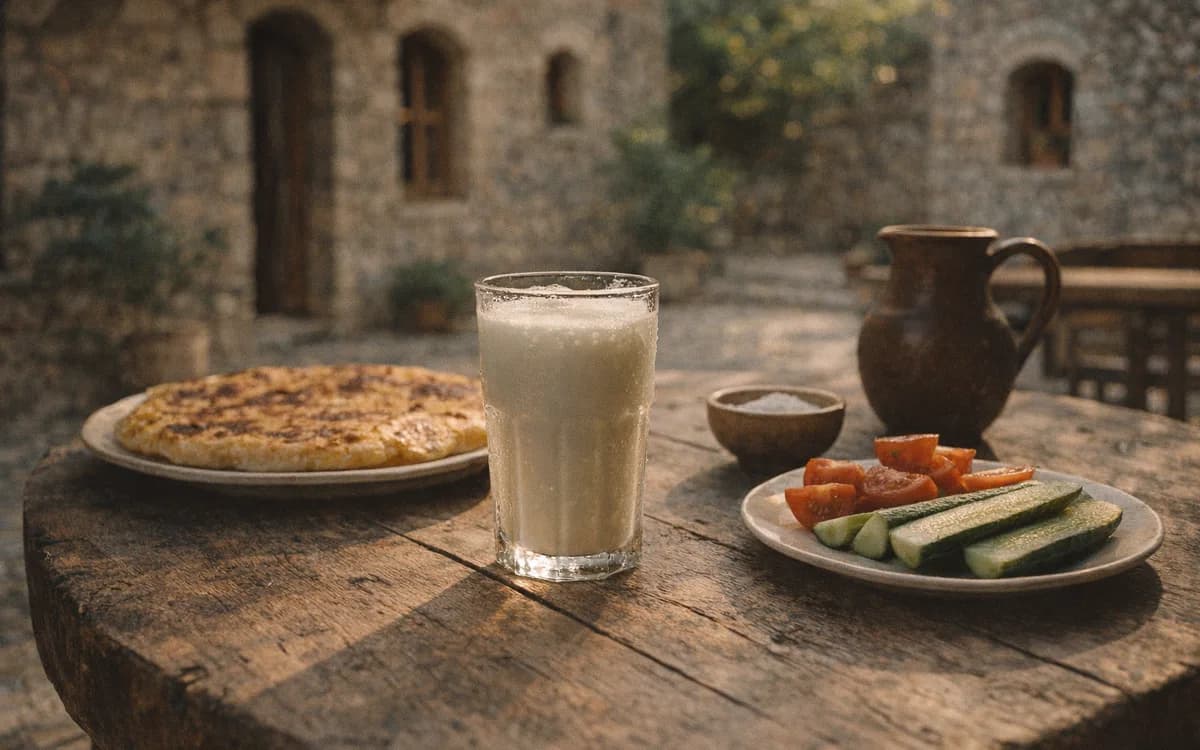
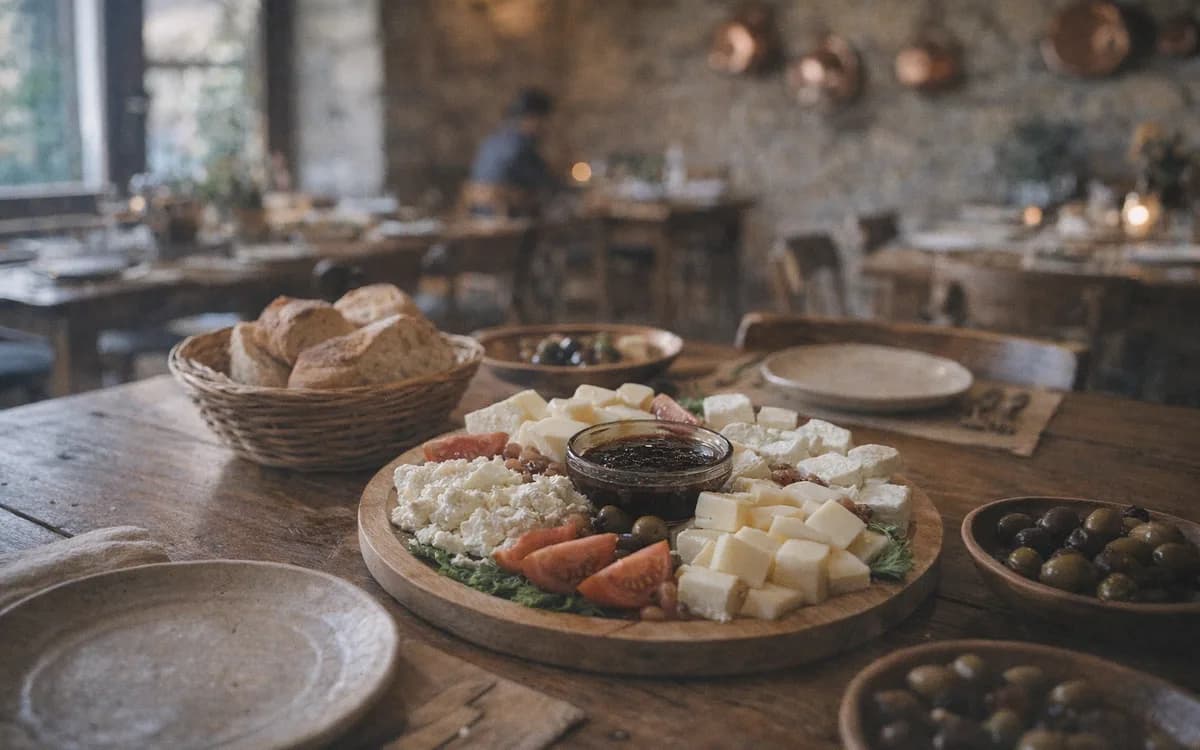
On the table, lakror does not need much. Yogurt, fresh cheese, Turshi shpie from the pickle jars, or a simple village salad are enough. At lunch, mountain tea may be the right companion. In the evening, some guests prefer a small glass of Raki Rrushi, grape raki, especially after a larger meal.
The waiting is part of the pleasure. People stand closer to the hearth than they planned to. Someone asks about the filling. Someone else watches the lid. When the saç lifts and the steam comes up, the table becomes quiet for a moment before everyone reaches for a piece.
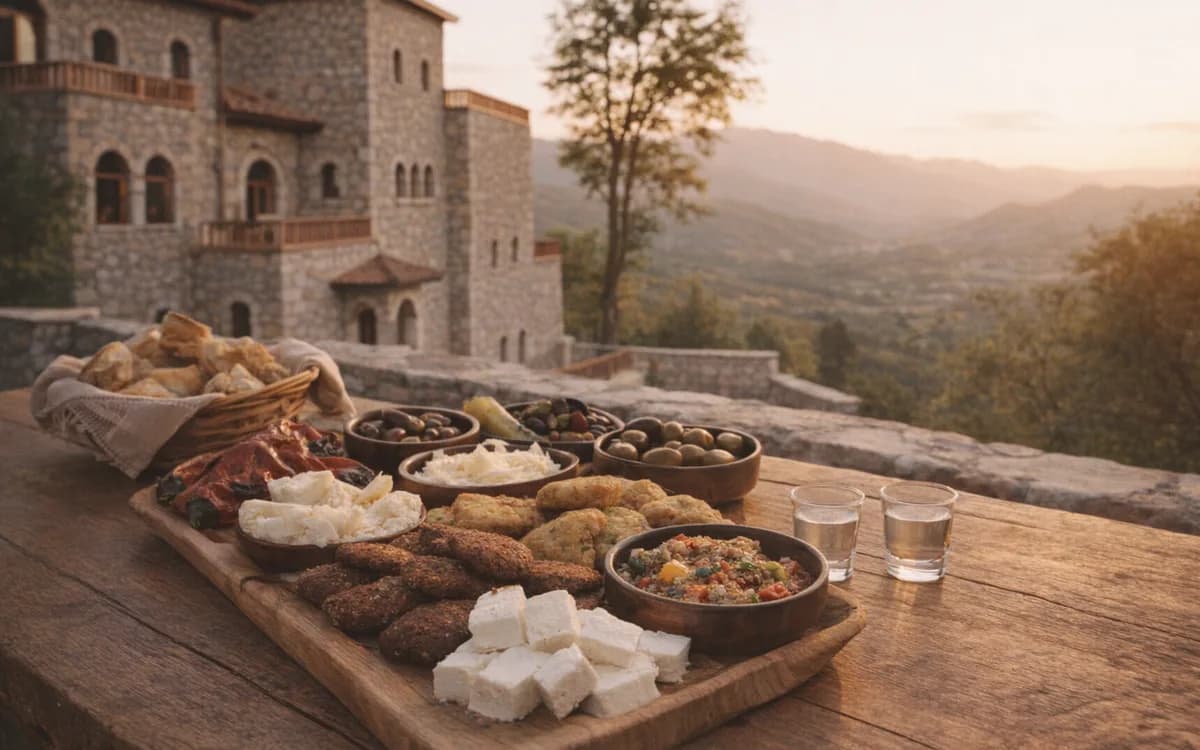
At our guesthouse in Fshat, on Rruga e Arbërit near Klos, those small pauses are often what travelers remember. Food cooked this way does not hide the work. You can see the hands, the heat, and the patience.
Can You Make Saç-Baked Lakror at Home?
Yes, you can make a version of lakror at home. It will teach you the structure of the dish: thin dough, balanced filling, careful sealing, and a hot bake. Without a saç and embers, it will not be exactly the same, but it can still be very good.
Use a heavy baking tray, cast-iron pan, or pizza stone if you have one. Preheat the oven well so the base begins cooking quickly. A hot oven helps the dough crisp before the filling releases too much moisture. If the top needs more color at the end, a brief moment under the broiler can help, but watch closely.
Do not chase fake smoke flavor. It is better to make clean dough and a filling that tastes of its ingredients. The ember version has a stronger sense of place because the heat is uneven in a good way: one edge blisters more, one corner browns deeper, the base takes on the memory of the hearth.
Oven version versus ember version
The oven version gives control. You can set a temperature, time the bake, and repeat the process easily. It suits apartments, family kitchens abroad, and cooks making lakror for the first time.
The ember version teaches fire control. You learn when to add heat, when to remove it, and when to leave the pie alone. If cooking outdoors, use a stable surface, heatproof tools, and pay attention to wind. Embers are calmer than flame, but they still demand respect.
Where to Taste or Learn Lakror near Klos
Culinary travelers often understand lakror best after watching it made once. A written recipe can explain the steps, but the hands explain the dough. The cook shows how thin the sheet should be, how much filling is enough, and how the saç is checked without losing too much heat.
You will find us in Fshat, on Rruga e Arbërit, near Klos in Dibër County. Since the Murriz Tunnel opened in March 2025, Rruga e Arbërit has made the Klos area much easier to reach from Tirana; in good conditions the drive can be under an hour, depending on traffic and your starting point.
Our Traditional Cooking Class lasts 3–4 hours and is arranged for hotel guests. The class can include hands-on cooking with local ingredients, byrek, traditional meat dishes, and bread baked in the wood-fired oven. The exact lesson changes with the season and the group, so if you are interested in lakror, dough work, or saç cooking, ask us when you book.
Ask about our cooking class if you want to learn traditional dough and fire-cooked methods.
Summer and autumn are especially good times for lakror because greens, leeks, herbs, and pumpkin shape the filling. You may also plan dinner after a day in the valley; our evening service runs from 18:00 to 22:00.
This ember-baked pie stays in memory because the method is visible. The fire is there. The lid is there. The table waits together.
Want to hear the crust crack as it comes from the embers? Book a stay and ask what filling the season has brought to our kitchen.
Frequently asked questions
What does the name mean?
The name means lakror, an Albanian savory pie, baked under a saç: a domed metal lid covered with hot embers. Heat from below and embers above cook the pie like a small hearth oven.
Is lakror the same as byrek?
Lakror and byrek are related Albanian savory pies, but they are not always the same. Lakror often refers to a flatter regional pie, and saç-baked lakror specifically points to the ember-baked method.
What fillings are used in Albanian lakror?
Common lakror fillings include leeks, spinach, wild greens, nettles, pumpkin, onions, herbs, and fresh curd cheese. The filling depends on region, household, and season.
Can this Albanian pie be made in a normal oven?
Yes, lakror can be adapted for a normal oven using a hot tray, pizza stone, or cast-iron pan. The crust will be good, but it will not have the same ember-baked texture from heat above and below.
When is the best season to eat lakror in Albania?
Lakror is made year-round, but summer and autumn are especially good. Fresh greens, leeks, herbs, and pumpkin give the filling more character during those months.