In this article
- Where Albanian chestnuts come from: Reç and Tropoja
- When and how to buy fresh gështenja in Albania
- How to prepare and score chestnuts safely
- How to roast Albanian chestnuts in the oven and peel them warm
- How to store raw and roasted chestnuts
- Serving roasted chestnuts at an Albanian autumn table
- Frequently asked questions
Where Albanian chestnuts come from: Reç and Tropoja
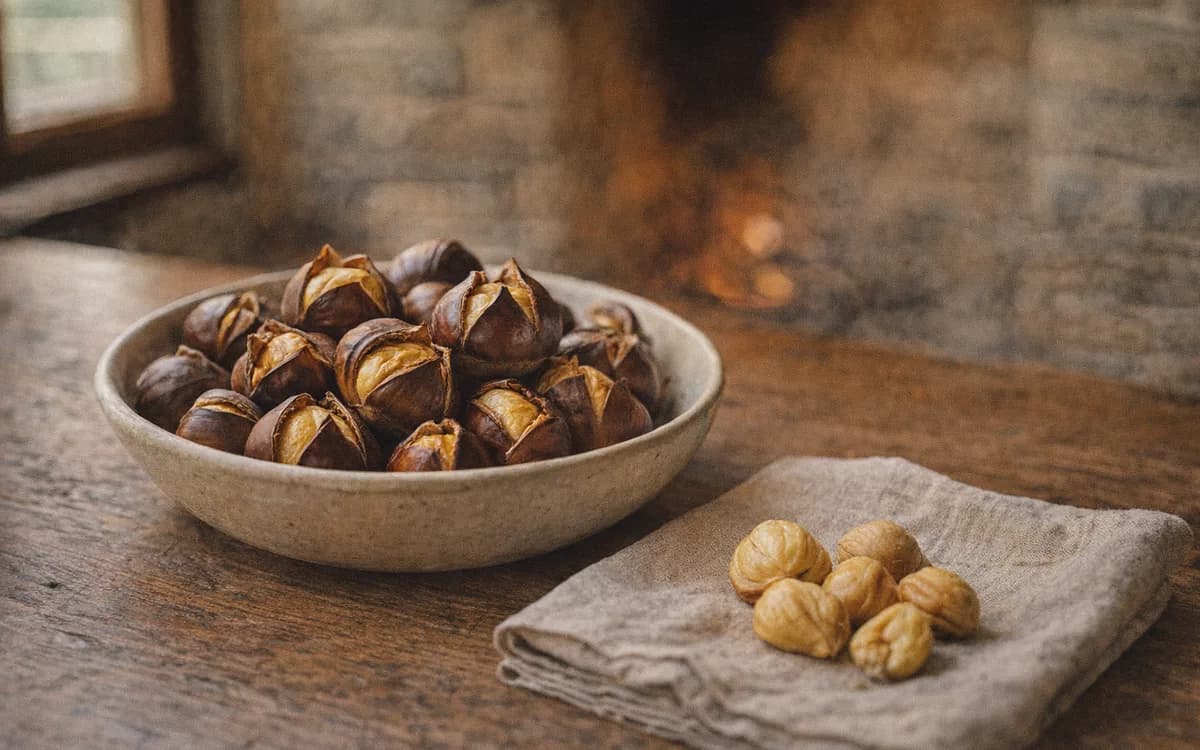
Good Albanian chestnuts feel heavy in the hand. After roasting, their shells curl back around a sweet, tender centre, ready to eat while still warm. In autumn, look for gështenja (chestnuts), choose a fresh batch, and leave yourself time for peeling: they are much easier to handle before they cool.
Reç and Tropoja are two documented chestnut-producing areas in northern Albania. Their names tell you something about origin, but the condition of the nuts in front of you still matters. We would choose a firm, fresh batch over tired nuts with a more impressive label.
Reç chestnuts and their growing landscape
Reç lies in the Malësi e Madhe area of northern Albania. Slow Food’s Reç chestnut entry documents its chestnut-growing heritage and landscape, connecting the crop with the place where it grows.
We enjoy knowing where an autumn ingredient comes from. Still, we check the nuts themselves and ask the seller about the batch: the Reç name alone tells us neither how fresh they are nor whether they have organic certification or a protected designation.
Tropoja chestnuts and regional production
Tropoja, in northeastern Albania, is another established chestnut-growing area. FAO’s work on Albania’s chestnut sector includes Tropoja and the chain of activity linking growers, processing and markets.
Our guesthouse is in Fshat, Klos, in Dibër County. Reç and Tropoja belong to other parts of northern Albania, rather than our immediate surroundings, so we would not send you there as nearby orchard outings. When buying a batch here in Klos, we ask the supplier where it was grown.
When and how to buy fresh gështenja in Albania
Fresh chestnuts are an autumn crop. Roughly September through November is a useful buying window, although harvest timing shifts with elevation, weather and growing area. Nuts on sale later may be stored fresh stock rather than a recent harvest.
Raw chestnuts in their shells also need to be distinguished from vacuum-packed, already cooked chestnuts. Both have uses, but only the raw, in-shell nuts belong in the roasting method below. Read the packaging before buying.
What a fresh chestnut looks and feels like
Choose nuts of similar size so that one part of the tray is not ready long before the rest. Then inspect several, not just the handsome ones on top.
- Weight: a chestnut should feel substantial for its size, not unexpectedly light.
- Firmness: the shell should feel firm, without obvious soft or collapsing areas.
- Surface: reject visible mould, insect holes and damaged, deteriorating shells.
- Smell: avoid sour, fermented or musty odours.
- Fit inside the shell: a pronounced rattle or loose-feeling shell can indicate that the kernel has dried and shrunk.
A glossy shell is attractive, but it is not enough on its own. Weight, firmness and smell give a more useful picture together. Even a carefully chosen batch can contain an occasional bad nut, which is why inspection continues when you peel.
Questions to ask about origin and harvest
Three questions are enough: “Where were these grown?”, “When were they harvested?” and “How have they been stored?”
Chestnuts sold in Albania are not necessarily Albanian-grown. If a seller names Reç or Tropoja, ask whether the batch can be traced to a grower or supplier there. We keep the conversation simple; a clear answer helps us understand what we are buying.
Buy a modest amount for your first attempt. A small batch cooked promptly is more satisfying than a large bag left drying in a warm kitchen.
How to prepare and score chestnuts safely
Use edible sweet chestnuts bought for food. Horse chestnuts are poisonous and must not be eaten. Buy from a food seller rather than using these instructions to identify wild nuts. Leave unidentified nuts out of the kitchen, even if they resemble something you have seen at a market.
Rinse your purchased chestnuts, dry them, and sort through them again. Discard nuts with mould, decay or suspicious smells. Inspect each nut rather than relying on whether it floats or sinks in water: a float test gives no reliable safety clearance.
Set a non-slip cutting board on a stable surface. Work with one nut at a time, flat side down, keeping your fingers away from the blade. Never hold a chestnut in your palm while cutting it.
Make an X on the rounded side, cutting through the hard shell and the papery skin beneath it without slicing deeply into the flesh. Chestnut shells can be slippery and tough. A purpose-built chestnut cutter is an alternative if a knife feels difficult to control.
Why every chestnut needs a cut
Scoring lets steam escape as the chestnut heats and gives the shell room to open. An intact shell traps pressure and may burst in the oven. Score every chestnut before roasting.
The cut also gives your fingers somewhere to begin when peeling. A scratch that barely marks the shell is not enough; both shell and inner skin need to be opened.
Skip soaking for this method. If you prefer to soak your chestnuts, score them all the same, and start with fresh nuts: soaking neither guarantees easy peeling nor rescues stale kernels.
How to roast Albanian chestnuts in the oven and peel them warm
For a manageable first tray, use 500 g raw, in-shell edible chestnuts, enough for roughly two to four snack portions. Salt is optional, added after peeling. You will need a baking tray, a stable cutting board, a suitable knife or chestnut cutter, and a clean tea towel.
Use 200°C in a conventional oven or 180°C fan, allowing approximately 20–30 minutes for roasting. Size, moisture and oven performance affect the timing. The flesh, not the clock alone, tells you when the batch is ready.
A step-by-step oven method
- Heat the oven. Set it to 200°C conventional or 180°C fan. Rinse and dry the 500 g of chestnuts, discarding any with mould, decay or suspicious odours.
- Score every nut. Place each chestnut flat side down on a non-slip board. Cut an X through the shell and inner skin on the rounded side, keeping your fingers clear and avoiding a deep cut into the flesh.
- Arrange the tray. Spread the scored chestnuts in a single layer with their cuts facing upward. Leave them uncrowded so you can inspect the opening shells.
- Roast and check. Begin checking at about 20 minutes; most batches need approximately 20–30 minutes. Carefully open one sample, allowing hot steam to escape. The shell should have opened and the flesh should be tender rather than hard in the centre. If necessary, return the tray to the oven for a few minutes and check again.
- Rest briefly under a towel. Transfer the roasted chestnuts into a clean tea towel, fold it around them, and leave for about 5–10 minutes. Handle the hot tray and nuts carefully.
- Peel in small batches. Once safe to handle but still warm, remove both the hard outer shell and the papery inner skin. Keep the remaining chestnuts covered while you work. Discard any nut that reveals mould or decay.
- Serve warm. Eat the peeled chestnuts plain or add a little salt, if desired.
This method suits a home oven. Albanian street sellers may use different roasting equipment, so expect some differences in the shells and finished texture.
Why the inner skin sometimes sticks
Freshness, adequate cooking and warmth all help. Shallow cuts can leave too little opening, undercooked centres resist peeling, and dried-out nuts may remain disappointing even after roasting.
If the batch cools while you work, briefly reheat the remaining nuts and try again once they are safe to handle. Do not keep roasting already tender nuts in the hope of correcting every stubborn patch of skin; they will eventually dry out.
Roasting does not make spoiled nuts safe. Throw away any that reveal mould or deterioration inside.
How to store raw and roasted chestnuts
Fresh chestnuts contain much more moisture than the pantry nuts you might keep beside dried fruit. Treat them as perishable produce, not something to leave in a bowl for weeks.
Refrigerate raw chestnuts in breathable packaging, such as a paper bag, and use them promptly. Check the batch regularly and remove deteriorating nuts. Keep damp chestnuts out of sealed containers at room temperature, where trapped moisture encourages spoilage.
Start with fresh kernels and use the fridge to slow deterioration; dried-out nuts stay dried out. If you buy more than you can roast soon, cook them and freeze peeled portions for later meals.
For cooked chestnuts, refrigerate within two hours of cooking. Use refrigerated leftovers within three to four days, or freeze them. Divide a large batch into smaller containers so it cools promptly rather than sitting in a warm heap.
Peel before freezing. Later, you can take out a small portion for soup or a vegetable dish without having to tackle shells and skin first. Label the container with the date and keep portions sealed in freezer-suitable packaging. Expect some texture change after freezing, but discard any chestnuts showing signs of spoilage.
Serving roasted chestnuts at an Albanian autumn table
Start with a bowl of warm, peeled Albanian chestnuts and very little else. Their sweetness is gentle, with a floury, tender texture quite unlike the crunch of a walnut. A little salt is enough if you want a savoury finish.
We like an autumn table that leaves room to taste each ingredient. Chestnuts do not need a heavy sauce or an elaborate presentation, especially when everyone has just spent a few minutes peeling them.
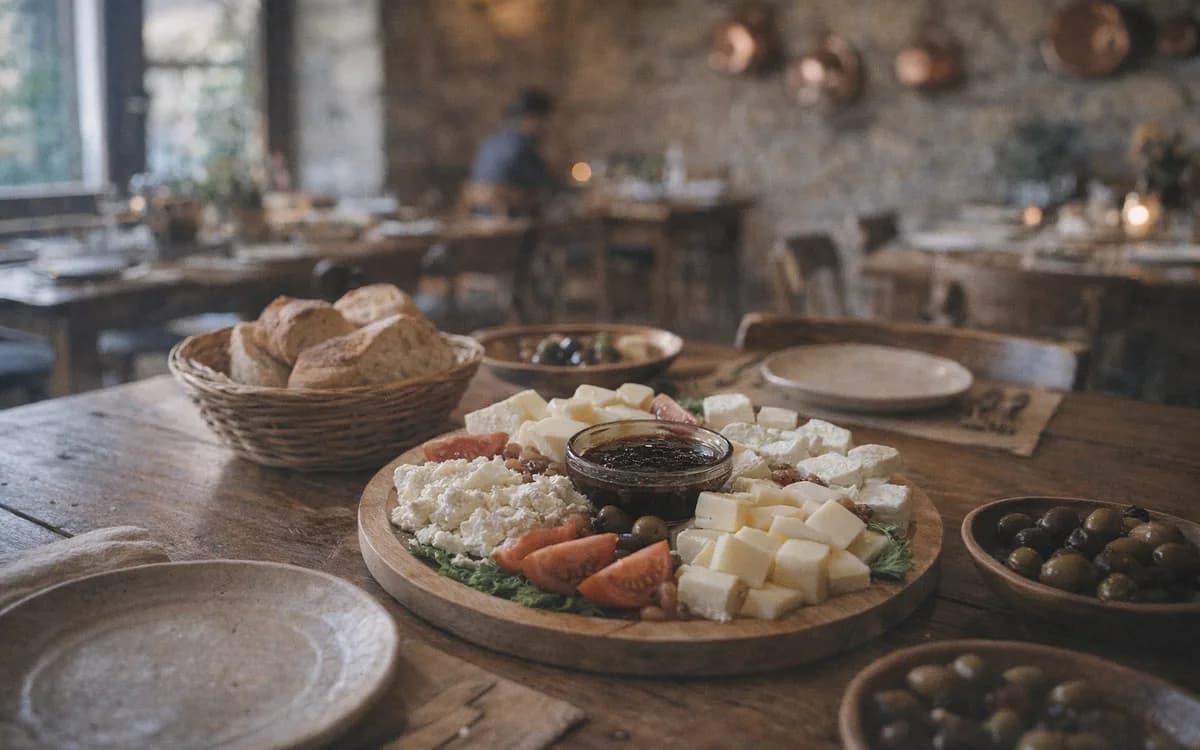
For an autumn table here in Klos, we picture a folded towel around the warm bowl, a plate of salty cheese within reach, and shells gathering beside it. The first chestnut breaks softly between your fingers. Let the tea wait a moment; eat while the warmth is still there.
Simple pairings: cheese and mountain tea
Salty cheese offers a pleasant contrast to the sweet flesh. Our Albanian cheese guide explains the differences between gjizë, white cheese and kaçkavall, which helps when choosing an accompaniment. At Bujtina Çupa, Djathë dhie (goat cheese) and Djathë dele (sheep cheese) are on our menu. Try either alongside chestnuts at home and see which balance of salt and sweetness you prefer.
For an alcohol-free drink, consider mountain tea. Our guide to Albanian mountain tea introduces çaj mali (mountain tea) and its place at the table.
Chopped cooked chestnuts can also add sweetness and substance to a vegetable soup or a side of cooked vegetables. Add them near the end if you want the pieces to hold their shape. Try a small handful first, then adjust to suit the vegetables you have.
At our kitchen, you will find Byrek Bujtine (our house-style byrek), cheeses and other Albanian dishes. Chestnuts belong to the autumn season rather than our regular menu. Before coming, Get in touch and ask us what is available that week; we will help you choose a meal around what our kitchen has that day.
Frequently asked questions
When are fresh Albanian chestnuts in season?
They are an autumn crop, generally available from September into November. Harvest dates vary with growing area, elevation and weather; later stock may have been stored.
Do chestnuts need to be soaked before roasting?
No. Soaking is optional, but scoring is essential: every chestnut needs a cut through the shell and inner skin so steam can escape.
How long do chestnuts take to roast in the oven?
Allow approximately 20–30 minutes for Albanian chestnuts at 200°C conventional or 180°C fan. Start checking at 20 minutes and look for opened shells and tender flesh, not simply elapsed time.
Why are roasted chestnuts difficult to peel?
Cooling, shallow scoring, undercooking and dried-out nuts can all make peeling harder. Remove both shell and inner skin while the chestnuts are warm enough to handle safely.
Are Reç and Tropoja chestnuts grown near Klos?
No. They are separate northern Albanian growing areas, not local Klos origins. For a batch sold or served in Klos, ask the supplier where it was grown before describing it as coming from either region.
Planning an autumn stay with us in Klos? Book directly, and ask us what is in season for your visit. We will help you plan around the food available that week.