In this article
What Is Fërgesë?
A good fergese recipe should arrive soft, warm, and ready for bread. In our kitchen in Klos, Albanian fergese begins with peppers, tomatoes, and gjizë, the fresh white dairy that turns the vegetables into one thick pan rather than a sauce.
Fërgesë is one of those Albanian dishes that looks simple until you cook it too quickly. The peppers need time to collapse. The tomatoes need to lose their water. The cheese needs gentle heat, because if the fire is harsh it can break into grains before it has hugged the vegetables. At Bujtina Çupa, we list Fërgesë among our traditional dishes: peppers, tomatoes, and cottage cheese, slow-cooked until the pan is scoopable.
The best-known name many travelers meet is fërgesë e Tiranës, but the word carries more than one version. Some families add liver. Some keep it all vegetable and dairy. Some finish it in a clay dish, some in a skillet, and many change the balance with the season. This recipe stays with the pepper, tomato, and cheese version, the one that works as a vegetarian Albanian dish and sits naturally beside bread, salad, and pickles.
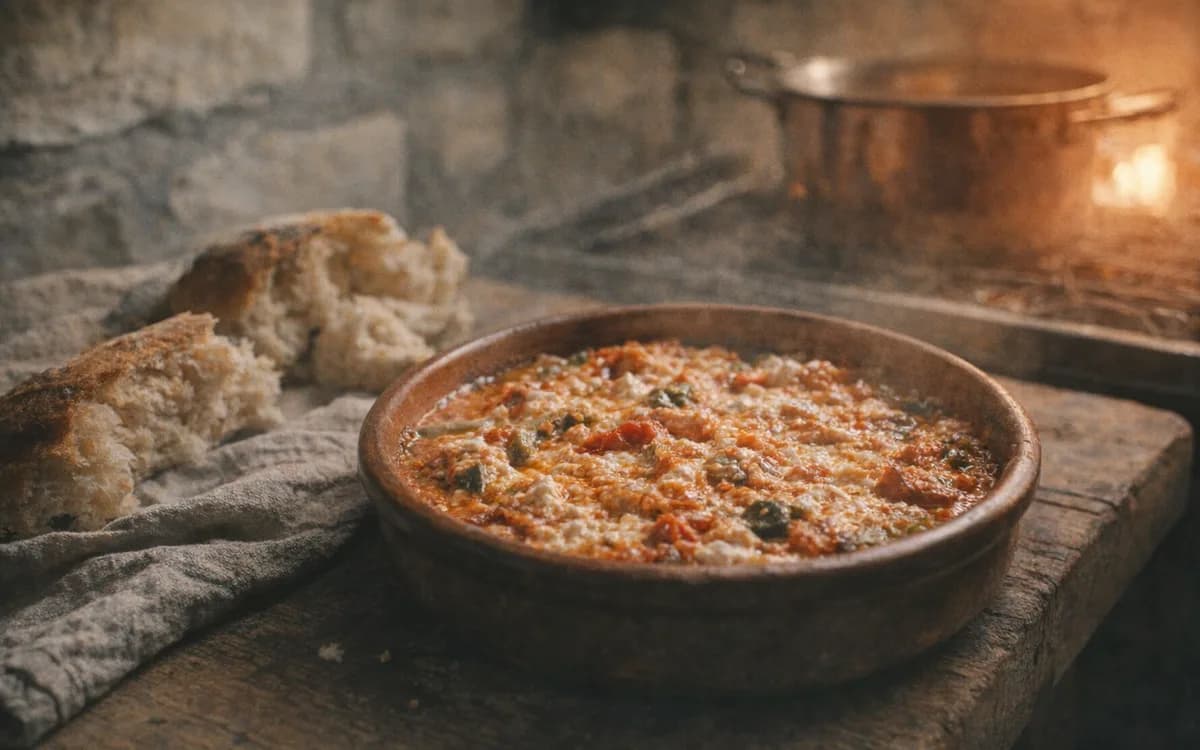
When guests ask about it in our kitchen, we usually describe it first by texture, not by a strict list of measurements. It should be creamy without cream, rich without being heavy, and thick enough that a torn piece of bread can carry it from the pan.
Why the texture matters
A watery fergese tastes like tomato sauce with cheese stirred through it. A good one tastes like summer vegetables that have given up their juice and settled into the dairy. The spoon should drag slowly through the middle. The peppers should still be visible in soft strips. At the edge of the dish, a little oil may shine.
That matters. A lot. The whole pleasure of fërgesë is in the scoop: warm bread, thick vegetables, a little tang from the gjizë, and a pan shared before the rest of the meal reaches the table.
Quick Kitchen Card
Use this fergese recipe card when you want the practical kitchen numbers before the slower notes below. The pan is small enough for a family table and generous enough for bread to keep returning to it.
- Yield - 3 to 4 servings.
- Prep time - 15 minutes.
- Cook time - 35 to 40 minutes.
- Rest time - 5 minutes.
- Oven - 180°C or 350°F.
- Main ingredients - 4 large peppers, 3 ripe tomatoes, 1 small onion, 2 garlic cloves, 3 tablespoons olive oil, 1 teaspoon sweet paprika, 250-300 g gjizë, and salt at the end.
- Ready when - the spoon leaves a slow path through the center, the edges bubble softly, and no watery tomato juice floods back into the pan.
Ingredients for Albanian Fergese: The Gjize Recipe Base
For a home pan serving 3 or 4 people, start with vegetables that actually smell ripe. Late spring gives us the first sweetness, but July and August tomatoes do the deepest work. If the tomatoes are pale or hard, cook them longer and do not rush the reduction.
- Peppers - 4 large bell peppers, red, green, or a mix, sliced into strips.
- Tomatoes - 3 ripe tomatoes, peeled if the skins are tough, chopped small.
- Onion and garlic - 1 small onion and 2 cloves of garlic, softened before the tomatoes go in.
- Fat - 3 tablespoons olive oil, or a spoon of butter with oil for a rounder flavor.
- Paprika - 1 teaspoon sweet paprika if your peppers need a little color and warmth.
- Gjizë - 250-300 g fresh gjizë, drained cottage cheese, or drained ricotta.
- Salt - added at the end, because the cheese may already carry enough.
Gjizë is fresh, soft, and lightly tangy. In Albania, it often comes from the same dairy rhythm as the village table: milk, whey, cheese, and whatever the household has made that week. At our restaurant, the kitchen works farm-to-table, with produce from our garden and nearby farms and dairy from local shepherds when the season allows.
Do not turn this into a cream dish. Heavy cream makes the pan smoother, but it also hides the pepper and tomato. The better route is patience: cook the tomato until its sharpness softens, fold in the dairy over low heat, and let the dish thicken by heat and time.
Gjizë substitutions outside Albania
If you cannot find gjizë, use cottage cheese first. Drain it in a fine sieve for 20-30 minutes, then mash the curds lightly so they fold into the vegetables. Ricotta works too, especially if it is well drained overnight. Feta can help, but use it like salt, not like the main cheese; a few crumbles bring tang, while too much feta makes the pan sharp and dry.
This is why every fergese recipe should be salted at the end. Taste after the dairy is in. Then decide.
Step-by-Step Method
This method uses a skillet and a shallow oven dish, because that is the easiest path in most home kitchens. If you have a small clay tavë, use it. If not, any ovenproof dish that holds the mixture in a modest layer will do.
- Warm the oil in a wide skillet over medium heat. Add the pepper strips and cook until they soften at the edges and lose their raw snap.
- Add the onion and cook until it turns translucent. Add the garlic only for the last minute, so it perfumes the oil without burning.
- Stir in the tomatoes and paprika. Keep the heat steady and cook until most of the tomato juice has gone. The mixture turns glossy, with no soupiness at the edges.
- Lower the heat. Add the gjizë or drained substitute in spoonfuls and fold gently. Do not beat it; fërgesë is rustic, and a little texture is right.
- Taste before salting. Add a small pinch only if the cheese asks for it.
- Transfer the mixture to a shallow baking dish, or keep it in the skillet if it is ovenproof. Bake at 180°C or 350°F until the edges bubble softly and the top looks set.
- Rest it for 5 minutes before serving. The pan will thicken as it stands.
The timings change with the produce. Peppers from a hot August market soften fast and bring sugar with them. Watery winter tomatoes need more time, or a few minutes longer in the skillet before the cheese goes in. Use your eyes first. The pan will tell you when it is ready.
The skillet and oven method
A skillet gives you control over water. That is the main thing. Many failed fërgesë pans are not under-seasoned; they are under-reduced. Cook the vegetables until a wooden spoon leaves a clear line on the bottom of the skillet for a second or two. Then add the cheese.
The oven finish is short. We are not baking a casserole. We are setting a warm Albanian pepper cheese dish so the top relaxes, the edges bubble, and the flavors sit together. If the top browns hard, the oven was too fierce or the dish stayed too long.
How to know it is ready
Drag a spoon through the center. The path closes slowly, not all at once. If liquid gathers around the spoon, return the dish to low heat or the oven for a few more minutes. If it becomes too stiff, add one spoon of reserved tomato or pepper juice and fold gently.
If the cheese looks grainy, lower the heat and stop stirring. Fërgesë likes warmth more than agitation. Let it sit. It often comes back together after a quiet minute off the fire.
Fergese e Tiranes, Liver Variations and the Vegetarian Albanian Recipe
Fergese e Tiranes can confuse travelers because the same name may point to different pans. In Tirana and beyond, you may see versions with liver, especially in older restaurant menus or family recipes. You may also find the pepper-and-cheese pan, which is the version many home cooks want when they search for fergese at home.
We do not treat one pan as the only honest one. Albanian cooking is full of household decisions: what the garden gave, what the shepherd brought, what was left from lunch, who is coming for dinner. The point is to understand the style, then cook the version in front of you well.
This vegetarian Albanian recipe belongs to the starter table, but it can also become a light main. Serve it with warm bread and a salad and it is enough for a late lunch. Add grilled vegetables or a clay-pot dish and it becomes part of a larger meal. If you are ordering in Albania and do not eat meat, ask whether the fërgesë has liver or is the pepper, tomato, and cheese version.
At our table, the cheese version makes sense in late spring and summer, when the vegetables are bright and the meal can stay unhurried. It is not a show dish. It is a dish people keep reaching toward while they talk.
What to Serve with an Albanian Pepper Cheese Dish
The first answer is bread. Always bread. Fërgesë is not made for a fork standing alone on a plate; it wants to be scooped, pushed, shared, and cleaned from the corner of the pan. Crusty bread works, but so does bukë misri me shellire, our corn bread with sesame, especially when the cheese is tangy and the tomatoes are sweet.
Keep the rest of the table simple. A sallatë fshati brings cucumber, tomato, onion, and freshness. Turshi shpie, our homemade pickles, cut through the richness. Olives are enough when the meal is small. Perime zgare, grilled vegetables, make sense if the peppers in the fërgesë are sweet and you want a little char beside them.
Make it a full Albanian table
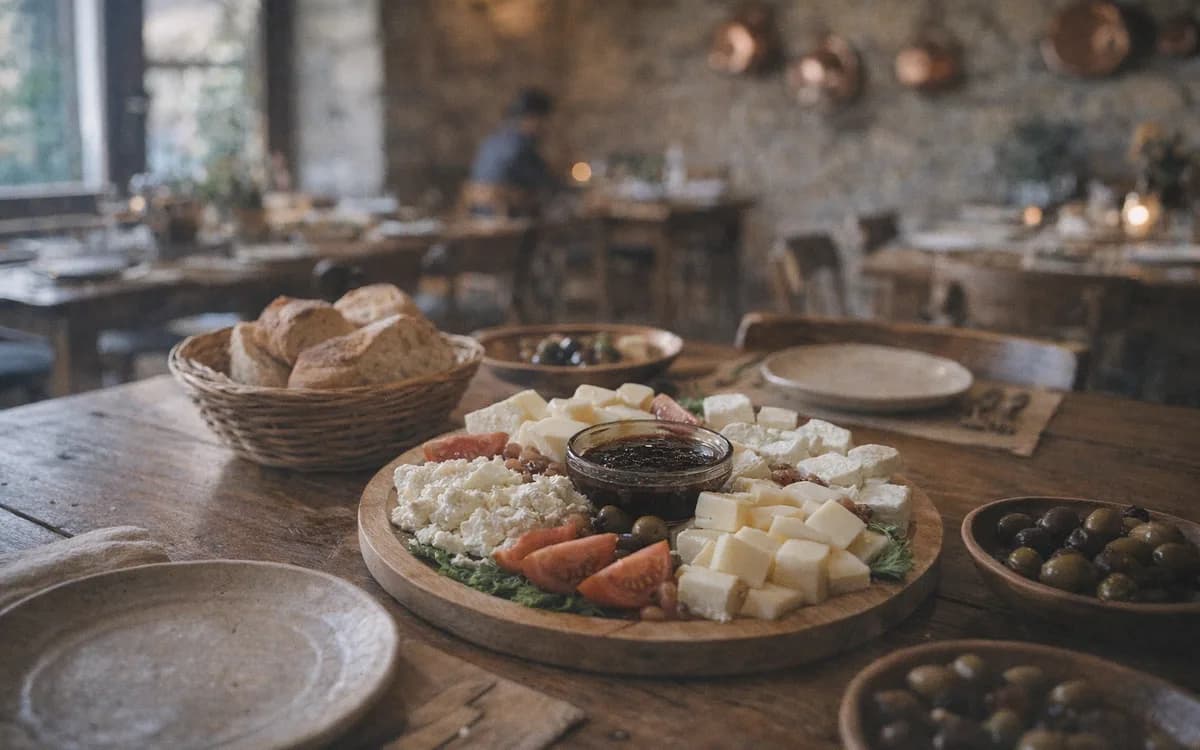
For a larger table, place the fërgesë near the beginning, while the bread is still warm. Then bring a salad, pickles, one oven or grill dish for meat eaters, and a shared platter such as Sofër tradicionale e madhe if the group wants to taste more than one thing. This is how fërgesë moves from recipe to meal: not as a lonely side, but as one warm pan among many hands.
Wine is optional. A light red, a white, or cold water all fit. In our bar, guests sometimes keep the meal modest at lunch and save a glass for sunset, when the windows and terrace look toward the mountains. The food does not need formality. It needs time.
Tasting Fergese at Bujtina Çupa in Klos
Bujtina Çupa is in Fshat, on Rruga e Arbërit near Klos in Dibër County, only about 35 to 40 minutes by road from Tirana since the Murriz Tunnel opened. That road brings many travelers into our valley hungry for something warm, simple, and unmistakably Albanian.
We are a family-owned guesthouse with 9 mountain-facing rooms, built in the style of an Albanian stone castle, but the kitchen memory is often smaller and closer: the garden, the dairy, the wood-fired oven, and the smell of bread before dinner.
Our restaurant is open daily to hotel guests and external visitors. Lunch runs from 12:00-16:00 and dinner from 18:00-22:00, which means fërgesë can be a midday stop or part of a slower evening table after the road through the Mat Valley. The menu changes with the season, but Fërgesë is listed among our traditional dishes, beside Tavë dheu, Byrek Bujtine, and Pule fshati me jufka.
See our restaurant before planning lunch or dinner in Klos.
The wood-fired oven is not only decoration. We use it for breads, pies, and slow dishes, the kind that make sense in a guesthouse where people arrive hungry from the road. A pan of fërgesë beside warm bread belongs to that rhythm. It is food for passing plates, not for hurrying.
Travelers who want to cook with us can ask about the Traditional Cooking Class. It lasts 3-4 hours and is hands-on, with local ingredients, traditional recipes, bread baked in the wood-fired oven, and a meal at the end. The exact dishes change by season and group. That keeps the class honest. In June the table feels different from November.
For travelers planning a food stop
If you are driving from Tirana toward Dibër, the modern Rruga e Arbërit has made our valley easier to reach, but it is still better to treat the trip as a meal and a night rather than a rushed detour. Come for lunch, stay for dinner if the evening slows you down, and let the morning view do its work from one of our mountain-facing rooms.
If dinner turns into morning views, book a stay directly with us.
Frequently asked questions
What is fergese made of?
Fergese is usually made with peppers, tomatoes, onion, garlic, and gjizë or cottage cheese, cooked until thick, warm, and scoopable.
Is fergese vegetarian?
The pepper-and-cheese version is vegetarian. Some fergese e Tiranes recipes include liver, so ask before ordering if you avoid meat.
What can be used instead of gjizë?
Well-drained cottage cheese is the closest easy substitute. Drained ricotta also works, and a little feta can be added for salt and tang.
Do you bake or simmer fergese?
Both methods work. Cook the vegetables down first, fold in the cheese gently, then warm or bake the dish at 180°C or 350°F until it is set and thick at the edges.
Can travelers try this dish at Bujtina Çupa?
Yes. This fergese recipe matches the style we list among our traditional dishes, made with peppers, tomatoes, and cottage cheese, and guests can ask about it during lunch or dinner service.
Want to cook dishes like this with us in Klos? Join our cooking class for a hands-on table with local ingredients, wood-fired bread, and the meal you helped make.