In this article
- What Is Hasude? Albanian Starch Pudding in a Guest-Table Tradition
- Ingredients for Albanian Hasude With Walnuts
- How to Make This Hasude Recipe: The Caramel Stage Step by Step
- Texture Troubleshooting: Lumps, Thin Pudding, or Burned Sugar
- How Albanians Serve This Hasude Dessert After a Slow Meal
- Hasude Compared With Other Traditional Albanian Dessert Favorites
- Frequently asked questions
What Is Hasude? Albanian Starch Pudding in a Guest-Table Tradition
A good hasude recipe begins with patience at the pan: sugar darkening into caramel, starch waiting in cool water, and walnuts ready for the warm pudding that follows a slow Albanian meal. Hasude is a traditional Albanian dessert made from caramelized sugar, water, starch or flour, a little fat, and walnuts. It is simple food, but not careless food. The texture depends on timing.
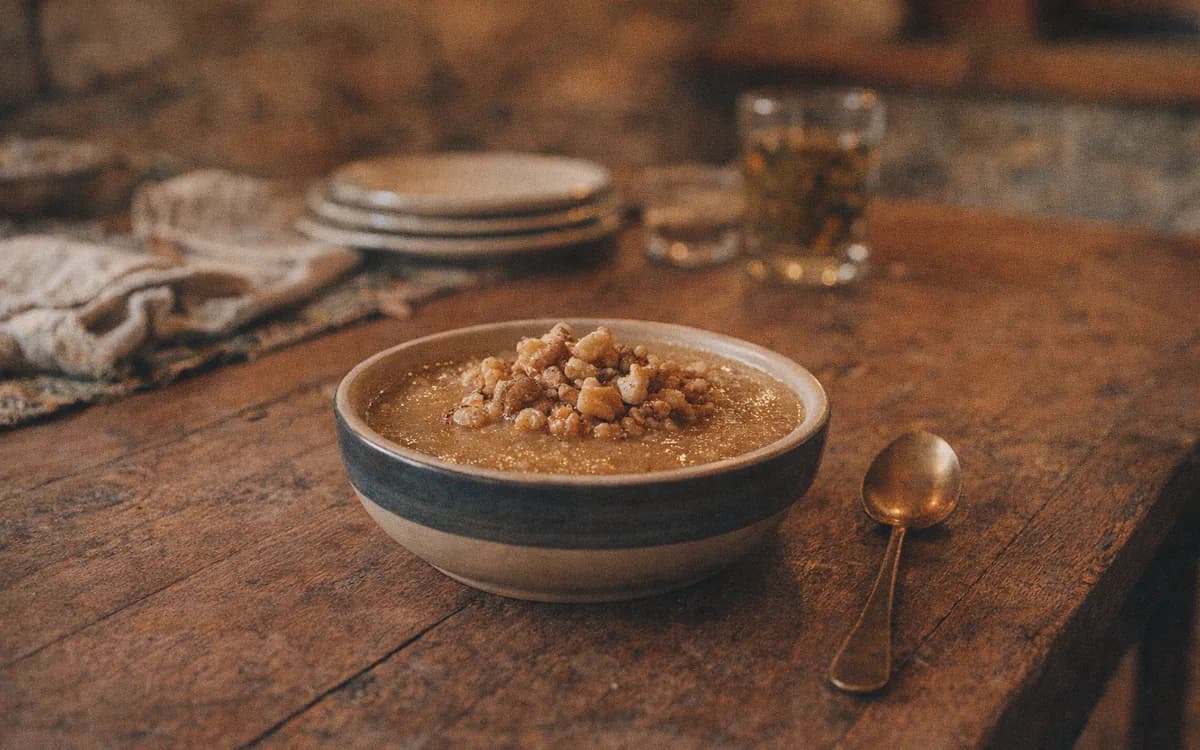
Think of Albanian hasude as something between pudding, spoon halva, and a soft-set dessert. It is glossy when made with cornstarch, a little more rustic when made with flour, and always best served warm in small portions. It is not a cake to slice. It is not a baked syrup dessert. It belongs to the stovetop, to a wooden spoon, and to the moment when guests are still talking after the plates are cleared.
In our mountain kitchen in Fshat, Klos, Dibër County, we know this kind of dessert well: pantry ingredients, few movements, and a result that feels generous. After a heavy winter table — maybe Pule fshati me jufka or Tavë dheu from our traditional menu — a warm spoon dessert makes more sense than something elaborate.
Hasude is especially loved in autumn and winter, when walnuts are close at hand and the evening asks for coffee or tea.
Hasude, hallvë, and regional names
Across Albanian homes, names can shift. Some families use hasude for a caramel starch pudding like this one. Others connect it with hallvë traditions, or use a family name that depends on region and habit. We do not force one national rule onto every table.
This version is Albanian caramel starch pudding with walnuts. It is not semolina halva, not rice-based kabuni, and not a honey-walnut cake like shëndetlie. The ingredients are humble, but the caramel gives the dessert its deep flavor.
Ingredients for Albanian Hasude With Walnuts
For 4 to 6 small servings, you need:
- 200 g sugar
- 700 ml cool water
- 100 g cornstarch, or 120 g plain wheat flour for a rustic version
- 60 g unsalted butter, or 50 ml neutral oil
- 80 g walnuts, roughly chopped
- 1 small pinch of salt
- Optional: 1/2 teaspoon cinnamon or 1 teaspoon finely grated lemon zest
The sugar brings sweetness and caramel flavor. The water carries the starch into the pan. The cornstarch or flour thickens the pudding. Butter gives aroma and a soft richness; oil keeps the finish lighter. Walnuts bring the bite that makes the dessert feel complete.
At our kitchen, we cook many dishes slowly in the wood-fired oven, from breads and pies to oven dishes, but hasude asks for a different kind of attention. It happens on the stovetop. The pan is the place where sugar can become warm and nutty, or go too far in a few seconds.
Prepare the walnuts before you begin. Roughly chopped pieces are better than walnut dust because they stay visible in the pudding. You can toast them lightly in a dry pan for more aroma, but do not burn them. Add them near the end so they keep their fragrance.
Cornstarch vs flour
Cornstarch gives the cleanest texture: smoother, glossier, and a little translucent. It thickens quickly and makes a soft pudding that shines when spooned into bowls.
Flour gives a more old-fashioned body. It is opaque, slightly heavier, and can taste a little nuttier if cooked long enough. Some families prefer that rustic texture. If you use flour, whisk it very well with cool water and expect a less silky finish.
Do not add dry starch or dry flour directly to hot caramel. It will clump instantly. Always dissolve it first in cool or room-temperature water.
Butter, oil, or a mix
Butter gives hasude a richer smell and a rounded flavor. Neutral oil gives a plainer, lighter dessert, common in simple home versions. A mix of both also works. The fat should go in near the end, after the starch has thickened, so it melts into the pudding and helps the surface look glossy.
How to Make This Hasude Recipe: The Caramel Stage Step by Step
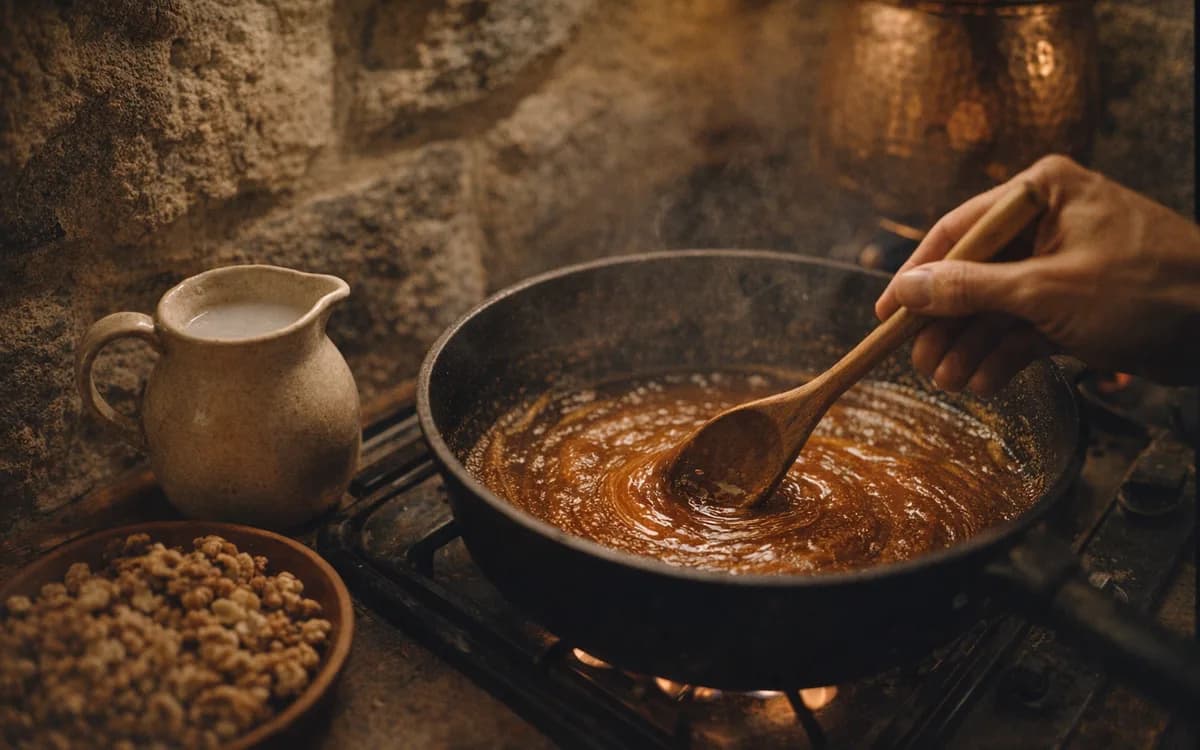
The success of this hasude recipe depends on two things: the color of the caramel and the way the starch mixture enters the pan. Go slowly. Hot caramel burns badly, so keep children away from the stove, use a deep pan, and do not splash.
-
Make the starch mixture. In a large bowl, whisk 100 g cornstarch, or 120 g flour, with 700 ml cool water and a pinch of salt. Whisk until completely smooth. If you see lumps, strain the mixture through a fine sieve before cooking.
-
Start the caramel. Put 200 g sugar in a deep, heavy pan over moderate heat. Let it warm without rushing. At first it will look like dry sand, then damp sand, then clear syrup at the edges. Swirl the pan gently or stir with a heatproof spoon when the sugar begins to melt.
-
Watch the color. The caramel should move from pale gold to amber. Pale caramel tastes mostly sweet. Deep amber gives hasude its roasted backbone, with a gentle bitterness that balances the sugar. Stop before the caramel smokes or turns black.
-
Lower the heat and add the starch mixture carefully. Turn the heat low. Slowly pour in the starch-water mixture while stirring constantly. The caramel may steam, bubble, and seize into hard pieces for a moment. Keep stirring. Those pieces will melt back into the liquid as the pan heats evenly.
-
Stir until thick and glossy. Raise the heat only to medium-low and keep stirring. The mixture will look thin at first, then thicken quickly. Cook until it falls from the spoon in slow ribbons and a spoon dragged across the bottom of the pan leaves a trail for one second before the pudding flows back.
-
Add fat and walnuts. Stir in 60 g butter, or 50 ml neutral oil, until fully absorbed. Add 80 g chopped walnuts. If using cinnamon or lemon zest, add it now. Cook for 1 to 2 more minutes, stirring gently.
-
Serve warm. Spoon the hasude into small bowls or shallow plates. Scatter a few extra walnuts on top if you like.
In our cooking class, the lesson changes with the season and the group — guests may work with byrek, traditional meat dishes, or bread baked in the wood-fired oven — but the same rule holds for Albanian home cooking: the hand learns by watching texture, not only by watching the clock.
The right caramel color
The caramel is ready when it is amber and smells roasted, not sharp. If it is too pale, the finished pudding will taste sweet but flat. If it goes black, the bitterness will carry through every spoonful. Do not try to hide burned sugar with walnuts or cinnamon. Start again.
A heavy pan helps because it spreads heat more evenly. Moderate heat is safer than high heat. Sugar can be patient if we let it be.
How to know hasude is done
Hasude should thicken quickly, but it should not become stiff like rubber. The surface should look glossy, not dusty or pasty. When you lift the spoon, the pudding should fall slowly, not pour like water and not break into clumps.
If you use flour, cook a little longer to remove the raw flour taste. If you use cornstarch, stop once the pudding is fully thickened and shiny.
Texture Troubleshooting: Lumps, Thin Pudding, or Burned Sugar
Lumps usually mean the starch was not dissolved fully, or the heat was too high when the mixture hit the pan. Whisk hard while the pudding is still hot. If the lumps remain and you have not added the walnuts yet, press the mixture through a sieve. A blender can rescue the texture, but use it only before walnuts go in.
Thin hasude needs either more cooking or a little more starch. First, keep stirring over medium-low heat for a few minutes. If it still stays loose, mix 1 teaspoon cornstarch with 2 tablespoons cool water in a small cup, then stir that slurry into the pan. Cook until the texture tightens.
Too-thick hasude can be loosened with small splashes of hot water. Add a tablespoon at a time and stir until smooth. Do not pour in a large amount at once, or the pudding may turn uneven.
Burned sugar is the one problem we do not fix. If the caramel is black or smells harsh, throw it away and begin again. The dessert uses so few ingredients that burned caramel has nowhere to hide.
If fat separates and the pudding looks greasy, the fat may have gone in too early or in too large an amount. Stir over low heat until it comes together. Next time, add the butter or oil after the starch has thickened.
Make-ahead and reheating
Hasude is best warm and fresh, when the walnuts are aromatic and the pudding is soft. Leftovers can be covered and kept briefly, then reheated gently with a spoonful of water. The texture firms as it cools, so reheated hasude is still good, but it will not be as light as the first serving.
How Albanians Serve This Hasude Dessert After a Slow Meal
Hasude does not need decoration. Spoon it into small bowls, keep the walnuts visible, and add a little cinnamon only if your family likes it. Warm is ideal. Room temperature is acceptable, but the caramel and walnuts are less fragrant once the pudding cools.
This is the kind of hasude dessert that suits a table that is not in a hurry. At Bujtina Çupa, dinner is served from 18:00 to 22:00, and the rhythm of an evening meal in the mountains is slow by nature. A large platter such as Sofër tradicionale e madhe, a clay dish, bread, salad, and conversation can stretch into the quiet part of the night. A small warm sweet at the end feels right.
Serve hasude with strong coffee, black tea, or mountain tea. If you want something lighter than coffee after dinner, tea is a gentle match for the caramel. Our bar is open daily from 07:30 to 22:00, with later hours for hotel guests, so the last cup of the evening can be unhurried too.
If you enjoy herbal pairings, read our guide to Albanian mountain tea for a softer drink beside walnut desserts.
Serving temperature and garnish
Warm hasude spreads softly on the spoon and carries the aroma of caramel best. Scatter walnuts on top just before serving, or fold most of them through the pudding and keep a few pieces for the surface. A pinch of cinnamon belongs to some homes, but not all. Lemon zest is brighter and less traditional for some families, though it can help if you want a fresher finish.
Coffee, tea, and winter evenings
Autumn and winter are the natural seasons for Albanian walnut pudding. The ingredients are in the cupboard, the pan warms the kitchen, and the dessert is ready before anyone has truly left the table. It is a practical sweet, but it feels like care.
Hasude Compared With Other Traditional Albanian Dessert Favorites
Hasude sits in its own place among traditional Albanian dessert recipes. It is quick, stovetop-based, and soft. That makes it different from walnut cakes, rice desserts, and baked sweets that need more time.
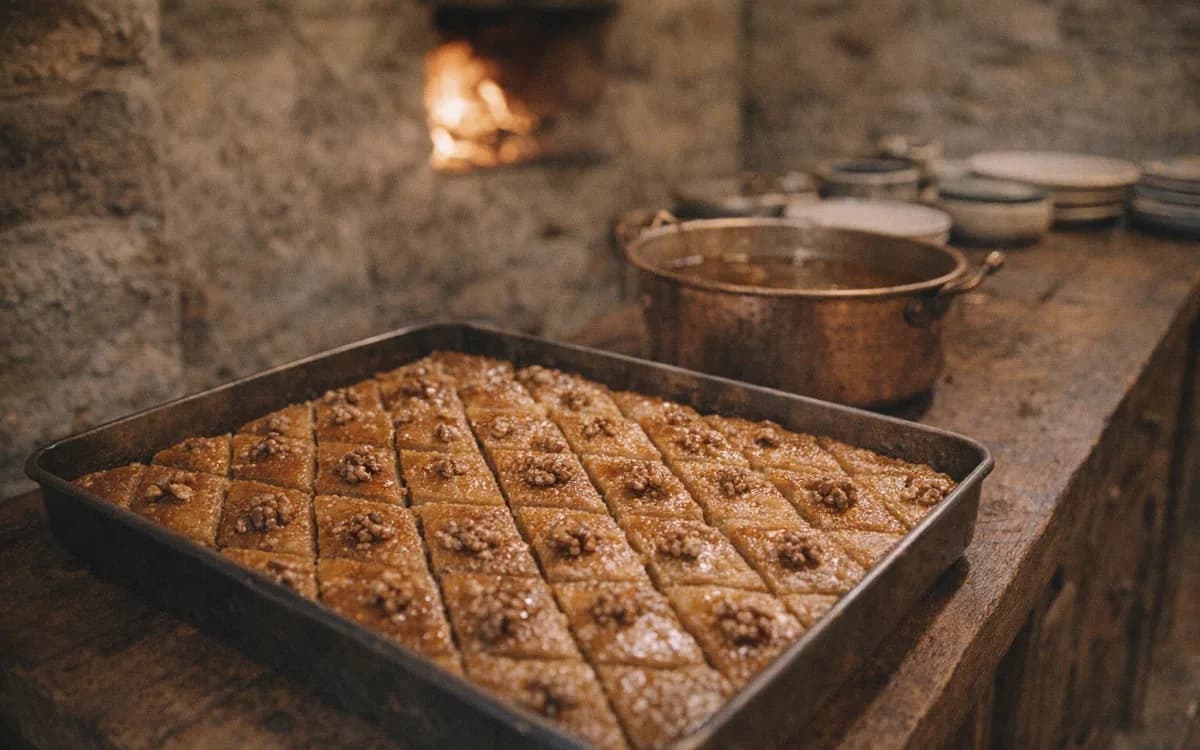
Shëndetlie also uses walnuts, but it is a honey-walnut cake. It is baked, cut into pieces, and often served when a firmer sweet is needed for guests. If you want that style, our shëndetlie recipe is the better choice.
Kabuni is another comforting Albanian spoon dessert, but it is rice-based and scented with cinnamon. Some family versions have festive associations and richer cooking traditions. Hasude is caramel-starch based: faster, simpler, and more focused on sugar, walnuts, and texture. For rice and cinnamon, see our kabuni recipe.
Hasude is useful when the oven is busy, when guests arrive with little warning, or when you want something warm without making dough. It is also a good recipe for diaspora kitchens because the ingredients are easy to find in Europe, the United States, and almost anywhere Albanians have carried their table habits.
When to choose hasude
Choose hasude when you want a quick warm dessert with few ingredients and a soft spoon texture. Choose shëndetlie when you want a cake to cut and share. Choose kabuni when the meal calls for rice, cinnamon, and a more festive bowl.
Want to taste Albanian food where it belongs, after a slow mountain meal and a warm glass of tea? Book your stay — we keep the table ready for guests who come hungry for the old recipes.
Frequently asked questions
What is hasude made of?
Hasude is made with caramelized sugar, water, cornstarch or flour, a little butter or oil, and walnuts. Some families add cinnamon or lemon zest.
Is Albanian hasude made with cornstarch or flour?
Both versions exist. Cornstarch makes a smoother, glossier pudding, while flour gives a more rustic and slightly heavier texture.
Why did my hasude turn lumpy?
Hasude turns lumpy when starch is added dry or when the starch mixture hits very high heat too quickly. Dissolve the starch in cool water first, then add it slowly to the caramel while stirring.
Can hasude be made ahead?
Hasude is best served warm soon after cooking. It can be reheated gently with a spoonful of water, but it firms as it cools.
What do Albanians serve with hasude?
Hasude is commonly served in small warm portions with walnuts, often after a meal with coffee, black tea, or mountain tea.