In this article
- What Mat kulla towers are and why they matter
- Albanian kulla houses: the architecture to look for
- Shulbatër kulla, Kurdari tower heritage and villages near Klos
- How to visit traditional towers in Albania respectfully
- Planning a Klos stone towers day trip
- What Mat’s kulla heritage means for the future
- Frequently asked questions
What Mat kulla towers are and why they matter
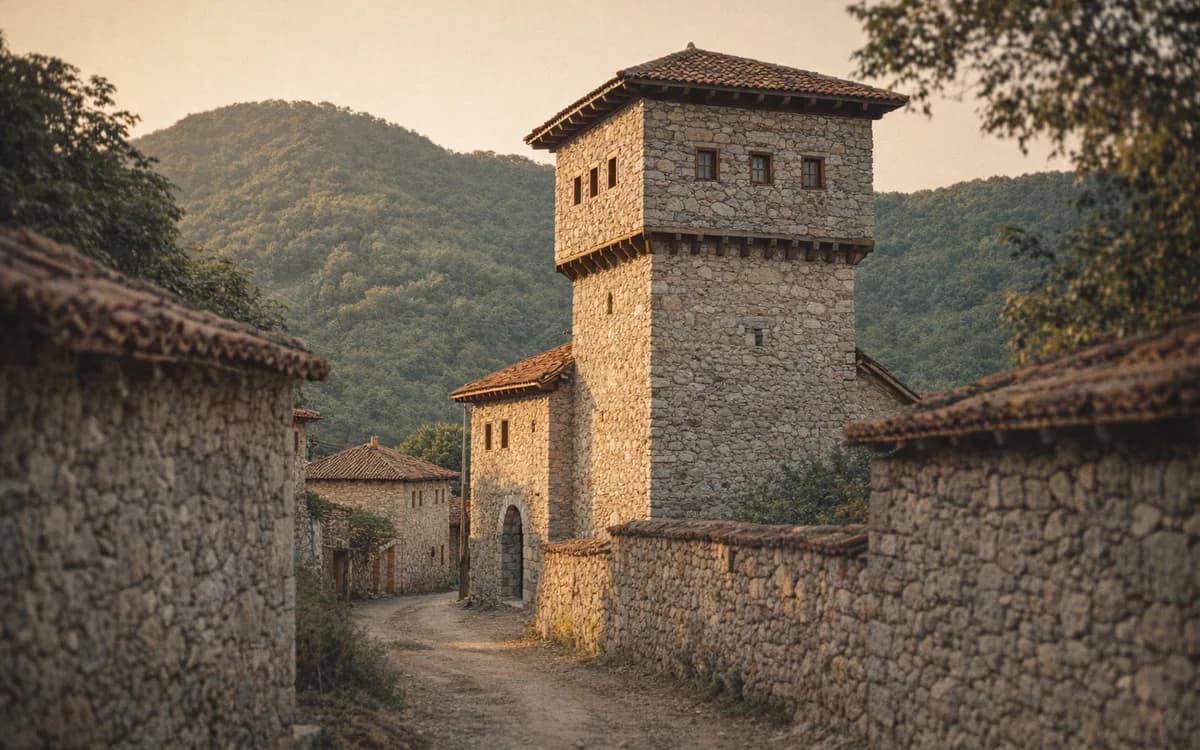
In cold morning light, a stone wall above a village lane can look almost silent until you notice the gate, the narrow opening, the way the masonry holds the slope. Mat kulla towers begin there for us: not as museum pieces, but as family tower-houses built for protection, storage, status, hospitality and daily life. A kulla is not simply an old house, and it is not a castle in the royal sense. It is a fortified vertical home, shaped by mountain weather, family needs and the kind of village life where land, animals, guests and safety all had to be considered together.
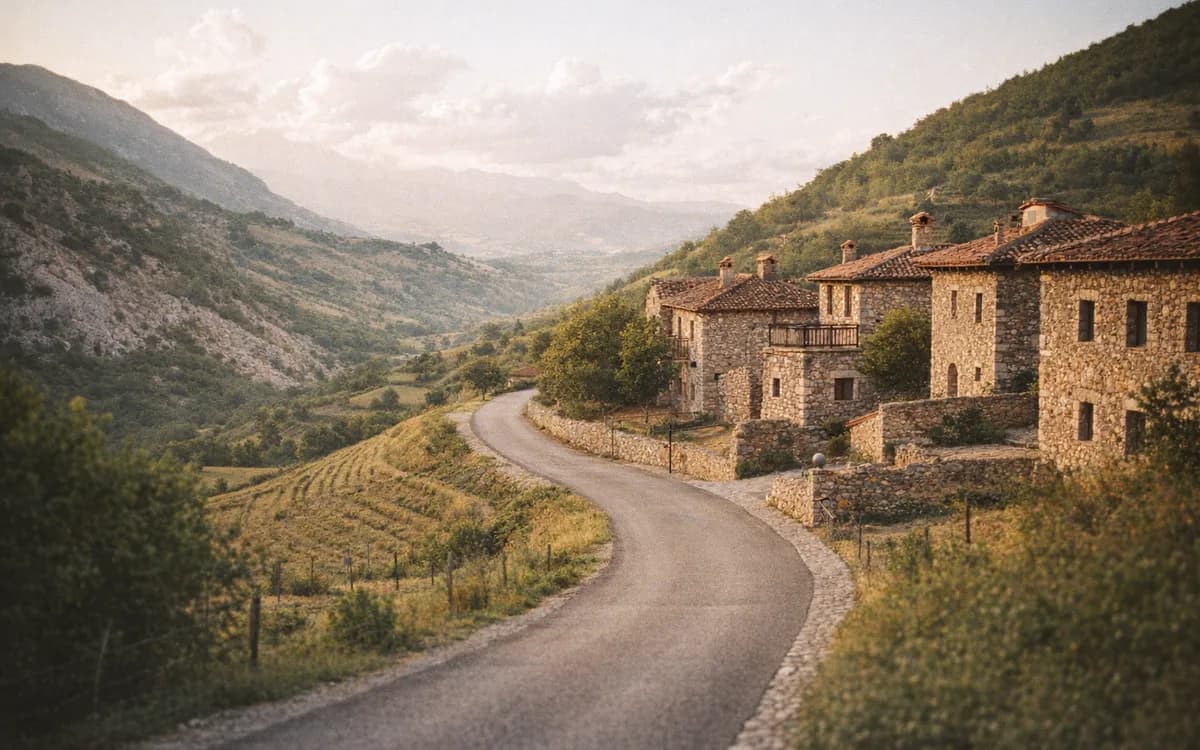
In Mat and around Klos, these towers belong to the wider tradition of Albanian kulla houses, but they should be understood through their own valley. They stand near fields, lanes, courtyards and family plots. Some are still connected to private households. Some are ruins. Some have been repaired, adapted or partly restored. The respectful visitor looks first from the road and asks before stepping closer.
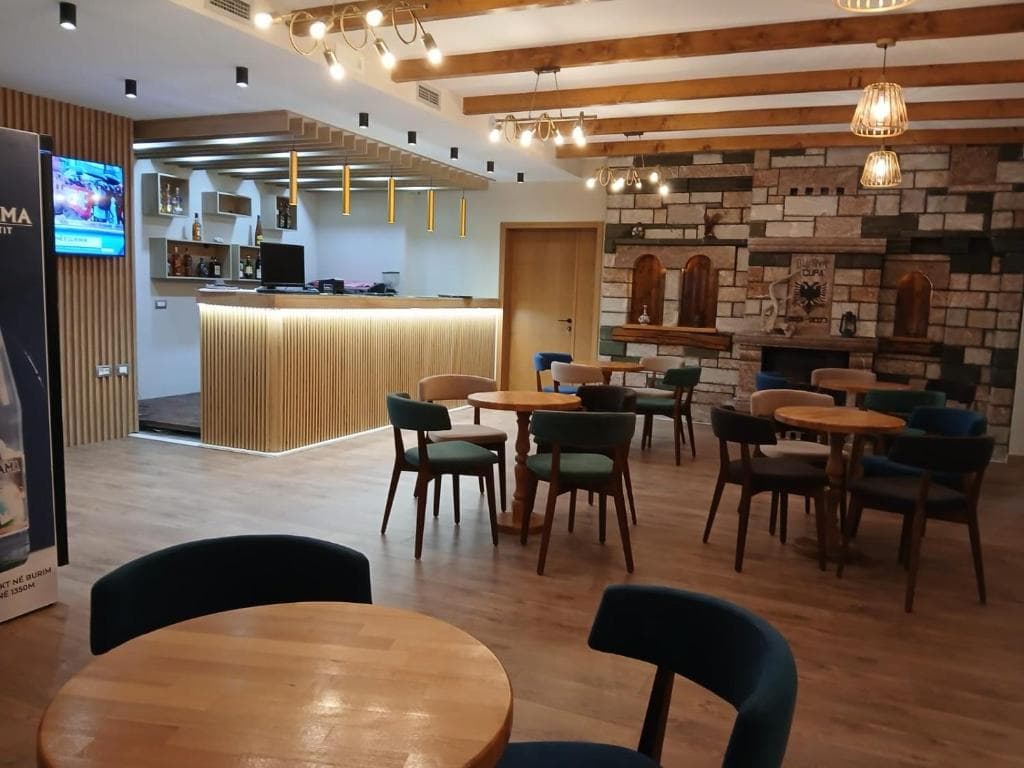
We feel close to this architecture because our own guesthouse in Fshat, on Rruga e Arbërit near Klos in Dibër County, was built in the traditional style of an Albanian stone castle. It is newer, opened in December 2024, but the material language is familiar: stone walls, careful proportions and a belief that a building should sit honestly in the mountains.
A tower-house, not a castle
A kulla was usually a family building. Its strength came from thick walls, limited openings and upper floors where life could be safer and warmer. The lower parts often served practical needs such as storage, animals or work space, while the higher rooms held the more private and social life of the household.
That vertical rhythm matters. A tower-house looks upward because it had to protect, observe and gather family life into a small footprint. A castle controls territory. A kulla protects a household.
Why Mat’s towers feel different
Mat’s towers are tied to valleys, slopes and roads rather than to a single monument site. You may see a stone wall beside a vegetable garden, a tower shape behind a newer roof, or an old gateway that still frames everyday village movement. The beauty is not always polished. Often it is in the survival: stone patched by family hands, timber replaced when needed, and buildings that still belong to people rather than to display boards.
Albanian kulla houses: the architecture to look for
Albanian kulla houses reward slow looking. From a distance, notice the mass first: thick stone walls, upright volume and a roofline that often feels compact against the hillside. Closer in, pay attention to small windows, heavy timber elements, deep openings, gateways, courtyards and stairs that show how people moved between working areas and family rooms.
Many traditional towers in Albania were designed around practical pressure. Winters could be hard. Families needed secure storage. Animals, tools, grain, firewood and guests all had their place. Stone was available, strong and familiar. Timber gave floors, roofs and warmth. The design was not decorative in the modern sense, but it had dignity because every choice served use.
Stone, timber and vertical living
A design-minded traveler should begin with how the tower meets the ground. Is it set into a slope? Does the lane approach from below or from the side? Are there views over fields or toward another ridge? These choices were not random. Sightlines mattered. Drainage mattered. Access mattered, especially in weather.
The upper rooms are part of the story too. In many tower-house traditions, the higher floor carried the more protected family space and the room where guests could be received. Hospitality and defense may sound opposite, but in mountain architecture they often lived together. A secure home was also a home able to host.
Signs of repair and survival
Do not expect every kulla to look untouched. A metal roof, a new window, a patched corner or a fresh cement seam can tell you that a family tried to keep the building standing. Reused stones may reveal a changed doorway. Different masonry styles may show different periods of repair.
For architects, this is where Mat becomes especially interesting. The towers are not only examples of old form; they are records of adaptation. A perfect ruin can be beautiful, but a repaired family building can teach more about continuity.
Shulbatër kulla, Kurdari tower heritage and villages near Klos
A short heritage circuit from Klos should be treated as a day of observation, not a checklist of doors to open. The stone heritage villages near Klos include places associated with Shulbatër kulla, Kurdari tower heritage and the wider Mat landscape of old houses, lanes and family compounds. Access changes. Ownership matters. A tower mentioned in a tourism listing may still require local permission, current road advice or an introduction before a visitor can approach.
From our side of Klos, we suggest planning the route with time to stop, walk quietly and let the villages explain themselves. The road may bring you near a tower, but the better understanding comes from the setting around it: terraced land, barns, gates, paths, views and the way newer houses sit beside older stone.
Specific towers to know near Klos
Several named towers help travelers understand the spread of this heritage without turning the day into a race. In Kurdari, Sataj’s Tower is one important name to know. In Shulbatër, Gjini’s Tower and Shaban Zajmi’s Tower are often mentioned in the same conversation about stone houses and village memory. Closer to us, The Old Tower in Fshat matters because Fshat is not only where we welcome guests today; it is also part of the older Klos landscape of lanes, walls and family compounds. You may also see Gurrë e Vogël included as a nearby tower example in local tower-tour materials.
Please treat all of these names as starting points, not promises of open access. Some buildings may be private, unsafe, closed, partly restored or reachable only with local help. Ask before entering courtyards. Accept a no. The name on a list is useful, but the living village around it comes first.
You can see our rooms if you want to sleep in Klos before or after the circuit.
Shulbatër kulla and village context
Shulbatër is one of the names travelers often search when they begin looking for a Mat tower experience. That interest is good, but it should come with care. A village is not an open-air museum. If a host, owner or local contact has arranged a visit, you may learn more in ten minutes of respectful conversation than in an hour of photographing walls from the wrong place.
Notice how the tower relates to the village rather than only how it looks alone. Is there a courtyard? Are there older boundary walls? Does the building face a lane, a field or a view? These small details help you understand how a kulla worked as part of a household.
Kurdari and the Mat tower landscape
Kurdari tower heritage belongs to the same wider landscape of stone, family history and rural roads. Conditions can vary by season, and not every building connected to heritage interest is prepared for casual visitors. That is normal in living villages.
The best approach is patient: check access, drive slowly, park without blocking lanes, and ask before walking into private space. If you are Albanian diaspora returning with family stories, this patience matters even more. Heritage is emotional. People may be proud to share, but they also have ordinary days, work and privacy.
Pairing towers with Mat valley heritage
If you have more time, pair the tower circuit with wider Mat history. The region carries royal history, village architecture, agricultural memory and mountain routes in a small area. A morning among towers and an afternoon following other Mat Valley heritage makes more sense than rushing from one isolated site to the next.
At Bujtina Çupa we often see that travelers remember the pauses: a ridge view, a quiet lane, a stone corner catching late light. Those pauses are where the tower stops being an object and becomes part of a lived place.
How to visit traditional towers in Albania respectfully
Traditional towers Albania travelers come to see are often still private, family-owned or connected to households nearby. The first rule is simple: stay outside courtyards, gates, interiors and enclosed land unless someone has clearly invited you in. Ask before photographing people. Keep drones away from homes. Leave stones, tools and old objects exactly where they are.
Albanian hospitality, mikpritja, is real and deeply valued, but it should never be treated as an automatic service. A family may welcome you warmly. They may also be busy, absent or not comfortable receiving visitors. Respect both answers.
If you want help checking access or local conditions, get in touch before you set out.
Photography and privacy
The kindest photographs usually begin from public space: a building across a lane, a roofline against a hillside, a wall holding the bend of a path. Gates, courtyards and interiors are more private than they may appear. If people are in the frame, ask first. If the answer is no, accept it with a smile and move on.
For photographers, the best images often come from distance anyway: a tower against a hillside, a stone wall with a lane bending around it, morning light on repaired masonry. These views respect the village and still carry the story.
When a local guide helps
A guide or local host can make a heritage circuit easier and more respectful. They may know which roads are passable, which buildings are safe to approach, and which families have previously welcomed visitors. They can also translate small stories that a wall alone cannot tell: who repaired a roof, why a doorway was closed, how a family used the upper room.
This is especially useful for architects and diaspora visitors. One group may be reading structure; the other may be reading memory. Both need context.
Planning a Klos stone towers day trip
Mat kulla towers make the best day trip when the morning is unhurried. Have breakfast, check the weather, then leave enough daylight for village roads and unplanned stops. In our restaurant, breakfast is served from 07:30 to 09:30, which gives you a natural start before the roads grow busier or the summer light becomes harsh.
Spring and autumn are often the easiest seasons for this kind of trip. The light is softer, the walking is more comfortable, and village roads are usually simpler than in winter. Summer can be excellent too, especially with an early start and water in the car. Winter visits need local advice because daylight, rain, snow or mud can change the plan quickly.
Best season and time of day
For photography, early morning and late afternoon give stone more texture. Midday can flatten the walls and make narrow lanes feel hotter. If you are visiting in colder months, aim to return before dark. Rural roads are easier when you are not guessing at turns after sunset.
The Murriz Tunnel opened to traffic on March 14, 2025, and Rruga e Arbërit has made access from Tirana much easier; allow roughly around an hour from Tirana to the Klos area, depending on your start point, traffic and road conditions. It is still a mountain road trip, not a city transfer, so give yourself room for weather, coffee and a slow arrival.
What to bring
Bring comfortable shoes for uneven lanes, a charged phone, offline maps, water, a light layer and respectful clothing for village settings. Carry some Albanian lek for cafés or small local purchases. Do not depend on every village having card payments or strong mobile signal.
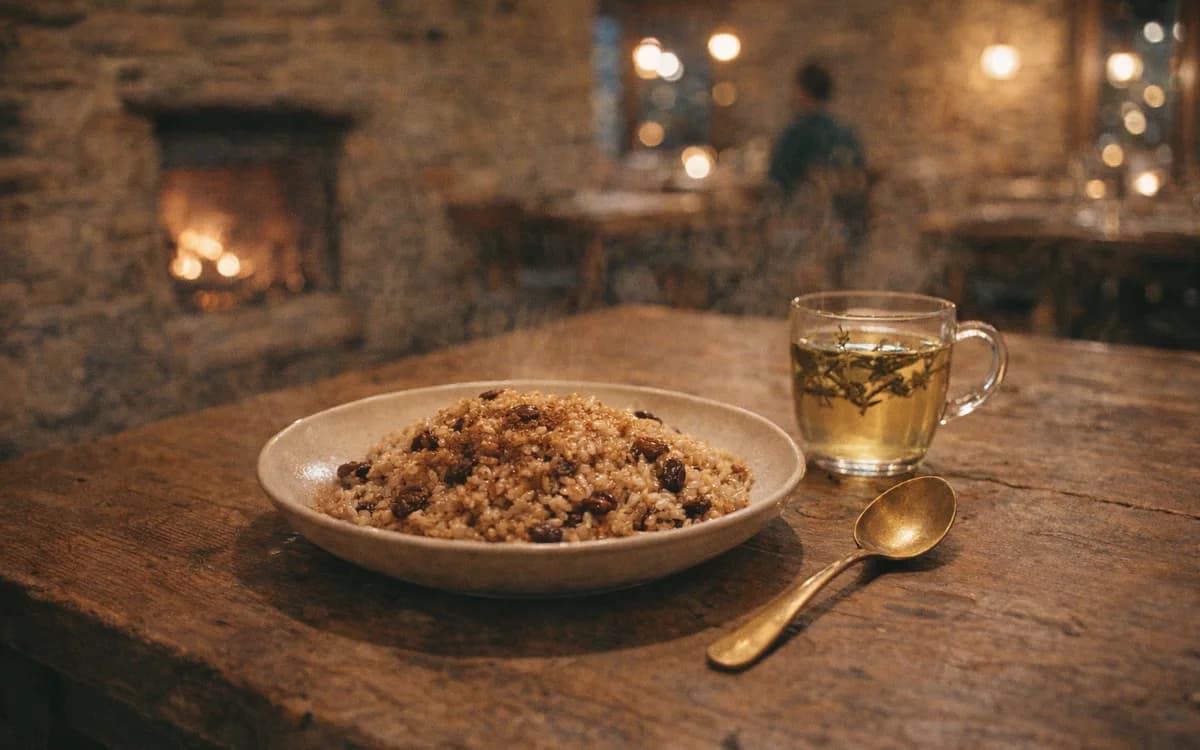
When you come back from the villages with dust on your shoes and stone walls still in your eyes, our evening table is waiting from 18:00 to 22:00 with the kind of food that belongs after a heritage day: Tavë dheu, Byrek Bujtine, or Pule fshati me jufka if you want a proper village-style dish to share. Food is another form of heritage, especially when it comes from the garden, nearby farms and the wood-fired oven.
What Mat’s kulla heritage means for the future
Kulla heritage can disappear quietly. Weather opens a roof. Migration leaves a house empty. A repair made too quickly changes the character of a wall. A family may not have the money, time or reason to maintain a building that no longer fits modern life. Mapping and revitalization efforts matter because they make these towers visible before they are lost.
Tourism can help, but only if it stays careful. Visitors bring attention, income and pride. They can also bring noise, trespass, drones and pressure on families who did not ask to become an attraction. The difference is behavior.
Preservation starts with attention
Slow heritage travel begins with attention. Pause before entering. Ask before photographing. Use local knowledge. Stay in the region instead of rushing through. Buy coffee where it is offered. Listen when someone explains that a building is private, unsafe or not ready for visitors.
The value of these tower-houses is not only in old stone walls. It is in the skills that placed them, the families that guarded them, the repairs that kept them standing and the villages that still live around them. When you travel this way, you help keep the story human.
Frequently asked questions
Where are these tower-houses near Klos?
Mat kulla towers are found in villages around the Mat region and Klos area, including places associated with Shulbatër, Kurdari, Fshat and Gurrë e Vogël. Access varies because many towers are private, partly restored or connected to family property.
Can visitors enter Albanian kulla houses?
Visitors should enter a kulla only with permission from the owner, host or local guide. Many Albanian kulla houses remain private family property.
What is a kulla in Albania?
A kulla is a traditional fortified stone tower-house, built for family living, protection, storage and hospitality in mountain and rural communities.
What is the best season to visit Klos stone towers?
Spring through autumn is the best season for visiting Klos stone towers because roads, daylight and walking conditions are easier. Winter visits need current local advice.
Are Shulbatër kulla and Kurdari tower heritage suitable for a day trip?
Yes, they suit a slow heritage day trip from Klos when access, road conditions and local permission are checked in advance.
Want to base yourself in Klos while tracing Mat’s stone tower villages with care? Book your stay and we will help you leave room for the stories behind the walls.