In this article
- What Is Albanian Tarator?
- Ingredients for a Guesthouse-Style Tarator Recipe
- How to Make Tarator Step by Step
- Serving Tarator the Albanian Summer Way
- Common Tarator Mistakes and Easy Fixes
- Tarator Albania Variations: From Klos Tables to Home Kitchens
- Plan a Summer Food Stay Around Albanian Recipes
- Frequently asked questions
What Is Albanian Tarator?
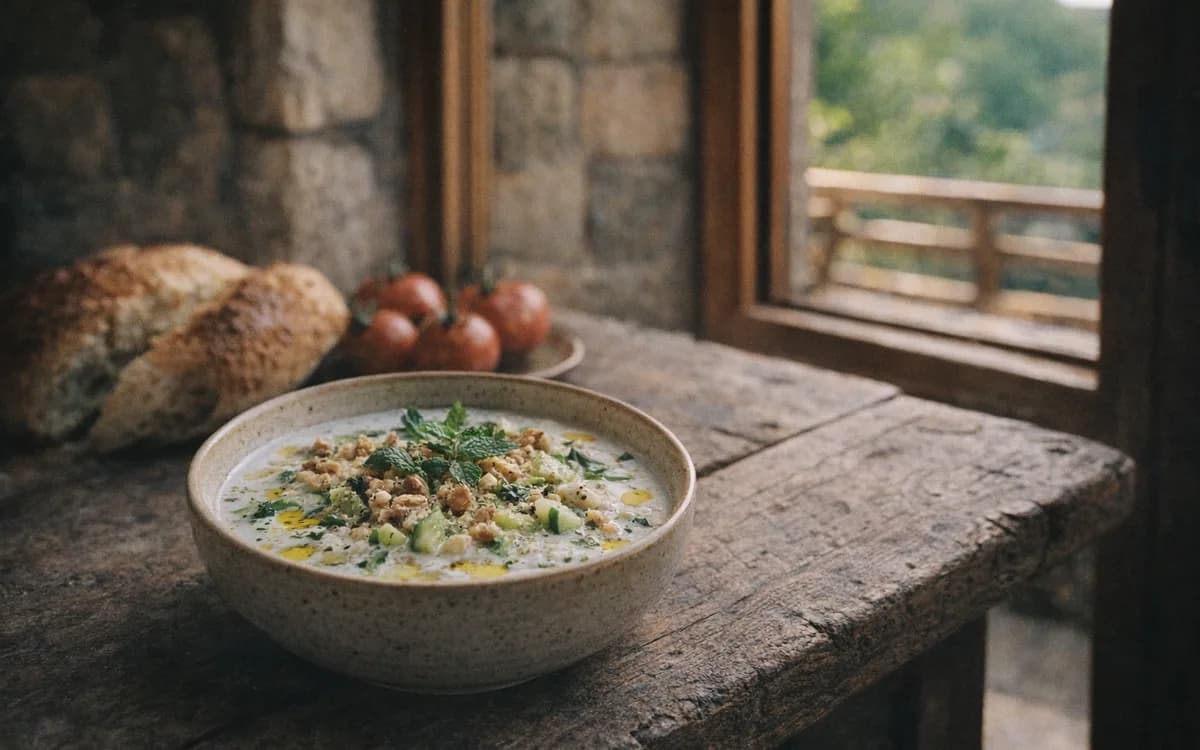
This tarator recipe is the kind of summer food we think about when the valley is hot, the cucumbers are firm, and the table needs something cool beside grilled meat, tomatoes, and warm bread. Albanian tarator is a cold cucumber yogurt soup, sometimes loose enough to eat with a spoon and sometimes thick enough to sit beside the main plate like a salad or sauce.
At its simplest, tarator is made from plain yogurt, cucumber, garlic, olive oil, salt, herbs, and cold water. That is all. The flavor comes from the balance: tangy yogurt, crisp cucumber, a clean hit of garlic, and herbs that make the bowl feel colder than it is.
Across the Balkans, tarator changes from house to house. Bulgarian versions often bring walnuts and dill to the front. In Albanian homes, especially in summer, you will see both thinner and thicker versions. Some families chop the cucumber. Some grate it. Some add walnuts. Some keep it plain and sharp.
Soup, sauce, or salad?
The texture changes the eating moment more than the name. Thin tarator with cold water and it becomes a spoonable Albanian summer soup for lunch. Keep it thick and it works beside qofte, lamb, chicken, roasted peppers, or boiled potatoes with olive oil.
We like to think of tarator as a flexible bowl. If the meal is light, make it soup-like. If the table is full, keep it thick enough to scoop with bread.
Ingredients for a Guesthouse-Style Tarator Recipe
For 4 servings, you will need:
- 2 cups thick plain yogurt - full-fat yogurt gives the best body and clean tang.
- 1 medium cucumber - small, firm cucumbers are best if you can find them.
- 1 small garlic clove - use more if you want a sharper table-style tarator.
- 1 to 2 tablespoons olive oil - enough to soften the garlic and round the yogurt.
- 2 to 4 tablespoons cold water - add slowly until the texture is right.
- Salt - start lightly, then adjust after chilling.
- Fresh herbs - dill, mint, or parsley all work.
- Optional walnuts - finely chopped, added at the end for crunch.
Do not use sweetened yogurt. Greek-style yogurt works well, but it needs cold water to loosen it. If your cucumber has a tough or bitter skin, peel it. If the center is very seedy, scrape it out before chopping or grating.
Garlic should support the yogurt, not burn through it. One small clove is enough for a gentle version. Two cloves make a stronger bowl, better with grilled meat and bread.
The yogurt matters most
In our kitchen in Fshat, on Rruga e Arbërit near Klos, simple dishes depend on the quality of the main ingredient. Tarator is a good example. Technique helps, but thick plain yogurt gives the soup its body.
At Bujtina Çupa, our restaurant cooks with garden produce and nearby farms, and our wood-fired oven is used for breads, pies, and slow dishes. That same way of thinking fits tarator at home: choose the best yogurt and cucumber you can, then do very little to them.
See our kitchen for the Albanian dishes we cook at Bujtina Çupa.
Herbs and walnuts: optional, not decoration
Dill makes tarator bright and grassy. Mint makes it feel especially cold on the palate. Parsley keeps the flavor familiar and clean. Use what is fresh, not what feels most official.
Walnuts are optional. If you use them, chop them finely and add them just before serving so they keep their texture. A small handful is enough. Tarator should still taste like yogurt, cucumber, and garlic first.
How to Make Tarator Step by Step
-
Prepare the cucumber. Grate the cucumber for a softer soup-like tarator, or dice it finely for a crunchier side dish. If the cucumber is watery, salt it lightly and let it sit for 5 to 10 minutes. Squeeze it gently before adding it to the yogurt.
-
Crush the garlic. Put the garlic clove on a board with a pinch of salt and crush it into a paste. This matters. Garlic paste spreads through the yogurt evenly, while chopped garlic can bite too hard in one spoonful.
-
Whisk the yogurt. Put the yogurt in a bowl and whisk until smooth. Stir in the garlic paste, cucumber, olive oil, herbs, and a little salt. If you are using walnuts, you can stir in half now and save the rest for the top.
-
Thin slowly. Add cold water one tablespoon at a time. Stir after each spoonful. Stop when the tarator is exactly where you want it: loose enough for soup, or thick enough for a side dish.
-
Chill before serving. If you have time, cover the bowl and chill it for at least 20 minutes. The garlic softens, the cucumber cools the yogurt, and the salt settles into the mixture.
-
Finish the bowl. Taste again before serving. Add a final thread of olive oil, a little more herb, and cracked black pepper if you like. Add the last walnuts at the end so they stay crisp.
The finished tarator should be cold, tangy, lightly garlicky, and fresh. The cucumber should still have some life in it. If it tastes heavy, add a spoon of cold water. If it tastes flat, add salt in small pinches.
Grated cucumber or diced cucumber?
Grated cucumber gives a softer texture and releases more juice into the yogurt. This is good when you want a bowl of cold cucumber yogurt soup with bread for lunch.
Diced cucumber keeps its crunch. We prefer it when tarator is served beside grilled foods, smoky vegetables, or anything from the oven. The small pieces make the bowl feel more like a salad, even when the yogurt is loosened.
How much water to add
Start with less water than you think. Yogurt loosens as it sits, and cucumber releases liquid after salting. If you add too much water at the beginning, the tarator can turn thin before it reaches the table.
For a spoonable soup, add 3 to 4 tablespoons cold water, or more if your yogurt is very thick. For a mezze-style side, use 1 to 2 tablespoons, just enough to make the yogurt smooth.
Serving Tarator the Albanian Summer Way
Tarator belongs to hot afternoons, outdoor meals, and tables where the food is simple but generous. It cools the plate without making the meal heavy. That is why it works so well beside grilled meat, fried vegetables, fresh tomato salad, and bread.
At home, serve tarator with grilled Albanian meatballs, lamb, chicken, roasted peppers, fried eggplant, boiled potatoes with olive oil, or warm bread. It also works with byrek, especially when the pie is rich and needs something cool beside it.
At our mountain table near Klos, we think about contrast. A hot dish from the grill or oven wants a cold spoonful beside it. A plate of tomatoes wants yogurt and garlic. Bread wants something to drag through.
Best dishes to serve with tarator
Good pairings include qofte, grilled trout, chicken, lamb, smoky peppers, and potatoes. If you are cooking from our menu for inspiration, think of dishes like Trotë zgarë, Fileto pule, or Mish qingji with a cool bowl of tarator on the side.
For a lighter Albanian summer soup meal, serve tarator with warm bread, olives, and a tomato-cucumber salad. For a fuller table, add Byrek Bujtine or another homemade byrek, then bring tarator in a chilled bowl.
Join our cooking class if you want to learn Albanian dishes by hand during your stay.
Make-ahead serving notes
You can make tarator a few hours ahead. Keep it covered in the refrigerator and stir well before serving, because cucumber releases water as it sits.
Add herbs and walnuts just before the bowl goes to the table. Herbs lose brightness if they sit too long in yogurt, and walnuts soften quickly.
Common Tarator Mistakes and Easy Fixes
Watery tarator usually comes from watery cucumber, thin yogurt, or too much water added too quickly. Salt and drain the cucumber, use thicker yogurt, and thin the bowl one spoonful at a time.
If the garlic tastes too sharp, do not throw the bowl away. Add more yogurt and a little more cucumber, then chill it. Cold softens the garlic flavor. So does time.
If the flavor is flat, add salt slowly. Then finish with olive oil and fresh herbs. Tarator is simple, so every small adjustment shows.
If the cucumber tastes bitter, peel it and remove the seedy center. Next time, choose smaller cucumbers with tight flesh and thin skin.
If the yogurt looks grainy or split, whisk it before adding anything else and make sure the water is cold. Warm water is not welcome here. Tarator should stay cold from the first stir to the last spoonful.
If the bowl is too thick, loosen it with ice-cold water one tablespoon at a time. If it becomes too thin, add more yogurt or a spoonful of finely diced cucumber.
How to store leftovers
Store leftover tarator covered in the refrigerator. It is best within 24 hours, while the cucumber is still fresh and the herbs still taste alive.
Stir before serving again. Do not freeze tarator. Yogurt and cucumber lose their texture after freezing, and the bowl will not come back the same way.
Tarator Albania Variations: From Klos Tables to Home Kitchens
There is no single official tarator Albania version that every family follows. The best version is the one that fits the meal in front of you.
For a thicker mountain-style bowl, use strained yogurt, diced cucumber, less water, and enough garlic to stand up to grilled meat. This version works as a side dish and can sit beside warm bread, potatoes, or vegetables.
For a lighter lunch version, grate the cucumber and add more cold water. Serve it in bowls with bread. This is the version we like on the hottest days, when the meal should cool you down quickly.
For an herb-forward version, use mint when the day is very hot, dill when you want freshness, or parsley when you want the flavor mild and clean.
For a walnut version, add a small amount of finely chopped walnuts just before serving. They give texture, especially if the tarator is thick enough to use as a dip.
Plant-based yogurt is not traditional, and it changes the flavor. If you need to use it, choose an unsweetened thick version and add salt, garlic, herbs, and olive oil carefully. The bowl should still taste clean, cold, and savory.
Start with the base recipe. Then adjust the texture for the table: soup for lunch, side dish for grilled food, thicker dip for bread and vegetables.
Plan a Summer Food Stay Around Albanian Recipes
Food travelers often come to Albania for dishes that feel close to the land: yogurt, cucumbers, tomatoes, bread, grilled meat, herbs, and cheese. Tarator fits that kind of table. It is not complicated. It depends on freshness, temperature, and balance.
Bujtina Çupa is a family-owned guesthouse in Fshat, Klos, in Dibër County. We opened in December 2024, with 9 rooms and a restaurant shaped around Albanian cooking, garden produce, and mountain views. Dinner service runs from 18:00 to 22:00, which is just right after a warm summer day on Rruga e Arbërit or a walk through the Mat Valley.
If you make tarator at home, remember the four things that matter most: thick yogurt, crisp cucumber, garlic crushed with salt, and a cold bowl. The rest is adjustment.
Want to taste summer dishes where the yogurt is thick and the cucumbers come to the table cold? Book your stay and we will keep a place for you at our mountain table near Klos.
Frequently asked questions
Is Albanian tarator the same as tzatziki?
No. Tarator is usually looser and served as a cold soup or side dish, while tzatziki is typically thicker and used as a dip or sauce. The ingredients overlap, but the texture and serving style are different.
Can tarator be made ahead of time?
Yes. Tarator can be made a few hours ahead and kept cold. Stir it before serving, and add herbs and walnuts at the end for the best texture.
Should cucumber be grated or diced for tarator?
Both work. Grated cucumber makes a softer soup-like tarator, while diced cucumber gives a crunchier side dish.
Does Albanian tarator always include walnuts?
No. Walnuts are optional in many Albanian homes. They add texture, especially in a thicker tarator, but they are not required.
How long does tarator last in the fridge?
Tarator is best within 24 hours. After that, cucumber releases more water and fresh herbs lose their brightness.