In this article
- What Is Trahana Albania? A Tangy Soup with Deep Roots
- How Traditional Trahana Is Fermented, Dried, and Stored
- How Trahana Soup Is Cooked in Albanian Homes
- Why Trahana Is Albanian Comfort Soup for Autumn and Winter
- What Trahana Tastes Like and What to Eat With It
- Where to Taste or Learn Trahana in Albania
- Frequently asked questions
What Is Trahana Albania? A Tangy Soup with Deep Roots
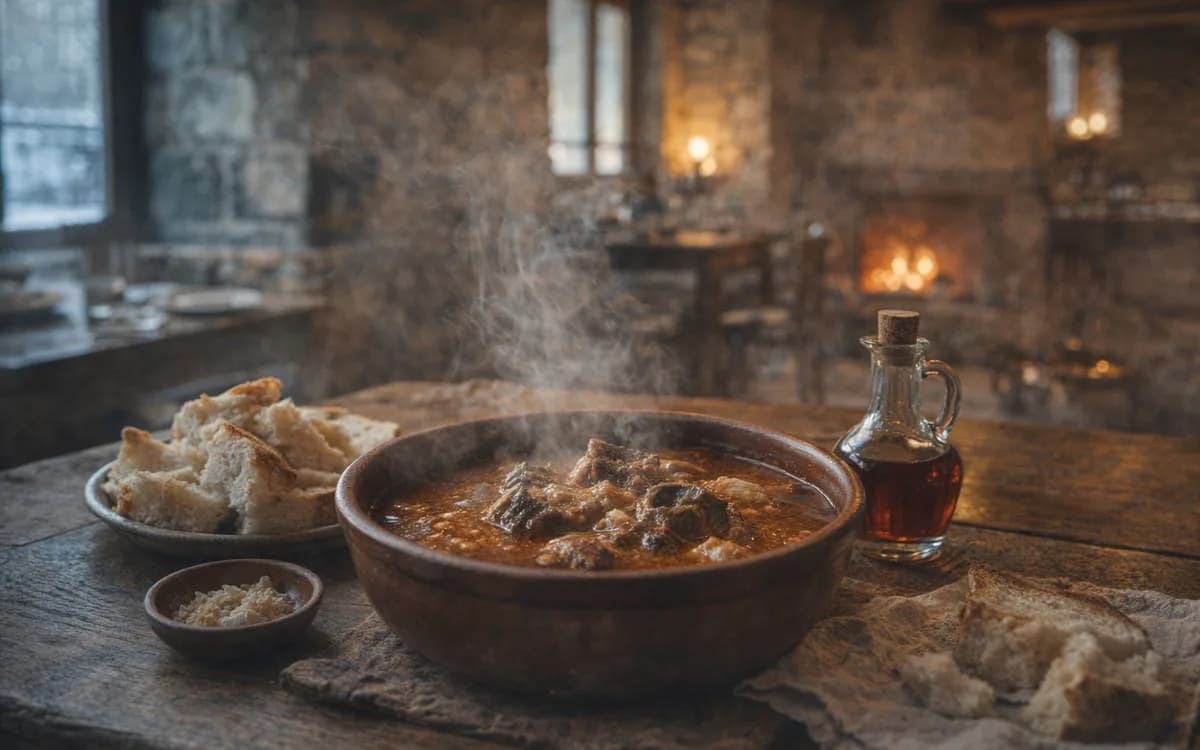
When the first cool mornings reach the mountains, trahana Albania begins to make sense immediately. A bowl steams on the table, bread waits beside it, and the sharp smell of fermented dairy softens into something warm and steady.
Trahana is a fermented mixture of grain and dairy that is dried, stored, and later cooked into soup. In Albania, it may be made with wheat, flour, cracked grain, or semolina, mixed with yogurt, sour milk, or buttermilk, depending on the household. Once it has fermented and dried, it becomes a winter food that waits patiently in jars, cloth bags, or sealed containers.
You will find relatives of trahana across the Balkans and the eastern Mediterranean. Some are looser, some are more sour, some are cooked with tomato or pepper, and some are almost like porridge. Here we speak about the Albanian way we know best: practical, seasonal, and tied to cold mornings in homes where nothing good is wasted.
Trahana is not fancy food. That is part of its strength. It tastes sour, creamy, wheaty, and simple. It can be breakfast before work, a light supper when the air turns damp, or a small bowl given to a guest without ceremony.
A food made for keeping
Trahana belongs to the old logic of preservation. Milk does not stay fresh forever. Grain can last, but it needs cooking. Fermentation joins the two, giving flavor and making the mixture useful long after the warm days have passed.
No one honest should tell you there is only one national recipe. Albanian families vary. A grandmother in one valley may make trahana different from a household across the mountain. The shared idea is what matters: summer work becomes autumn comfort.
How Traditional Trahana Is Fermented, Dried, and Stored
Traditional trahana begins before anyone is hungry for soup. The mixture is usually made in warm weather, when sun and air can help with drying. Grain or flour is combined with fermented dairy until it forms a thick dough or paste. Then it rests. The sourness develops. The grain drinks in the dairy. The smell changes from raw and milky to deeper and sharper.
After fermentation, the mixture is crumbled or spread thin. In many homes, trays are set outside where the air can reach them. Hands break the dough into smaller pieces again and again, because smaller pieces dry better and cook more evenly later. The sour aroma is stronger at first, then gentler as the trahana dries.
Weather decides much of the timing. A dry mountain day helps. Humidity slows everything. Some households dry trahana quickly in thin crumbs; others take more time and turn it often. The goal is simple: it must be dry enough to store safely for months.
Once ready, trahana can be kept in jars, cloth bags, or sealed containers. A scoop is enough for a small pot. That is why it is such a good example of Albanian fermented food. It is humble, but it solves real problems: how to keep dairy, how to feed a family in winter, how to carry flavor from one season into the next.
Summer work for autumn bowls
The best autumn foods are often prepared before autumn arrives. Tomatoes are cooked down. Peppers are roasted and stored. Pickles are put away. Trahana follows the same rhythm.
At Bujtina Çupa, we understand this seasonal table because our kitchen also works from what the garden and nearby farms give us. Our restaurant serves farm-to-table Albanian cooking, with dishes such as Tavë dheu, Byrek Bujtine, and Pule fshati me jufka when the menu calls for something deeply traditional. Trahana is not something we promise every day; it depends on the season and what has been prepared. But the thinking behind it is very close to the way mountain kitchens cook.
Why fermentation matters
Fermentation gives trahana its tang. Drying gives it patience.
For a first-time eater, the flavor may be surprising because it is sour in a savory way. It is not like lemon. It is closer to yogurt, sourdough, or kefir, but with the body of grain. When cooked slowly, that acidity becomes rounder. A little butter, olive oil, cheese, or broth can soften the edge without hiding it.
How Trahana Soup Is Cooked in Albanian Homes
The basic method for trahana soup is simple, but every cook has opinions. Some soak the dried trahana first. Others stir it straight into cold water, milk, or broth. The pot is warmed slowly, and the soup is stirred often because the dried grains thicken quickly. If the heat is too high or the spoon is forgotten, it can catch at the bottom.
At its plainest, trahana needs only liquid, heat, and a little fat at the end. Water makes a lighter bowl. Milk makes it creamier. Broth gives more depth, especially in cold weather. Some households add garlic or onion at the start. Others finish with dried mint, red pepper, white cheese, or bread cubes fried in butter.
Texture changes from home to home. One family may cook it smooth, almost like a savory porridge. Another may leave it slightly grainy, with a little chew. Neither is wrong. Traditional trahana is forgiving, and that is why it has lasted.
See our kitchen for the seasonal Albanian dishes we serve at Bujtina Çupa.
The simplest bowl
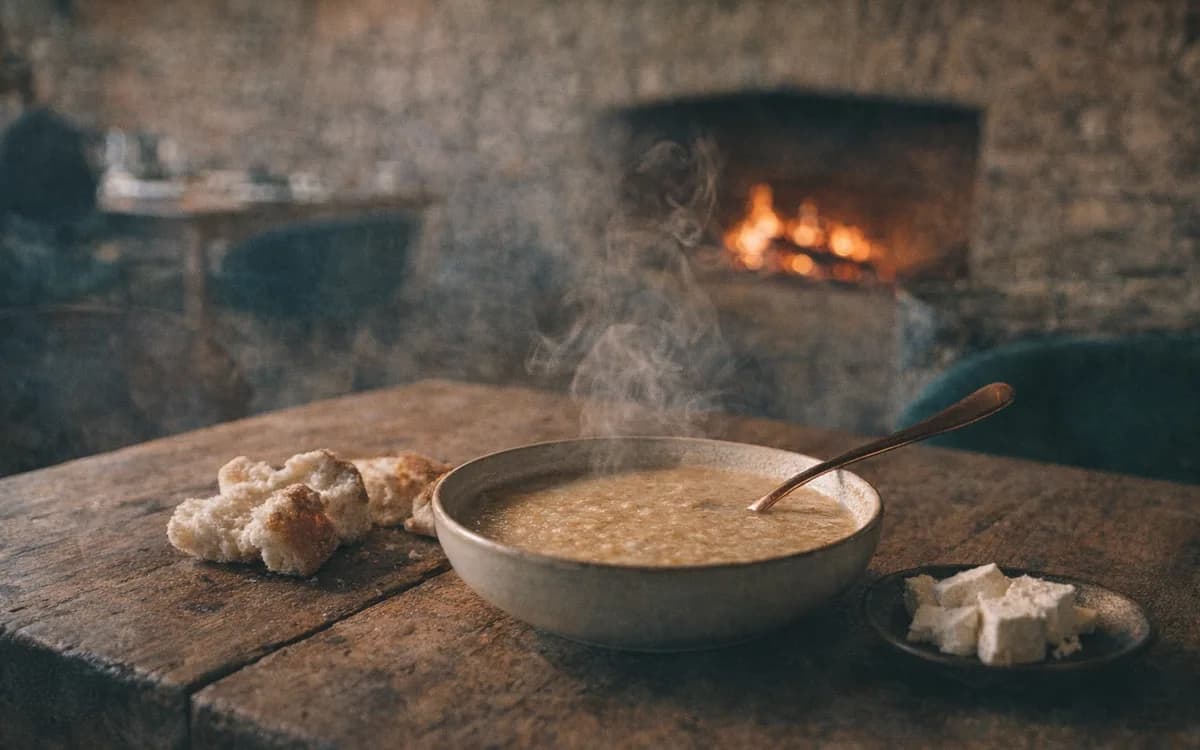
For a small pot, imagine a handful of dried trahana stirred into water or broth. The cook keeps the spoon moving as the liquid warms. The granules soften, swell, and thicken the soup. At the end, a spoon of butter or a thread of olive oil gives shine and richness.
This is a guide, not a fixed recipe. Some people like the soup loose enough to drink from a bowl. Others want it thick enough that the spoon stands for a moment before falling. Salt depends on the dairy, the broth, and the cheese added at the table.
In summer, Albania has other yogurt dishes that cool the body, such as tarator with cucumber and garlic. Trahana belongs to the other side of the year. It is what you want when the window is cold to the touch.
Broth, butter, and mountain appetite
In colder places, richer trahana makes sense. A broth-based pot after outdoor work has a different strength from a light breakfast bowl. Butter can be melted with a little red pepper and poured over the top. Crumbled white cheese adds salt and softness. Bread nearby is not decoration; it is part of the meal.
Our own mountain days in Klos, Dibër County, follow this appetite. Guests may spend the day on Rruga e Arbërit, or ask about our guided Hiking Rruga e Arbërit experience. Since the Murriz Tunnel opened in March 2025, the Tirana to Dibër corridor has become much faster, with the drive to us around 35–40 minutes via Rruga e Arbërit. Cold air, a walk outside, and a warm bowl have always understood each other.
Why Trahana Is Albanian Comfort Soup for Autumn and Winter
Trahana answers autumn before anyone makes a speech about the season. The mornings are darker. Shoes carry damp soil. The garden gives different things. A bowl of sour, warm grain begins the day without making the meal heavy.
That is why trahana is such a natural Albanian comfort soup. It can be light enough for breakfast and still warming enough for evening. Children grow up knowing its smell. Grandparents keep it in jars. A guest may receive it with bread, cheese, or pickles, not as a performance, but because there is a pot ready and the day is cold.
For food travelers, this kind of dish often teaches more than a formal restaurant plate. It shows how Albanians think about the year. Food is not only cooked when it is wanted; it is prepared when the season allows, stored carefully, and brought back when the body needs it.
Breakfast before the day begins
Soup for breakfast can surprise visitors from Europe or the United States. In an Albanian mountain household, it makes sense. A mountain breakfast soup gives warmth, salt, grain, and energy in one bowl. It is quick if the trahana has already been dried and stored. It asks for little more than a pot, a spoon, and someone willing to stir.
At Bujtina Çupa, breakfast service runs from 07:30 to 09:30, and colder mornings change what people crave. Some want eggs, cheese, bread, and coffee. Others ask about the foods Albanians keep for winter. Those questions are welcome here, because they often lead to the best conversations.
What Trahana Tastes Like and What to Eat With It
If you have never tasted trahana soup, expect tang first. The sourness comes from fermented dairy, but a well-cooked bowl should not be harsh. It is creamy when simmered, earthy from the grain, and warming without being heavy.
For an international comparison, think somewhere between savory porridge, yogurt soup, and a grain stew. Then forget the comparison after the first few spoonfuls, because trahana has its own character. It is old-fashioned in the best way: plain enough to eat often, interesting enough to remember.
Good partners are simple. Crusty bread. White cheese. Roasted peppers. Homemade pickles. Dried mint. A drizzle of olive oil. Some families add paprika or red pepper, but trahana is not usually spicy unless the cook chooses to make it that way.
People who already enjoy sourdough bread, kefir, yogurt, or fermented grains often understand traditional trahana quickly. The flavor opens as the bowl cools slightly, so the second spoonful may taste softer than the first. Give it time. Not every visitor loves sour foods immediately, and that is fine. Albanian tables have room for honest taste.
For travelers trying it the first time
Taste trahana slowly. Try it plain first, then with bread or cheese. Notice the thickness. Notice whether the sourness sits at the front of the tongue or becomes rounder with butter and broth.
If someone offers you homemade trahana, ask how it was dried. Ask what dairy they used. Ask whether their family cooks it thick or thin. The answer will probably teach you more than a printed recipe.
Where to Taste or Learn Trahana in Albania
Travelers looking for trahana in Albania should think seasonally. Guesthouses, village kitchens, family-style restaurants, and homes are the most natural places to ask. Autumn and winter are the strongest seasons, though dried trahana can exist in the pantry all year.
Ask before you expect it. This is not a dish that should be forced onto every menu just because a visitor has read the name. It depends on whether a batch was made, how it was stored, and what the cook is serving that week. Polite curiosity works better than certainty: “Do you make trahana here?” opens a warmer conversation than “I want the famous soup.”
For travelers who want to understand Albanian home cooking, a hands-on lesson can help. Our Traditional Cooking Class lasts 3–4 hours and may include byrek, traditional meat dishes, and bread baked in the wood-fired oven, depending on the season and group. It is a good way to learn the thinking behind foods like trahana: how families preserve, stretch, season, and serve what the land gives them.
Ask about our cooking class if you want to learn Albanian home cooking during your stay.
Bujtina Çupa is a family-owned guesthouse in Fshat, on Rruga e Arbërit near Klos, with 9 rooms and a kitchen rooted in the valley around us. We opened in December 2024, newly built in the traditional style of an Albanian stone castle, and we are still adding memories to these rooms one season at a time.
Trahana is not only a recipe. It is a preserved memory of warm months, served when the air turns cold.
Want to taste the food Albanians keep for cold mornings? Book your stay and ask us what is simmering in our kitchen when autumn reaches the valley.
Frequently asked questions
What is trahana in Albania?
Trahana in Albania is a fermented mixture of grain and dairy that is dried, stored, and later cooked into a tangy soup or porridge. Recipes vary by household, but the idea is always practical: preserve flavor for colder months.
Is trahana soup eaten for breakfast?
Yes. In many Albanian mountain households, trahana soup is eaten as a warm breakfast, especially in autumn and winter. It is simple, filling, and quick to cook when the dried trahana is already prepared.
Does trahana contain dairy?
Traditional Albanian trahana usually contains fermented dairy such as yogurt, sour milk, or buttermilk. Some family recipes may differ, so travelers with dairy restrictions should always ask before tasting.
What does trahana soup taste like?
Trahana soup tastes tangy, creamy, and wheaty. The fermentation gives gentle sourness, while slow simmering makes the texture thick and warming.
When is the best season to eat trahana in Albania?
Trahana is most closely associated with autumn and winter. It is often dried in warmer weather and cooked later, when cold mornings call for a hot bowl.