In this article
- What Makes This Albanian Quince Jam Different?
- Small Batch Quince Jam: Ingredients and Equipment
- How to Make This Quince Jam Recipe Step by Step
- Quince Jam Texture: Fixing Runny, Thick, or Tough Results
- How to Store Refrigerator Quince Jam Safely
- Serving a Quince Breakfast Spread the Albanian Way
- Frequently Asked Questions
What Makes This Albanian Quince Jam Different?
A quince can perfume a kitchen while still feeling almost impossibly hard beneath the knife. This quince jam recipe turns that firm autumn fruit into a soft breakfast spread: tender grated strands, a little lemon, and enough syrup to hold everything together without running off the bread.
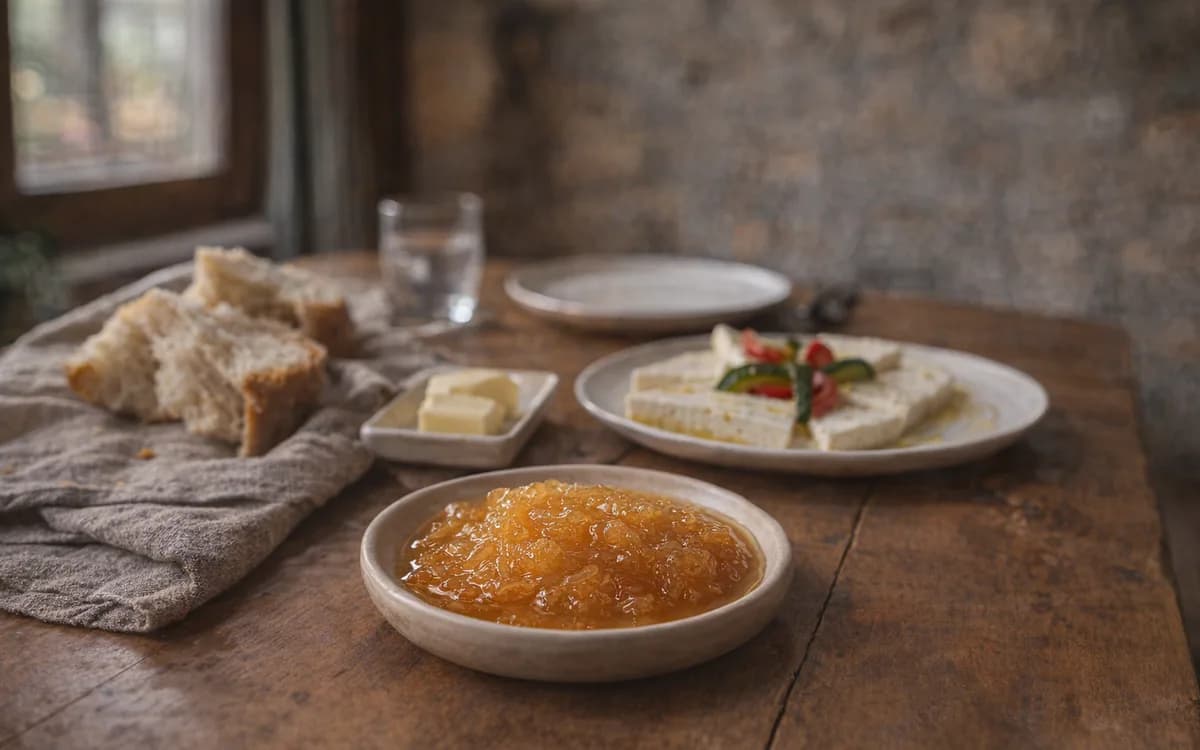
We like the contrast of sweet quince and salty white cheese at an autumn table. Put butter nearby. Tear a piece of bread, rather than covering every slice before everyone has sat down.
In Albanian, reçel ftoi means quince jam or preserve. Household versions vary in sweetness, cut, and consistency; this is an Albanian-inspired home batch, not a claim that every family makes it the same way. Grating the fruit gives a textured spread rather than a smooth jelly or a firm, sliceable quince paste.
It also differs from gliko-style preserves, where distinct pieces of fruit sit in syrup. Here, the strands mingle closely enough to spread with a knife, but remain visible on the spoon.
This is a refrigerator recipe, not a shelf-stable canning recipe. Make a modest batch for breakfasts ahead and freeze what you will not eat soon. A sealed lid does not change those storage requirements.
Small Batch Quince Jam: Ingredients and Equipment
Allow approximately 25 minutes for preparation and 45–65 minutes for cooking, with extra time if the fruit is particularly firm. These are working estimates: the tenderness of the strands and the consistency of a cooled spoonful decide when the jam is ready.
The finished quantity varies with evaporation. Have two small, clean, heat-safe containers ready rather than planning around an exact jar yield.
Ingredients
- 500 g quince flesh, weighed after peeling and coring
- 350 g granulated sugar
- 350 ml water, plus a little extra if needed during cooking
- 30 ml lemon juice — approximately 2 US tablespoons
Buy more than 500 g of whole quince; the peel and substantial cores will be discarded. An exact fruit count is not useful because quinces vary considerably in size. Weigh the prepared flesh before grating it.
Quince contributes the fruit and naturally occurring pectin. Water lets the hard strands soften before the mixture becomes concentrated. Sugar sweetens the preserve and helps build its consistency, while lemon keeps the flavor from becoming flat. The lemon quantity does not establish safety for cupboard storage.
Keep this first batch unspiced so you can taste the quince clearly.
Equipment
Gather a kitchen scale, sturdy knife, stable cutting board, coarse box grater, wide heavy-bottomed saucepan, stirring spoon, small plate, and clean heat-safe containers. Put the plate in the refrigerator before starting; you will use it to cool a sample quickly.
Choosing Ripe Quince
Choose fragrant, mostly yellow fruit. Ripe quince remains firm; it does not need to yield like a pear. Rub away the surface fuzz when washing, and reject moldy or rotting fruit. Quince is usually cooked rather than eaten like a raw apple: heat turns its tough flesh into something much gentler.
How to Make This Quince Jam Recipe Step by Step
Keep the heat moderate and give the fruit time. A wide pan encourages evaporation, but a fierce boil can leave you with a sticky bottom before the strands have cooked properly.
-
Prepare the fruit. Wash the quinces and rub away any fuzz. On a stable board, peel them, cut into quarters, and carefully remove the hard cores and seeds. Work in manageable pieces, keeping your fingers out of the knife's path. Weigh out 500 g of prepared flesh.
-
Grate coarsely. Use the large holes of a box grater, stopping before your fingers get close to the cutting surface. Transfer the grated fruit promptly to the saucepan. A little browning during preparation is normal oxidation; it is not a reason to discard otherwise sound fruit.
-
Soften in water. Add 350 ml water and bring to a gentle simmer over medium heat. Lower the heat and cook for approximately 15–25 minutes, stirring occasionally. Test a strand against the side of the pan with the spoon: it should crush readily, without a hard center. If the water nearly disappears before that happens, add a small splash of hot water and continue simmering.
-
Add sugar and lemon. Once the fruit is tender, stir in 350 g sugar and 30 ml lemon juice. Keep the heat low to medium and stir until the sugar dissolves completely. The mixture may loosen as the sugar draws moisture from the fruit.
-
Cook to a spoonable consistency. Simmer gently, uncovered, for approximately another 30–40 minutes. Stir more frequently as it thickens, sweeping the base and corners of the pan. Look for strands suspended in a thick mixture rather than floating in thin liquid. Begin checking a cooled sample before the jam looks fully thick in the hot pan.
-
Test on the chilled plate. Take the pan off the heat while testing. Put a small spoonful on the cold plate and let it cool for a minute or two. It should spread slowly when nudged, with no watery halo separating around it. If it is still loose, return the pan to a gentle simmer and repeat the test after a few minutes. Stop when the cooled sample is soft and spreadable, not stiff.
-
Transfer and refrigerate. Spoon the finished jam into clean, heat-safe containers. Use small containers so it cools readily, allow the fierce heat to subside briefly, and refrigerate promptly; do not leave it on the counter overnight. Keep refrigerated at 4°C/40°F or below and use clean utensils when serving. Freeze any surplus you will not eat soon.
Soften the Quince Before Adding Sugar
The tenderness check in step three is worth slowing down for. Once the sugary mixture concentrates, correcting firm fruit becomes harder. A strand that bends is not necessarily cooked through: press it against the pan and check that it crushes easily.
If it still feels woody, continue the water simmer. More sugar will not fix it.
Check the Set on a Cold Plate
Hot jam looks thinner than cooled jam, so judging only by the bubbling pan can lead to overcooking. We want a breakfast spread with tender strands, not a rigid jelly wrinkle. The cooled spoonful should sit together, then yield easily when pushed with a spoon.
Quince Jam Texture: Fixing Runny, Thick, or Tough Results
The simplest diagnosis starts with a cooled spoonful. Let that sample tell you what needs changing before adding anything to the whole batch.
The Jam Is Runny
If the cooled sample has loose liquid around the fruit, simmer the batch gently for a few more minutes and test again. Keep the intervals short as it approaches the right consistency. Evaporation can move surprisingly quickly in a wide pan.
The Jam Is Too Thick
Warm it gently with 15 ml water at a time, stirring until incorporated before deciding whether it needs more. Stop when a cooled sample spreads comfortably. Return the adjusted jam to the refrigerator afterward; adding water does not make it suitable for pantry storage.
The Strands Are Still Tough
This is a fruit-softening problem, not a setting problem. Add a little water and cook gently until the strands soften, then reassess the consistency. Avoid simply boiling harder: that concentrates the syrup while increasing the chance of scorching.
The Bottom Is Catching
Lower the heat and sweep the spoon across the base more often. If a layer has burned, transfer the unburned upper portion to another pan without scraping the bottom. Taste it; a persistent burned flavor cannot be stirred away.
Golden, rosy, and deeper amber shades are all possible. Do not keep cooking solely to chase a pink color. Likewise, avoid large sugar reductions on the first batch: they change the balance and texture, and do not justify longer storage.
How to Store Refrigerator Quince Jam Safely
This preparation has no validated water-bath processing method. It is not intended for pantry storage or for gifting as a shelf-stable preserve, even if a jar lid pulls down as the contents cool.
Use clean containers and utensils, label the preparation date, and refrigerate promptly at 4°C/40°F or below. Small containers help avoid a large mass of jam sitting warm for hours. Keep the main supply cold and take out only the portion you want for the table.
There is no recipe-specific refrigerated shelf life established here, so make it for near-term use rather than treating it as a preserve that will last for weeks. Freeze surplus early instead of waiting until you are unsure about its condition. Sugar and lemon are ingredients, not a substitute for appropriate storage.
For freezing, choose freezer-safe containers and leave expansion space at the top. Freeze in breakfast-sized portions if that suits your household, then thaw a portion in the refrigerator. Stir after thawing if a little liquid has separated.
Discard the entire container if you see mold, notice fermentation, or detect an abnormal odor. Do not scrape mold off the surface and eat the remainder.
If you want jars for the cupboard, use a separately tested quince canning recipe from an authoritative preserving source and follow its ingredients, jar sizes, and processing instructions exactly. Do not add a canning step to this method.
Serving a Quince Breakfast Spread the Albanian Way
Start with bread, butter, a small dish of jam, and white cheese on a separate plate. The quince supplies fragrance and sweetness; the cheese brings a salty edge. Keeping them separate lets everyone choose the balance they enjoy.
Warm bread is especially good because the butter softens into it while the cooled jam holds its texture. Use a modest spoonful. You should still be able to taste the bread beneath the fruit.
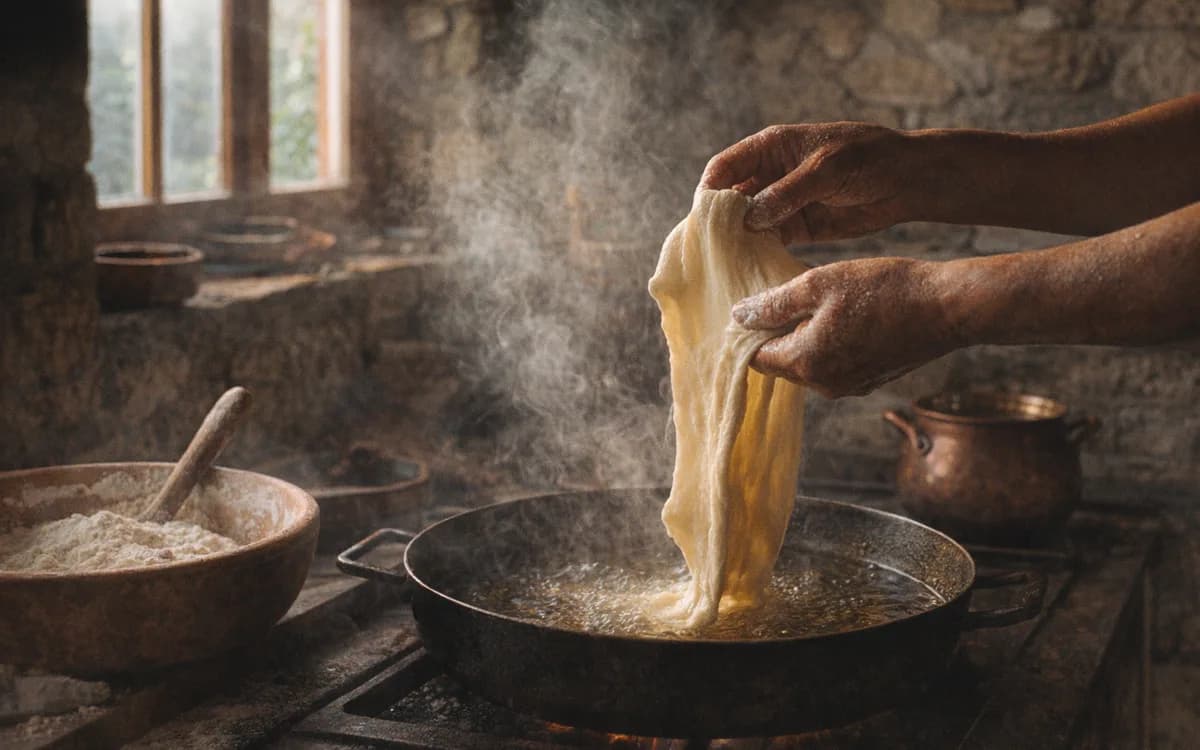
For a fuller table, petulla—Albanian fried dough—makes another pleasing companion. Our petulla recipe gives you something to cook alongside the jam, while our traditional Albanian breakfast introduces the wider table. Plain yogurt is an easy everyday alternative: spoon a little quince over it rather than sweetening the whole bowl.
At Bujtina Çupa, bread and pies connect naturally with our wood-fired oven. Byrek Bujtine, our house-style byrek, is one of the dishes listed in our kitchen; this home quince recipe is not a promise that jam appears on our menu. Our breakfast service runs from 07:30–09:30, leaving room for an unhurried morning meal.
At home, keep the arrangement just as simple. Bread first. A spoonful of fruit, a little butter, and enough time to enjoy them.
Frequently Asked Questions
Do quinces need peeling before making grated jam?
This grated quince jam recipe uses peeled, cored fruit for a more uniform texture. The 500 g ingredient weight refers to prepared flesh, not whole quinces.
Why are the quince strands still hard?
Hard strands indicate that the fruit has not softened enough. Simmer the grated quince in water until a strand crushes readily against the pan before adding sugar; extra sugar will not tenderize it.
Does quince jam have to turn pink?
No. Color varies with the fruit and cooking conditions, and the jam may stay golden or become rosy or amber. Tender strands and the consistency of a cooled sample are better measures of readiness.
Is this quince jam safe to store in a cupboard?
No. This is a refrigerator-batch recipe, not a tested canning recipe. Refrigerate or freeze it, even if a jar lid seals during cooling.
For an autumn morning in Klos and breakfast with us at Bujtina Çupa, book a stay.