In this article
What is Albanian papare?
Yesterday’s bread deserves another meal. This papare recipe turns it into a warm, savory breakfast with butter and crumbled white cheese, adding hot liquid gradually so the bread softens without becoming soup.
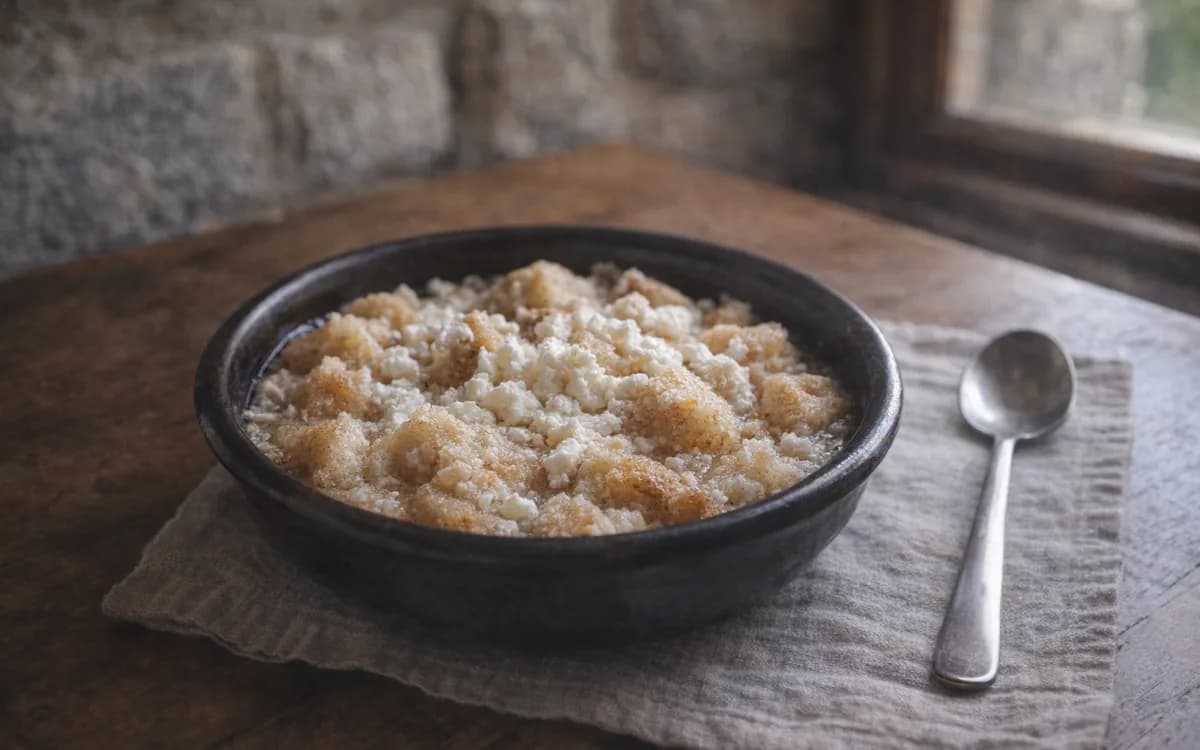
Papare is bread softened with hot liquid and enriched with fat. This version is papare me djathë (papare with cheese): a simple pan of moist bread, buttery edges and little pockets of salty cheese. Eat it warm, with a spoon, while the cheese is soft and the bread still has some shape.
Albanian papare varies between households. Water, stock and milk all appear in different preparations, and the cheese can change too. Here we use water or low-salt vegetable stock, keeping the flavor savory and the ingredients easy to find outside Albania.
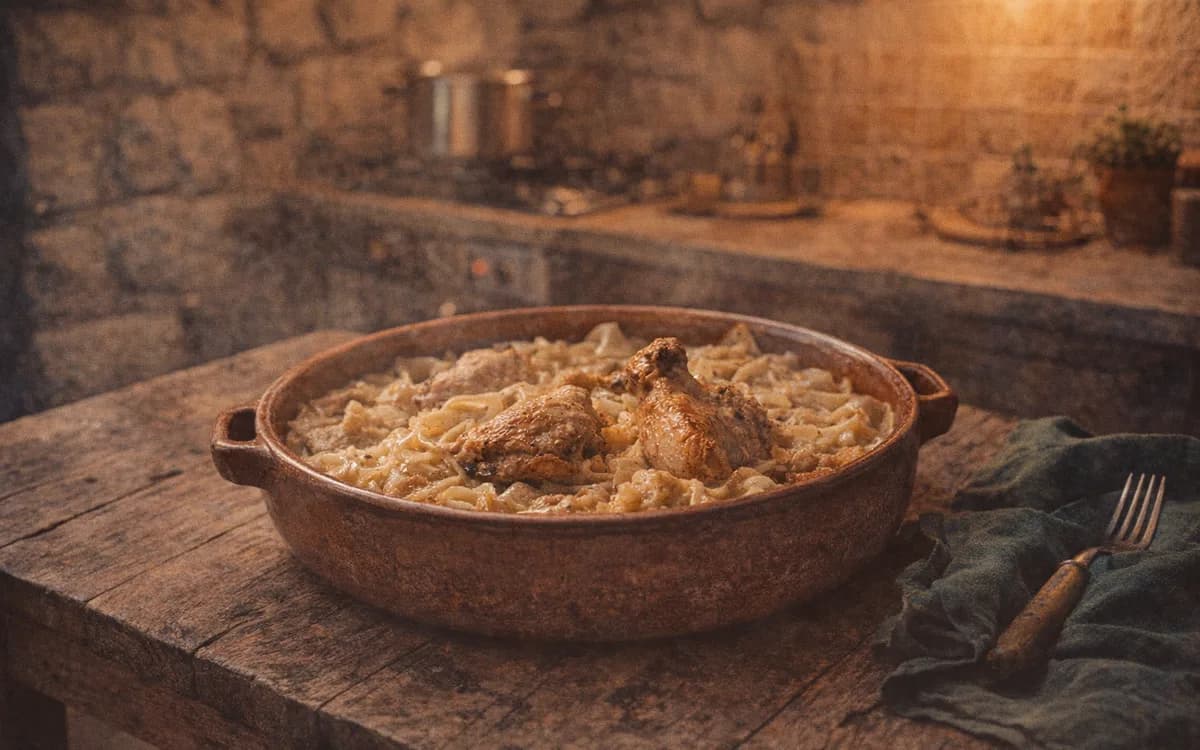
It is a useful breakfast for cold mornings, especially when a loaf has become too firm for a pleasant sandwich. It is not the poultry-and-cornbread dish përshesh; the names and preparations are not interchangeable. For this pan, plain wheat bread and white cheese are the starting point.
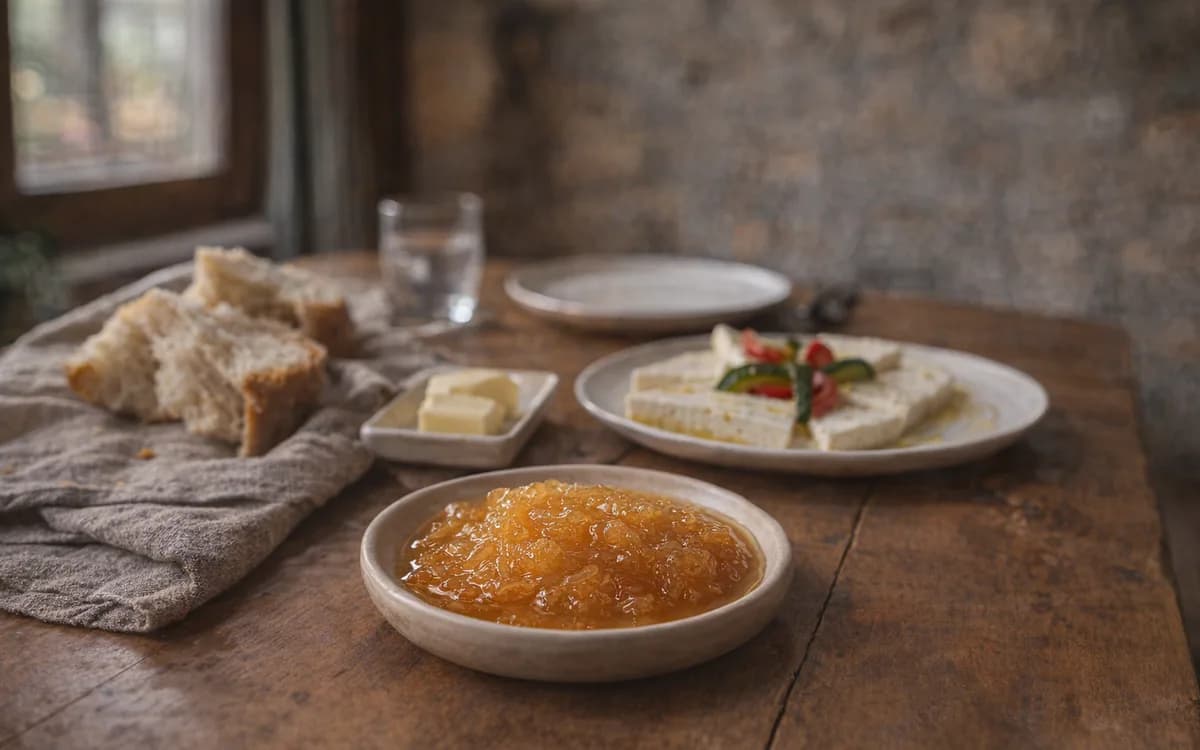
Ingredients for papare me djathë: bread, butter and cheese
Makes two servings. Use a medium saucepan or deep frying pan, preferably with a lid available for softening stubborn crusts.
- 200 g day-old plain wheat bread, torn into roughly 2–3 cm pieces
- 25 g butter
- 100 g brined white cheese or feta, crumbled
- 250–350 ml hot water or low-salt vegetable stock, kept ready; start with 200 ml and add more only as needed
- Salt, only if needed, after tasting
The liquid range gives you room to adjust, not a target you must pour into the pan. Soft bread may need less; a dry, thick-crusted loaf may need more of the reserved liquid. Stop when the bread is moist throughout and there is no large pool underneath it.
Weigh the bread rather than counting slices. Two thick slices from a country loaf can weigh as much as several thin sandwich slices, and that difference changes how much liquid the pan needs.
Which leftover bread works best?
Day-old crusty wheat bread is a good starting choice because its pieces are easier to turn without immediately collapsing. Keep the crust: it gives texture, provided you let it soften.
Soft white sandwich bread also works. Handle it lightly and use smaller additions of liquid. Avoid sweetened loaves for this savory version, and discard moldy bread completely; trimming or cooking does not make it safe.
White cheese, feta and gjizë substitutions
Brined white cheese contributes both salt and a crumbly texture. Feta is an accessible substitute, though its saltiness varies considerably.
Gjizë (a fresh curd cheese) varies in moisture and seasoning. It makes a softer, less briny version when used instead of white cheese. Well-drained ricotta is another practical option, but it is not identical to gjizë and may need a little salt. Our Albanian cheese guide explains these differences in more detail.
Papare recipe: how to make it step by step
Have the liquid hot before you begin. Keep the cheese crumbled and within reach so you can concentrate on the bread as it softens.
- Prepare the bread and liquid. Tear 200 g bread into roughly 2–3 cm pieces. Heat 250–350 ml water or low-salt vegetable stock separately, measure out 200 ml for the first addition, and keep the rest hot. Crumble 100 g cheese, reserving about one quarter for serving.
- Coat the bread with butter. Melt 25 g butter in a medium saucepan or deep frying pan over medium-low heat. Add the bread and turn it briefly to coat the pieces. There is no need to fry them until crisp or deeply browned.
- Add the first liquid. Carefully pour in the measured 200 ml hot liquid, spreading it around the pan. Fold the bread gently, then leave it over low heat while it absorbs the liquid. Check a thicker piece before adding more.
- Adjust the moisture. If the bread is dry or firm inside and there is little free liquid, add another 25–50 ml hot liquid. Pause between additions. For stubborn crusts, cover briefly over low heat, then check again. Stop when the pieces are soft and moist, with some shape remaining and no large pool of liquid.
- Add the cheese. Fold in the three quarters of the crumbled cheese that you have not reserved. Let it warm through over low heat, handling the bread as little as possible. Taste a bite containing both bread and cheese; add salt only if needed.
- Serve immediately. Spoon into two bowls and scatter the reserved cheese over the top. Serve while warm and moist.
Coat the bread and add hot liquid gradually
The butter coating is the method for this version, not a rule for every household’s papare. Turning the bread first distributes the butter before the crumb becomes delicate.
Holding back some liquid gives you control. Once bread is saturated, further stirring will not help it absorb an unlimited amount; it mainly breaks the pieces down. Fold from underneath rather than stirring in circles, especially with soft bread.
Fold in the cheese and check the texture
White cheese softens and spreads through the warm bread, but it need not melt into a smooth sauce. Small crumbles are part of the finished dish. Taste only after incorporating the cheese, particularly if you used stock, because both ingredients can contribute salt.
Crusty versus soft bread: adjusting liquid and fixing texture
The same bread weight does not guarantee the same liquid requirement. Age, crumb density, crust thickness and piece size all affect how quickly the bread softens. Use the following cues to adjust your pan rather than expecting every loaf to behave alike.
- Crusty bread: Check the center of a thick piece and the edge of its crust separately. The crumb may soften while the crust remains chewy. If liquid is still visible, give it time before adding more; a brief spell under the lid can help moisture reach the firmer parts.
- Soft bread: Use the smaller end of the 25–50 ml additions after the initial pour. Fold less often. Its delicate crumb can collapse before you have finished distributing the liquid, so keep the heat low and resist repeated stirring.
Smaller pieces soften faster, but very small crumbs can make the whole pan paste-like. Roughly even pieces make it easier to judge the result.
If the papare is dry or firm in the middle
When there is little moisture left in the pan, add 25–50 ml hot liquid, cover briefly over low heat and check again. If only the crust is firm while the pan is already wet, wait rather than pouring immediately. The bread needs a chance to absorb what is there.
If the papare is watery or too mushy
For pooled liquid, leave the pan uncovered over gentle heat so excess moisture can evaporate. Avoid vigorous stirring and watch the bottom for catching.
Bread that has already collapsed cannot be restored to distinct pieces. It is still spoonable, but use less liquid and fewer folds next time if you prefer texture.
If it tastes too salty, add no further seasoning. A little extra unsalted bread can dilute the saltiness, but it will also need enough hot water to soften; reassess the texture rather than adding bread alone.
What to serve with a savory bread breakfast
Papare is substantial on its own. A little plain yogurt, sliced cucumber or a few olives alongside it is enough. Keep the accompaniments cool and simple: they offer a contrast to the warm, buttery bread without turning breakfast into a large spread.
Serve in bowls rather than on flat plates, particularly if you like a softer finish. Put the bowls on the table promptly; as papare stands, the bread continues taking up moisture and the texture becomes heavier. For more breakfast-table ideas, see our traditional Albanian breakfast.
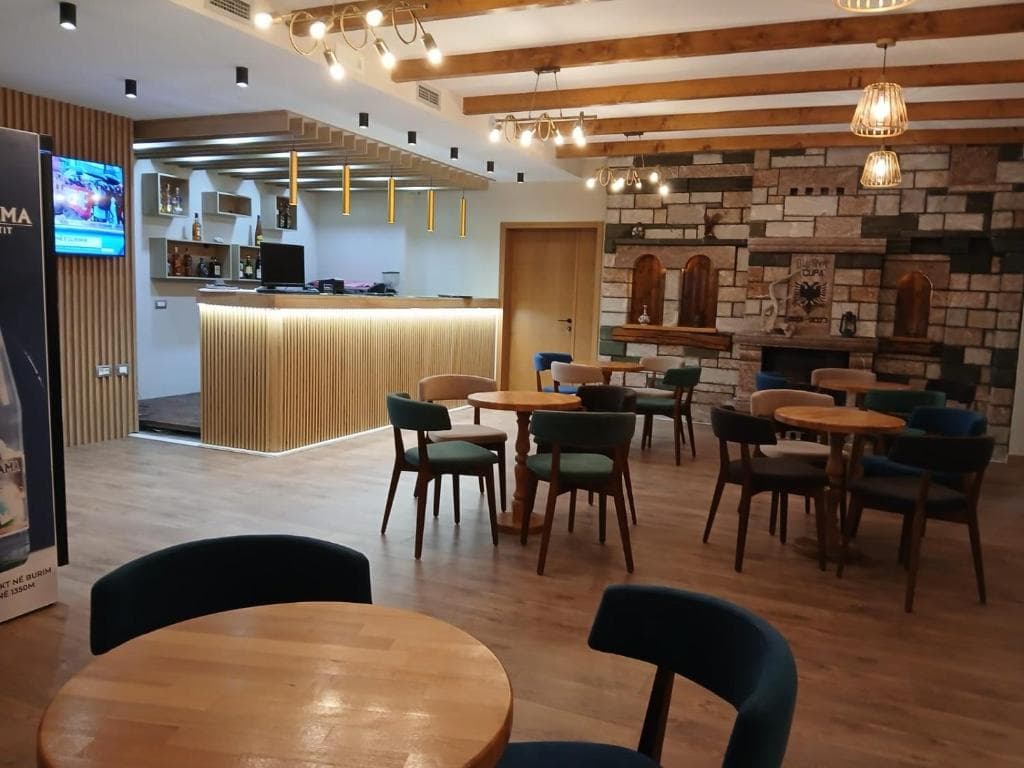
Bread and dairy also have a place in our kitchen at Bujtina Çupa. Our menu includes Byrek Bujtine (our house-style byrek) and Gjizë fshati (village ricotta with butter and eggs), and our wood-fired oven is used for breads and pies. Papare is not listed on our current menu; this is a dish you can make at home with the bread already in your cupboard.
Storing and reheating leftover papare
Papare has its best texture freshly cooked. As it sits, the softened bread continues to absorb moisture, so a refrigerated portion will usually be denser and less distinct than the bowl you first served.
Refrigerate leftovers in a covered container within two hours of cooking and eat them within one to two days. Do not leave this cooked, dairy-containing dish on the counter overnight. Keeping a dry loaf for tomorrow’s cooking is different from storing bread that has already been moistened and mixed with cheese.
Reheat only the portion you need in a saucepan over low heat. Add a small splash of water, loosen it gently and heat until steaming hot throughout. A lid can help it warm without drying at the edges; remove it if there is excess moisture.
This is not an ideal batch-cooking breakfast. Make two portions when you want them, and save the rest of the dry bread for another fresh pan.
Frequently asked questions
Can papare be made with fresh bread?
Yes, fresh bread works, but its soft crumb breaks down easily. Add hot liquid in small amounts and fold gently; day-old bread generally gives you more control over the final texture. Stop adding liquid as soon as the bread is moist throughout, even if some remains in your jug.
What cheese replaces Albanian white cheese in papare?
Feta is a practical substitute for brined Albanian white cheese. Its saltiness varies, so taste the finished papare before adding extra salt. Well-drained ricotta gives a milder, softer result rather than the same briny flavor.
Is papare made with water, milk or stock?
Household variations use water, stock or milk. This savory cheese version uses hot water or low-salt vegetable stock, added gradually to soften the bread. Water lets the butter and cheese stand out, while vegetable stock adds another layer of savory flavor.
How wet should papare be?
For this version, papare should be soft, moist and spoonable, with some bread pieces still recognizable. A large pool of liquid means more has been added than the bread has absorbed. Check a thicker piece before deciding whether the pan needs more moisture or simply more time.
Want to explore everyday Albanian dishes with us? Our Traditional Cooking Class lasts 3–4 hours and ends with a meal of what you have made. Ask about a cooking class and tell us you would like to learn papare; the lesson’s dishes vary by season and group.