In this article
- What Is Sutlijash, and How Is It Different From Kabuni?
- Sutlijash Ingredients: Rice, Milk, Sugar and Cinnamon
- Sutlijash Recipe: The Stovetop Method
- Why Is My Rice Pudding Too Thick, Thin or Scorched?
- Serving Albanian Milk Rice Pudding Warm or Chilled
- How to Cool, Store and Reheat Sutlijash Safely
- Frequently asked questions
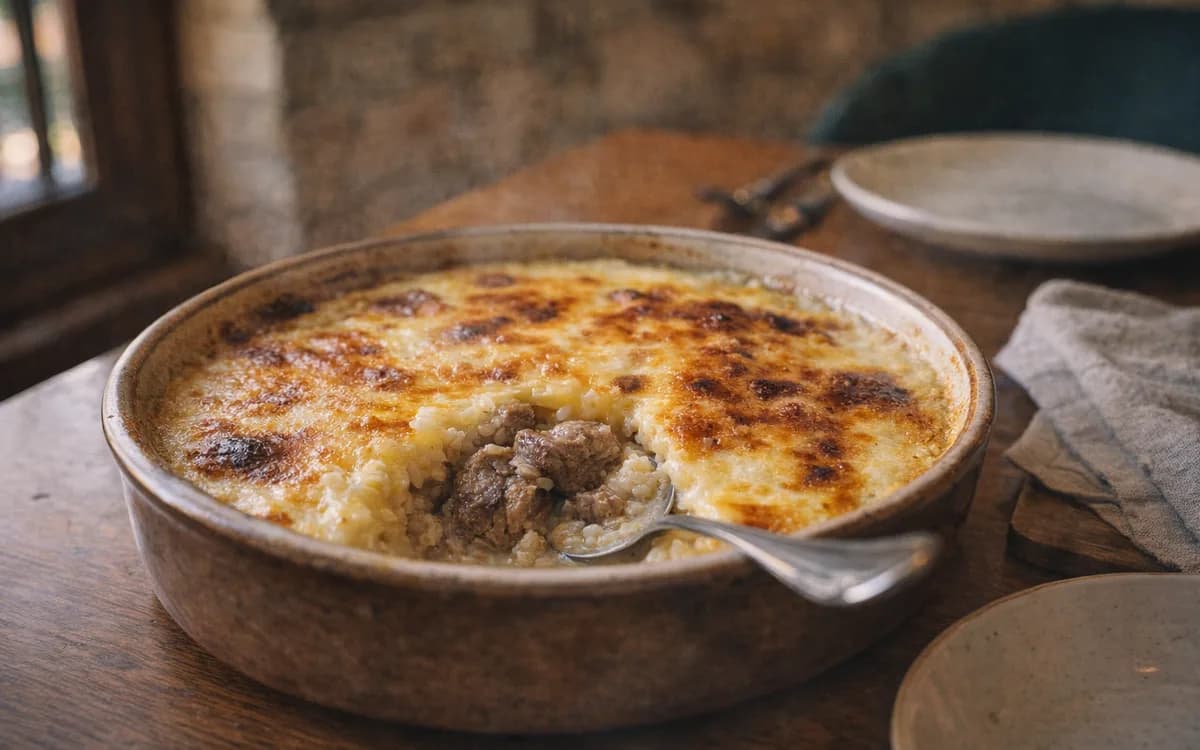
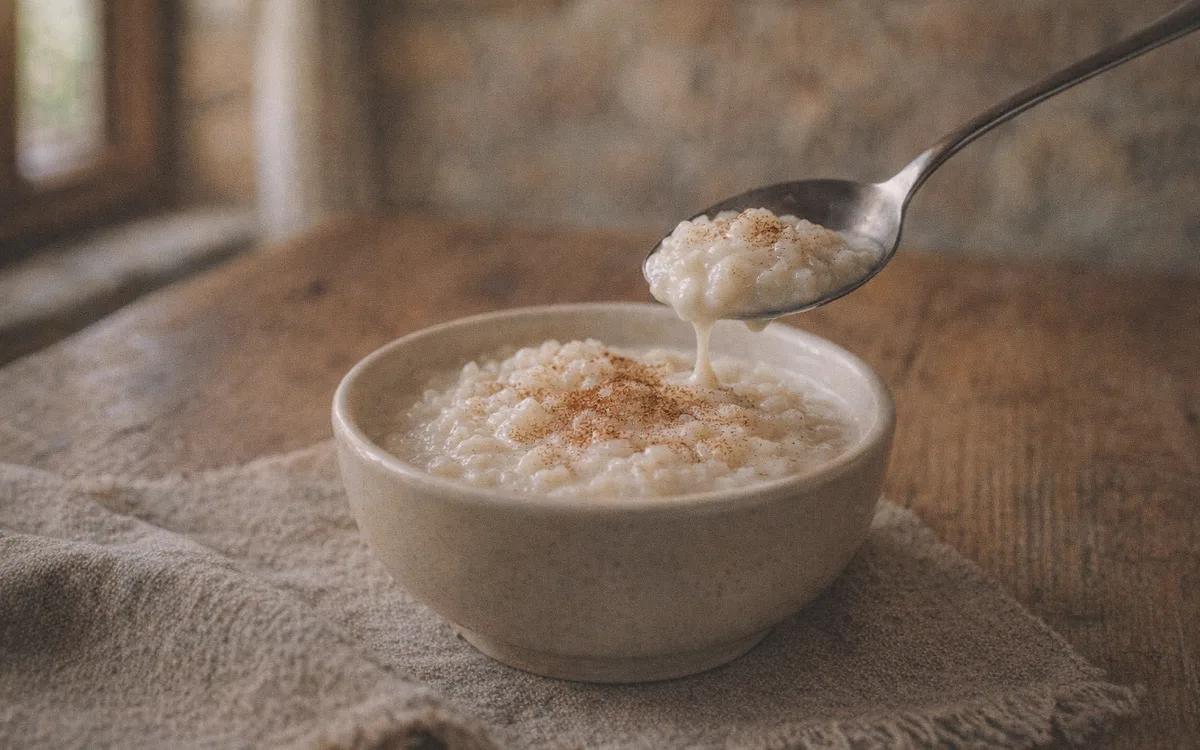
A spoonful of warm sutlijash (milk rice pudding) should hold tender grains in creamy milk, then slip easily from the spoon. This sutlijash recipe starts with rice, water, milk and sugar, with cinnamon added at the table. The trick is knowing when to stop cooking: a pudding that looks perfectly thick in the pan can become rather stiff once it cools.
We keep this stovetop version simple. No eggs, no cream, no cornflour. Give the rice gentle heat and enough time to soften, then choose whether to eat your pudding warm or save small bowls for later.
What Is Sutlijash, and How Is It Different From Kabuni?
Sutlijash is a milk-based rice pudding, gently simmered until the grains soften and their starch thickens the surrounding milk. Sugar sweetens it; cinnamon is a familiar finish. It belongs to Albanian home cooking and a wider regional tradition of milk-and-rice desserts, rather than being an exclusively Albanian invention.
You may encounter a sultjash recipe under that spelling, or hear the name tambëloriz, sometimes written without the accent as tambeloriz. Names, sweetness and consistency vary between households. A familiar name does not necessarily mean identical proportions.
The distinction from kabuni is clearer. Our published kabuni recipe uses butter and raisins for a sweet-pilaf character, with more distinct grains. Sutlijash is creamy and milk-led. The rice remains visible, but every spoonful carries thickened milk around it.
Both can carry cinnamon. That shared fragrance does not make their methods interchangeable: here, the rice cooks slowly in plenty of milk rather than becoming a buttery rice dessert with raisins. Keep those ingredients aside for kabuni and let this pudding taste of milk, tender rice and a little spice.
Sutlijash Ingredients: Rice, Milk, Sugar and Cinnamon
This makes four modest dessert portions. Allow about 5 minutes to prepare and roughly 40–55 minutes at the stove, followed by a short rest. Chilling, if you choose it, takes additional time.
Ingredients
- 100 g short- or medium-grain white rice
- 200 ml water
- 1 litre whole milk, plus a little extra if needed to loosen the pudding
- 70 g sugar
- A small pinch of salt
- Ground cinnamon, for serving
Whole milk gives a fuller taste without needing cream. The sugar makes a moderately sweet pudding; cinnamon adds fragrance rather than replacing sweetness. Salt should be barely noticeable, just enough to round out the milk.
Vanilla or a little citrus zest can be an optional variation another time, but neither is needed for this plain version. We suggest making the milk-and-cinnamon pudding first so you can judge its texture without other additions.
Set out a heavy-bottomed saucepan, a spoon or flexible spatula that reaches the corners, a measuring jug and four small bowls. Choose a saucepan with room above the milk: even a gentle simmer can rise suddenly if the heat is too high.
Which Rice Works Best for Creamy Pudding?
Ordinary short- or medium-grain white rice is suitable. Its starch helps thicken the milk while the grains become tender. Arborio is an accessible option, although its cooking time and liquid absorption can vary.
For this version, do not rinse the rice; retain its surface starch. Brown rice and parboiled rice are not direct substitutes because they need different cooking times and may give a different texture. You do not need a particular brand. Choose the right grain type, then judge doneness with a spoon rather than the packet timer alone.
Sutlijash Recipe: The Stovetop Method
Keep the saucepan uncovered throughout cooking. The milk needs to reduce gently, and you need to see what is happening at the surface.
-
Start the rice in water. Put the 100 g rice and 200 ml water in your saucepan. Bring to a gentle simmer and cook for approximately 5–8 minutes, stirring occasionally, until most of the water has been absorbed. The grains will still be partly firm. Do not wait for the bottom of the pan to become completely dry.
-
Add the milk. Carefully pour in the 1 litre whole milk and stir to separate the grains. Bring it back to a gentle simmer over moderate heat, then lower the heat. Look for small, lazy bubbles, not a rolling boil. If the milk begins climbing the pan, briefly lift it from the heat and turn the heat down.
-
Cook until nearly tender. Simmer gently, stirring regularly across the bottom and into the corners. Allow approximately 25–40 minutes after adding the milk for the rice to soften and the liquid to become creamy, including the finishing simmer in the next step. Stir more frequently as it thickens. Taste a grain: it should be almost tender before you add the sugar. If the milk reduces too far while the rice is still firm, add a little extra hot milk.
-
Sweeten and finish. Stir in the 70 g sugar and small pinch of salt. Continue at a gentle simmer for about 3–5 minutes, until the sugar has dissolved and the rice is fully tender. The pudding should be creamy but still flowing. If necessary, continue cooking gently until no chalky centre remains in the rice, adding hot milk as needed.
-
Rest briefly and portion. Remove the saucepan from the heat and let the pudding stand for 5 minutes. Stir once more, then spoon it into four small bowls. It will thicken during this short rest, so do not reduce it to a firm mound on the stove.
-
Finish with cinnamon. Dust lightly with ground cinnamon when serving warm. For chilled portions, follow the prompt-cooling instructions below, refrigerate, and add the cinnamon when you serve them. Chilling is optional, not another cooking step.
The Texture Cue That Matters More Than the Timer
Lift a spoonful. You want soft grains suspended in milk that flows back into the pan in a thick ribbon, not a spoonful that holds a rigid shape. Taste as well as look: thick milk can surround undercooked rice.
For chilled pudding, stop slightly looser than you would for immediate serving. Cooling thickens the mixture considerably. Extra cooking cannot compensate for that change; it only leaves less moisture for the rice to absorb later.
Why Is My Rice Pudding Too Thick, Thin or Scorched?
Most texture problems are easier to correct while the pudding is still warm. Make small adjustments and give each one time to work.
- Too thick: Stir in a small splash of milk over gentle heat. Repeat until the pudding is spoonable and creamy. Chilled portions naturally need more loosening than freshly cooked ones; that alone does not mean anything went wrong.
- Too thin, but the rice is tender: Simmer a little longer, stirring attentively. Before reducing aggressively, put a spoonful on a cool saucer and let it cool briefly. It will show you how much thicker the finished pudding is likely to become.
- Hard grains with little liquid: Add a little hot milk and continue cooking gently. The grains need moisture and time. More sugar will not soften an undercooked centre.
- A scorched bottom: Stop scraping immediately. Carefully transfer the unburned upper portion into a clean saucepan, leaving the stuck layer behind. Taste it before continuing; a strong burnt flavour cannot reliably be repaired with sugar or cinnamon.
- Milk boiling over: Reduce the heat and use a roomier saucepan if necessary. A vigorous boil wastes liquid and increases the risk of scorching before the rice is tender.
A heavy pan helps distribute heat, but it does not remove the need to stir. Pay particular attention near the end, when the pudding offers more resistance to the spoon and can catch quickly along the bottom.
Serving Albanian Milk Rice Pudding Warm or Chilled
Warm sutlijash is softer and more flowing. On an autumn or winter evening, serve it after the brief rest, while the milk is still warm and the cinnamon smells fresh. Small bowls are enough; this is a gentle dessert, but milk and rice make it satisfying.
Chilled pudding is thicker, with a more spoon-set consistency. That makes it convenient to portion ahead, provided it is cooled and refrigerated promptly. You can eat it straight from the fridge without reheating.
For rice pudding with cinnamon, a light dusting is usually better than a heavy brown blanket. Let the milk remain part of the flavour. Taste a spoonful before adding more spice.
At Bujtina Çupa, our kitchen serves Byrek Bujtine (our house-style byrek pie) and Pule fshati me jufka (village chicken with jufka noodles). Sutlijash is not listed on our current menu; this is a dessert for you to make at home. Our wood-fired oven has its place in breads, pies and slow dishes, but this pudding needs only a saucepan and patient, gentle heat.
How to Cool, Store and Reheat Sutlijash Safely
Rice pudding needs prompt cooling, not a long afternoon on the counter. Divide leftovers into small, shallow containers and cool them quickly, ideally within one hour, then refrigerate at 5°C or below. Do not leave a large saucepan out until it is completely cold. A cold-water bath around suitable containers can help speed cooling; keep the water out of the pudding.
Use refrigerated portions within 24 hours. This follows conservative cooked-rice guidance from the UK Food Standards Agency's home food safety advice.
Cooked rice can contain bacterial spores that survive cooking. If rice is stored unsafely, reheating does not necessarily make it safe again. Prompt cooling matters even when you intend to serve the pudding cold.
To reheat, add a splash of milk and warm gently in a saucepan, stirring until steaming hot throughout. For a microwave portion, use short intervals and stir thoroughly between them, reaching the centre and edges. Check that there are no cold pockets.
Reheat only once and serve immediately. Properly cooled and refrigerated pudding can also be eaten chilled; reheating is not required. Keep any portions intended for later in the fridge rather than bringing the whole batch to the table.
Frequently asked questions
Are sutlijash, sultjash and tambëloriz the same dessert?
These names are used for milk-based rice pudding in Albanian-speaking households. Spelling, proportions and flavourings vary by family and region, so two recipes with different names may be very similar without being identical.
Does sutlijash need eggs or cornflour to thicken?
This stovetop version needs neither. Rice starch and gentle reduction thicken the milk, and the pudding thickens further as it cools. Keep stirring as the liquid reduces rather than adding a thickener to rush the process.
Should sutlijash be served hot or cold?
Serve it warm after a short rest, or chilled after safe cooling and refrigeration. Warm pudding is looser; refrigerated pudding becomes thicker and firmer. Both are finished with a light dusting of cinnamon.
Can sutlijash be made the day before?
Yes, provided you cool it promptly, ideally within one hour, refrigerate at 5°C or below and eat it within 24 hours. Count that time from preparation, rather than treating the following evening as automatically within the storage window.
Want to spend time cooking with us in Klos? Our Traditional Cooking Class lasts 3–4 hours and ends with the meal you have made. Explore our cooking class and ask what we’re preparing during your visit.