In this article
- What is tavë me presh?
- Ingredients and pan size for Albanian leek bake
- How to clean and cook leeks without a watery casserole
- Bake the leeks with rice or without rice
- Why is the leek bake watery, dry or unevenly cooked?
- What to serve with the leek bake and how to store leftovers
- Frequently asked questions
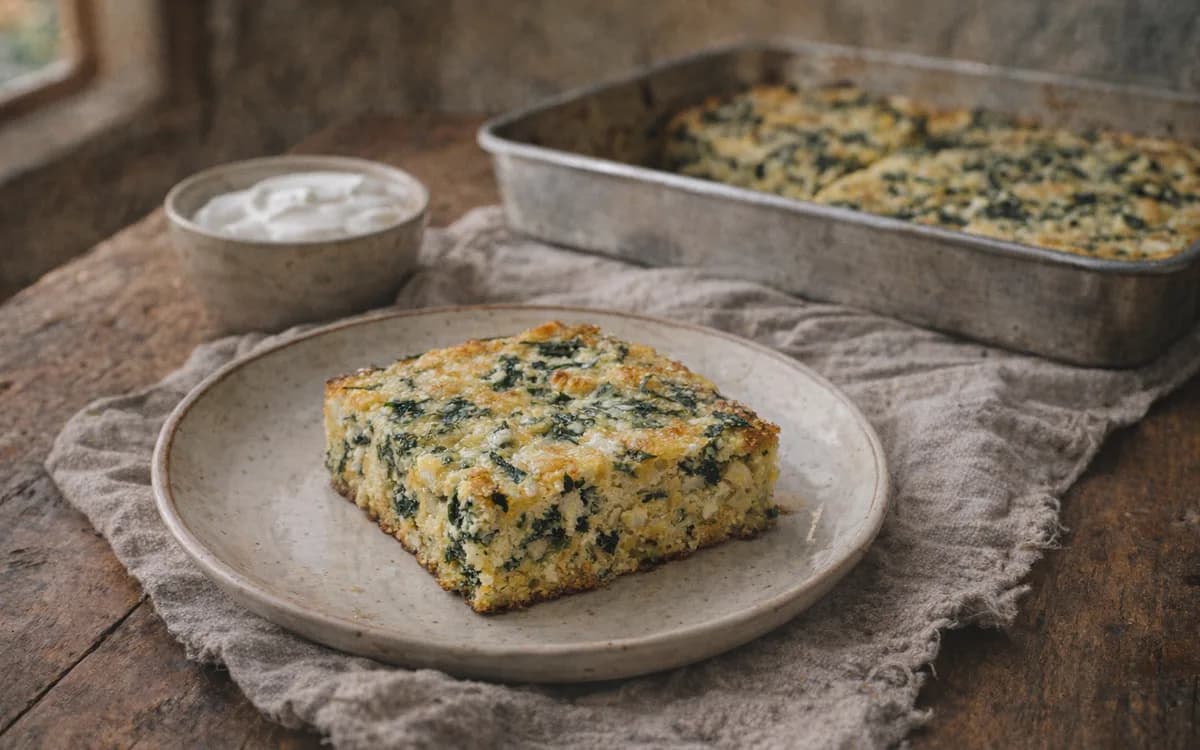
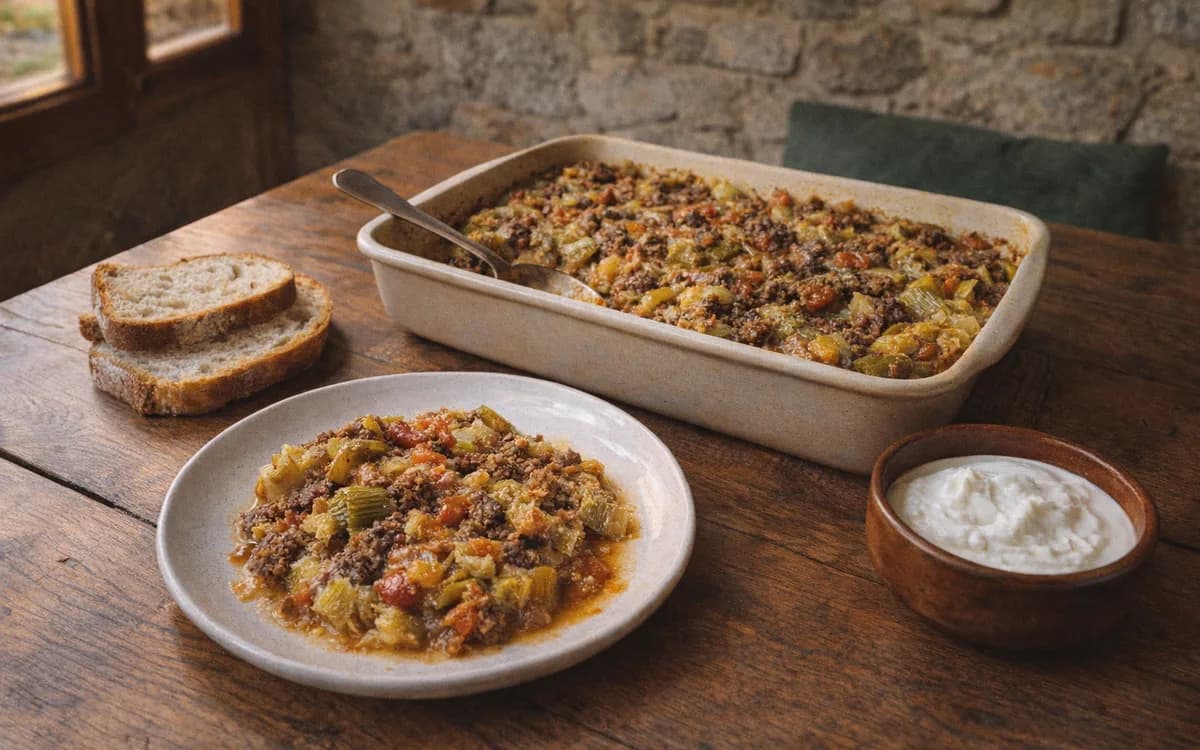
Sweet leeks, browned mince and a little tomato make tavë me presh (Albanian leek bake) a welcome supper when the evenings turn cold. The leeks soften into the meat juices, their sharpness giving way to sweetness. We like the contrast: a lightly browned surface, a soft middle and something tangy alongside.
Below are two versions, one without rice and one with white long-grain rice. They start with the same leek-and-mince base, but use different amounts of added liquid. Choose your version before you begin.
What is tavë me presh?
Tavë me presh is an Albanian baked leek dish, often made with meat and sometimes rice. Household preparations vary: some use pieces of lamb, while others use mince. Our home-cooking version uses lamb mince so that a little meat runs through every spoonful of leeks.
You may also see the name written as tave me pras. This is a crustless bake, not leek byrek or lakror: there is no dough to roll, layer or seal. The vegetables and meat go straight into a baking dish.
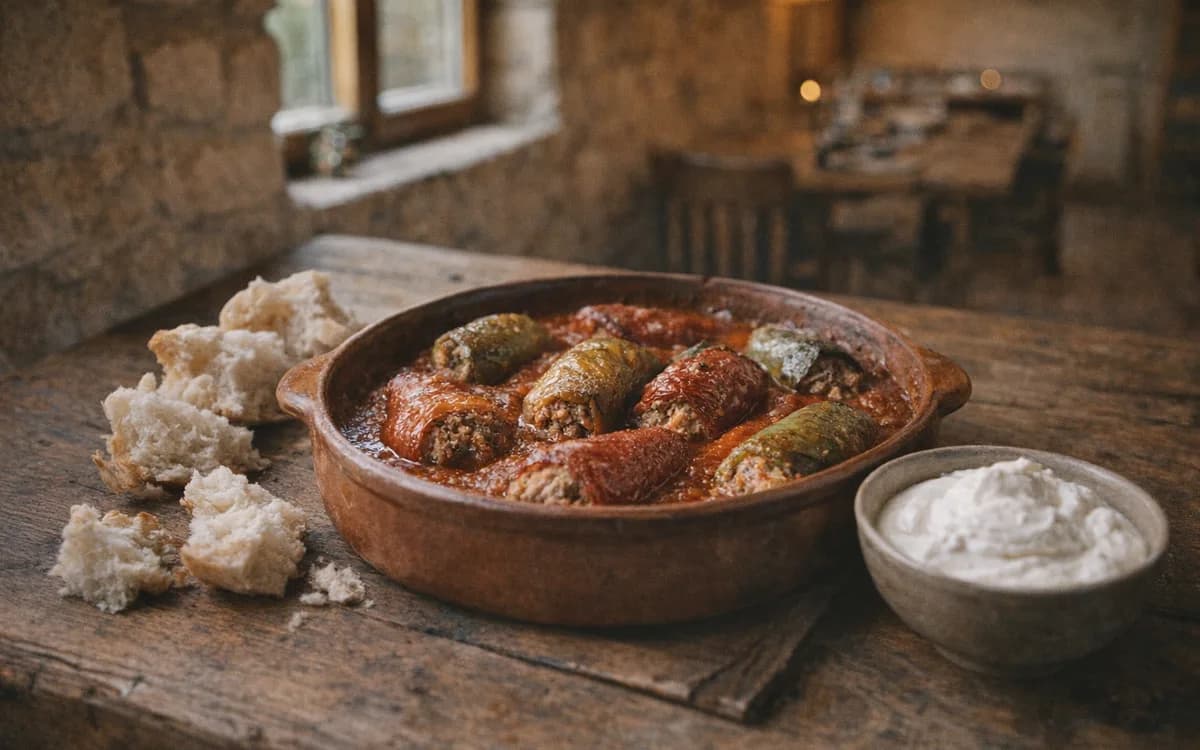
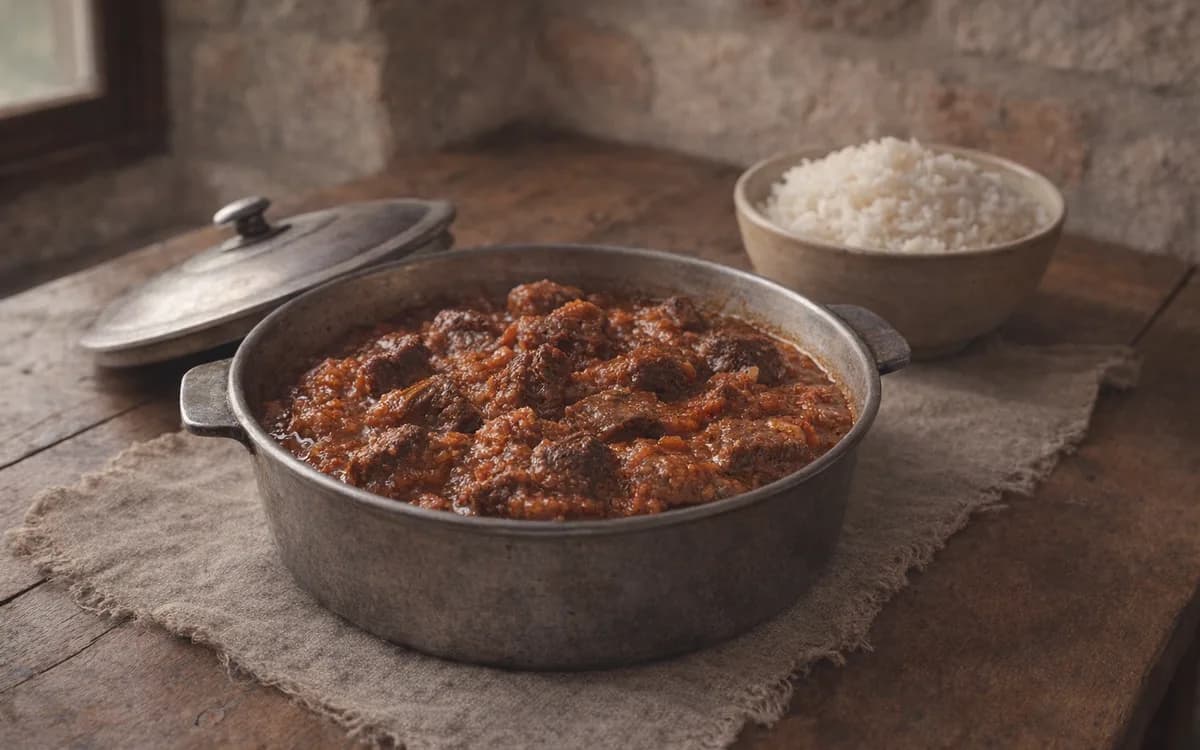
At our kitchen, our seasonal menu includes Fërgesë (slow-cooked peppers, tomatoes and cottage cheese) and Tavë dheu (a traditional clay-pot dish). This leek recipe is for your home table, rather than a promise about our restaurant menu.
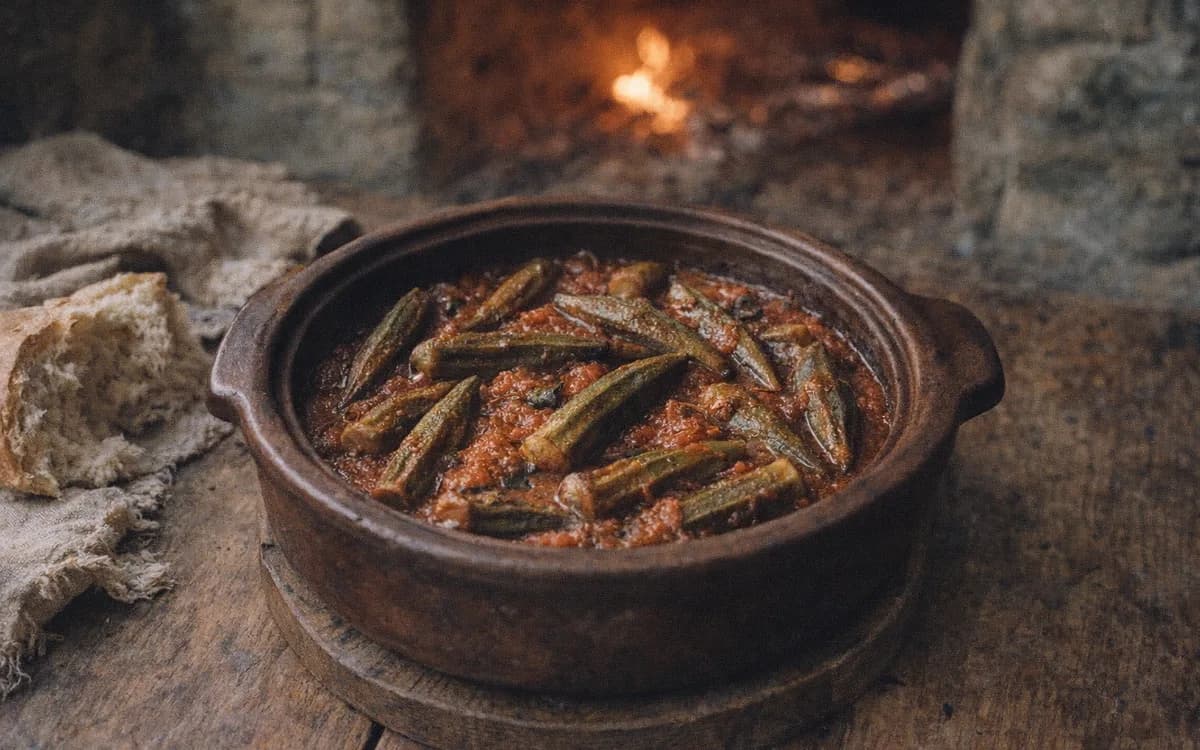
If you enjoy vegetables cooked with tomato, our tavë me bamje recipe offers another Albanian bake, made with okra. Leeks need their own treatment, though: washing carefully and cooking away excess moisture are the foundations here.
Ingredients and pan size for Albanian leek bake
Serves: 4 generously. Use a baking dish approximately 30 × 20 cm and 6 cm deep, a wide sauté pan and foil or an ovenproof lid.
Preparation: about 25 minutes. Cooking: allow 60–70 minutes for the rice-free version or 70–85 minutes with rice, including the stovetop base. Resting: 10 minutes. Heat the oven to 190°C conventional or 170°C fan.
The shared leek-and-mince base
- 1 kg trimmed leeks, weighed after removing roots and tough dark-green tops; use the white and tender pale-green parts
- 400 g lamb mince, approximately 15–20% fat
- 2 tablespoons olive oil, divided, plus a little for greasing the dish
- 400 g canned chopped tomatoes, including their juice
- 1 teaspoon fine salt, reduced if using salty stock
- ½ teaspoon freshly ground black pepper
Reserve sound, tough leek tops for stock rather than putting them into this bake. Buy more than 1 kg of whole leeks to allow for trimming; the amount of waste varies considerably.
Beef mince can replace the lamb weight for weight. It gives a different flavor, and very lean beef produces a less rich bake. Keep the leeks dominant rather than adding extra meat to compensate.
What changes when rice is added
For the rice-free version, add:
- 75 ml hot water or light, low-salt stock
For the rice version, add:
- 100 g ordinary white long-grain rice, weighed dry, then rinsed and thoroughly drained
- 250 ml hot water or light, low-salt stock
These are alternative additions, not cumulative ones. The rice version receives 250 ml in total, not 250 ml plus the rice-free allowance.
The tomatoes and leeks supply moisture too. That is why reducing the base matters, and why a standalone rice-to-water ratio is not enough to judge this casserole. Brown rice, risotto rice and quick-cook rice are not direct substitutes in these instructions.
How to clean and cook leeks without a watery casserole
Wash away grit, then drain well
Cut off the roots and tough tops. Split each leek lengthways and open the layers under cold running water, paying particular attention to the joins between green and white. Grit can sit surprisingly far inside.
Slice across into pieces about 1 cm thick. If they still look sandy, swish them in a large bowl of cold water, then lift them into a colander with your hands. Do not pour the bowl through the colander: that sends the settled grit back over the vegetables.
Drain thoroughly and shake away trapped water. The measured water or stock belongs in the recipe; a bowlful of wash water does not.
Cook off excess moisture before baking
- Prepare the oven and dish. Heat the oven to 190°C conventional or 170°C fan. Lightly grease the baking dish. Keep your chosen version's ingredients nearby.
- Brown the lamb. Heat 1 tablespoon of the oil in a wide sauté pan over medium-high heat. Add the mince, in two batches if necessary, and cook for about 6–8 minutes, breaking up large clumps. Let some edges brown rather than stirring constantly. Transfer to a bowl, leaving a little cooking fat in the pan; spoon away any large excess.
- Soften the leeks. Add the remaining tablespoon of oil and the drained leeks. Cook over medium heat for about 15–20 minutes, stirring regularly, until collapsed and tender. Lower the heat if their edges catch before the centers soften.
- Reduce the base. Return the mince and its juices to the pan. Add the tomatoes, salt and pepper. Cook uncovered for about 8–12 minutes, stirring, until the tomato juices thicken around the leeks.
Draw a spoon through the mixture. The gap should not immediately fill with thin liquid. Listen, too: gentle sizzling should begin to replace watery bubbling. The mixture must remain moist, not fry dry.
A crowded pan or especially juicy tomatoes can extend this stage. Follow the consistency rather than moving on simply because the timer has sounded.
Bake the leeks with rice or without rice
Both methods begin with the complete cooked base above. There is no need for a special oven or earthenware pot: a conventional household oven and a suitable baking dish will do.
The finished bake should be moist and spoonable. It will not cut into tidy pastry-like squares, and it should not sit in a pool of broth. Check the center with a food thermometer: ground lamb or beef should reach at least 71°C, independently of the vegetable and rice texture checks.
Rice-free leek and mince casserole
- Add the rice-free liquid. Stir 75 ml hot water or stock into the cooked base. Transfer everything to the prepared dish and spread it into an even layer, without pressing it down firmly.
- Bake uncovered. Bake on the middle shelf for about 25–30 minutes, until bubbling around the edges and lightly colored on top. Check that the leeks are fully tender and the center reaches at least 71°C. If liquid still pools visibly, continue uncovered in 5-minute intervals, watching the surface.
- Rest before serving. Leave the dish for 10 minutes before spooning out portions. The juices will settle, but resting cannot absorb a large excess of liquid.
Expect a loose, soft casserole with distinct leek pieces. The exposed edges may darken a little; the entire surface does not need to become a brown crust.
Albanian baked leeks with rice
- Distribute the rice. Stir the 100 g rinsed, well-drained white long-grain rice into the cooked base. Add 250 ml hot water or stock, mix thoroughly and transfer to the prepared dish. Level the mixture so the grains are evenly distributed, with none sitting in a dry mound on top.
- Bake covered. Cover tightly with foil or an ovenproof lid. Bake on the middle shelf for 35 minutes, then carefully lift the cover away from your face and taste a few grains from the center. If chalky or firm, cover again and cook for another 5–10 minutes, checking the liquid as described below. Check that the center reaches at least 71°C.
- Finish and rest. Once the rice is tender, uncover for 5–10 minutes only if excess liquid remains. If the moisture already looks right, skip this uncovered stage. Rest for 10 minutes before serving.
Judge the rice by tasting it, not by the color of the top. A browned surface can hide grains that have not finished cooking underneath.
Why is the leek bake watery, dry or unevenly cooked?
A watery pan: Usually the leeks or tomatoes needed longer on the hob, or too much liquid was added. Give the bake a short uncovered finish, watching it at 5-minute intervals. Adding raw rice at this stage will not help: it needs its own liquid and cooking time.
Hard rice and a dry surface: Sprinkle 30 ml hot water evenly over the mixture, cover tightly and return to the oven for 5–10 minutes, then taste a few grains from the center. If liquid is already present, simply cover and continue cooking. Small corrections are easier to control than a large pour.
Tender rice with excess liquid: A brief uncovered finish, watched at 5-minute intervals, lets some moisture escape before the grains become swollen and mushy. A little moisture between the leeks is desirable; a deep puddle is not.
A dry rice-free bake: The base may have been reduced too far, or the dish may be too broad and shallow. Fold in 30 ml hot water, cover and warm for 5 minutes, then reassess. This restores moisture but cannot reverse scorched leeks.
An uneven result after doubling: Preserve roughly the same filling depth. Two dishes are often easier than one deep casserole, and each may finish at a slightly different time. Doubling ingredients does not mean doubling the baking time.
What to serve with the leek bake and how to store leftovers
Simple accompaniments
Bread suits the rice-free version particularly well, catching the tomato and meat juices left on the plate. Either version welcomes a spoonful of plain yogurt, a crisp salad or pickled vegetables.
The leeks are sweet and the lamb is rich, so a sharp accompaniment earns its place. Our notes on Albanian turshi describe the pickled vegetables that fit naturally beside a cold-weather meal. There is no compulsory arrangement: a small bowl of yogurt may be all you need.
Cooling, refrigerating and reheating
Without rice: Divide leftovers into shallow containers and refrigerate promptly, within two hours. Keep the refrigerator at 5°C or below and use within two days. Shallow portions cool more quickly than a full baking dish, so refrigerate them while still slightly warm rather than waiting until completely cold.
With rice: Cool quickly in shallow portions, ideally refrigerating within one hour, and eat within 24 hours. Reheat rice leftovers only once. Reheating does not make poorly stored rice safe.
For either version, reheat only the portion needed until steaming throughout, reaching 74°C in the center. A covered oven dish helps retain moisture; add a small splash of water if needed and uncover carefully when checking.
You can also freeze promptly cooled portions in suitable containers. Aim to use them within one month for best texture; this is a quality window, not a safety deadline. Thaw in the refrigerator and reheat thoroughly. The leeks will be softer after freezing, but that suits a spoonable bake; apply the same once-only reheating rule to the rice version.
Frequently asked questions
Does this leek bake have to contain rice?
No. It is prepared with or without rice. Here, the rice-free version uses 75 ml added liquid, while the version with 100 g white long-grain rice uses 250 ml; choose one complete method.
Is the dish the same as leek byrek?
No. This is a crustless leek-and-mince bake. Leek byrek encloses its filling in pastry, so its preparation and moisture requirements are different.
Can beef mince replace lamb in Albanian leek bake?
Yes, replace the 400 g lamb mince with the same weight of beef mince. Flavor and richness will differ, especially with lean beef; either ground meat should reach at least 71°C in the center.
Why are the leeks tender but the rice still hard?
The rice needs more cooking time, moisture or both. If the pan is dry, add 30 ml hot water, cover and bake for another 5–10 minutes before checking grains from the center again.
How long does the rice version keep in the fridge?
Cool it quickly, ideally refrigerating within one hour, and eat within 24 hours. Keep it at 5°C or below and reheat only once, until steaming throughout and reaching 74°C.
Want to cook Albanian dishes with us? Ask about our 3–4-hour cooking class, where guests prepare a seasonal meal and sit down to enjoy it together. To arrange your stay, book directly with us.