In this article
- What is tasqebap, and do you need a clay pot?
- Tasqebap ingredients and the best beef cuts
- How to make this tasqebap recipe in an ordinary pot
- Why is the beef still tough, or the sauce too thin?
- Tasqebap with rice: what to serve alongside
- Making tasqebap ahead, freezing and reheating
- Frequently asked questions
What is tasqebap, and do you need a clay pot?
Beef, softened onions and tomato need patient heat, not special cookware. This tasqebap recipe brings Albanian beef stew to an ordinary home kitchen, with tenderness checks that matter more than the clock. Put a heavy-based pot on the hob. Keep its lid nearby.
Tasqebap (a slow-cooked meat stew) commonly combines pieces of beef with onions and tomato, though the ingredients and proportions vary between households. You may also encounter the spelling tas kebab in Albania. Similar names occur elsewhere, but they do not all describe an identical dish.
A heavy saucepan or casserole with a close-fitting lid works well; you do not need clay cookware or an oven. The aim is steady, gentle cooking without losing too much moisture.
At Bujtina Çupa in Fshat, Klos, Dibër County, our kitchen serves dishes including Mish viçi në vorbë (beef cooked in a clay pot). That is a separate menu dish, not another name for this recipe. For the tasqebap below, we are keeping things simple: a home-pot version with ingredients you can buy from an ordinary butcher and grocer.
Tasqebap ingredients and the best beef cuts
Serves: 4
Preparation: approximately 20 minutes
Cooking: allow around 3 hours overall with chuck; shin can take longer
Equipment: a 3–4 litre heavy-based pot with a lid, a spoon and a kettle
Ingredients
- 800 g boneless stewing beef, cut into roughly 3–4 cm pieces
- 400 g onions, finely chopped
- 2 tablespoons olive oil
- 2 garlic cloves, minced
- 2 tablespoons tomato paste
- 200 g crushed tomatoes
- 500 ml hot low-salt beef stock or water, plus extra hot water as needed
- 1 bay leaf
- Salt and black pepper, to taste
- Optional: 100 ml dry red wine, replacing 100 ml of the stock or water
- To serve, optionally: 250–300 g dry rice, cooked separately according to its packet instructions
The base recipe contains no wine and no flour. Softened onions and a little uncovered reduction give the sauce its body.
Chuck, shoulder or shin: what to buy
We would choose chuck or shoulder with some marbling and connective tissue. During a long, moist cook, those firm seams soften and help give the sauce a richer texture. Butcher names differ across Europe, so explain that you want beef for a slow braise rather than a quick stir-fry.
Boneless shin works too. It often needs longer, sometimes 3–4 hours of gentle simmering, before it yields easily. Keep the pieces reasonably even so that one small cube does not fall apart while a much larger one remains firm.
A packet labelled simply “stewing beef” may contain different cuts, so leave yourself some flexibility. Lean steak is a poor substitute: it can become dry during the time a tougher braising cut needs to soften.
Tomato, onions and optional wine
The onions provide sweetness and body; tomato paste adds concentrated flavour, while crushed tomatoes supply moisture and a little acidity. Garlic and bay are enough for this version. There is no need for a long spice list.
If you want wine, use 100 ml dry red wine and reduce the stock or water to 400 ml. Without wine, use the full 500 ml. Neither version needs another substitute, and simmering should not be treated as a guarantee that all alcohol disappears.
How to make this tasqebap recipe in an ordinary pot
Brown the beef and soften the onions
-
Dry, season and brown the beef. Pat the 800 g beef dry and season lightly with salt and black pepper. Heat the 2 tablespoons olive oil over medium-high heat. Brown the meat in two or three batches, allowing roughly 5–8 minutes per batch, turning as needed. Look for brown patches rather than a crust on every surface. Transfer the beef to a plate. Crowding the pot traps steam, leaving pale meat sitting in its own liquid.
-
Soften the onions. Lower the heat to medium-low and add the 400 g chopped onions to the same pot. Cook for approximately 10–15 minutes, stirring frequently, until softened and beginning to turn golden. Scrape up the brown residue as the onions release moisture. If it threatens to burn, add a small splash of water. Brown residue contributes flavour; blackened residue tastes bitter and should not be worked into the sauce.
-
Cook the garlic and tomato paste. Stir in the 2 minced garlic cloves for about 30 seconds, then add the 2 tablespoons tomato paste. Cook, stirring, for 1–2 minutes until the paste darkens slightly without scorching. If using the optional 100 ml wine, pour it in now, scrape the base and let it bubble for 2–3 minutes before continuing.
Simmer gently until the beef yields
-
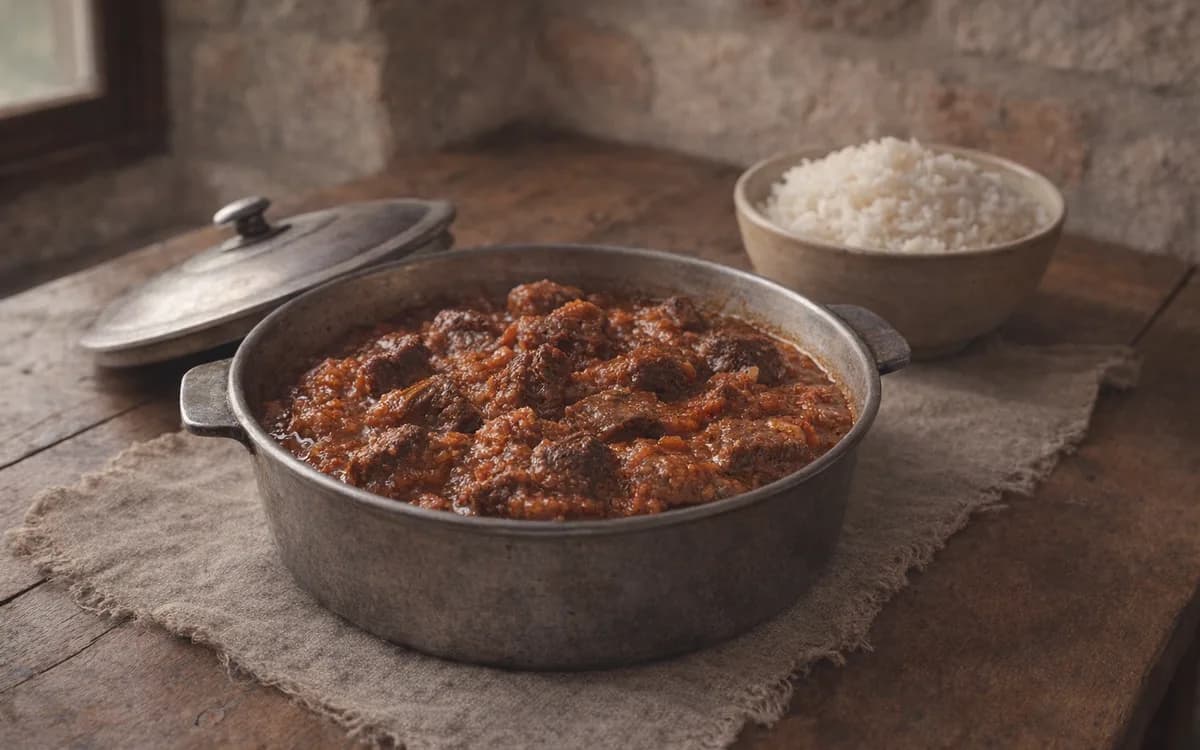
Build the stew. Return the beef and any juices from its plate. Add the 200 g crushed tomatoes, bay leaf and 500 ml hot stock or water—or 400 ml if you used wine. Stir well. The liquid should sit roughly level with, or just below, the meat. Pot shape affects this: add a little extra hot water if necessary, but do not turn the stew into a deep broth.
-
Cover and lower the heat. Bring the liquid to a gentle simmer, then fit the lid and turn the heat down. You want occasional small bubbles, not a rolling boil. Check about every 25–30 minutes, stirring gently across the base and adding small amounts of hot water if the sauce is drying out. A lid slows evaporation; it does not remove the need to look inside.
-
Test the meat, not just the time. Begin checking a piece at around 90 minutes of simmering. Chuck commonly takes approximately 2–3 hours at a gentle simmer; shin may need 3–4 hours. Press a fork into a piece: it should enter easily, and the beef should yield under gentle pressure. If it still feels springy or resistant, cover again and continue cooking. These are planning ranges, not deadlines.
Reduce to a spoon-coating sauce
-
Finish uncovered if needed. Once the meat is tender, remove the lid and simmer gently for approximately 10–20 minutes, stirring occasionally, until the sauce coats the beef and the back of a spoon. It should remain loose enough to spoon over rice. If considerable reduction is needed and the beef is already very tender, lift the meat out first, reduce the sauce alone, then return it to warm through.
-
Season and serve. Remove the bay leaf. Taste before adding more salt and pepper, because reduction concentrates the stock's seasoning. If serving rice, cook the optional 250–300 g separately according to the packet instructions, starting when the beef is nearly tender. Spoon the tasqebap alongside or partly over it, keeping some rice free to catch the sauce.
Why is the beef still tough, or the sauce too thin?
A braise gives you room to adjust. We would make one small correction at a time rather than adding several ingredients and hoping for the best.
- The beef is firm and resistant: If you used chuck, shoulder or shin, check that enough liquid remains, restore a gentle simmer and continue covered in 20–30 minute intervals. Connective-tissue-rich beef can need considerably longer than expected.
- The beef is lean, dry and stringy: This is different from a braising cut that has not softened yet. More cooking is not a universal cure. Keep it surrounded by sauce and avoid prolonged uncovered cooking; choose a better-marbled braising cut next time.
- The sauce is watery: Wait until the beef is tender, then reduce uncovered. Remove the meat temporarily if the liquid needs a long reduction. Adding more tomato paste changes the flavour as well as the thickness.
- The sauce is too thick: Stir in a small splash of hot water, let it settle into the sauce and reassess. You can always add another splash.
- The base is catching: Lower the heat and check the liquid. If it has burnt, transfer the unburnt stew to a clean pot without scraping up the scorched layer.
- The sauce tastes too salty: Avoid reducing it further. A little water may help, though a badly over-salted batch needs dilution with unsalted food. Low-salt stock and seasoning at the end prevent much of this trouble.
Flour and sugar are not routine repairs here. Tender meat, softened onions and controlled evaporation should do most of the work.
Tasqebap with rice: what to serve alongside
We like tasqebap with rice because the grains take up the onion-and-tomato sauce without competing with it. Plain rice is enough; a simple pilaf also works. For four people, allow approximately 250–300 g dry rice and follow the instructions for your particular variety.
Start the rice when a piece of beef is nearly tender, rather than at the beginning of the braise. Rice has a short, fairly predictable cooking time. Stewing beef does not.
Keep the two pots separate. Adding uncooked rice directly to this recipe changes the liquid balance, and the grains may become soft long before a stubborn piece of beef yields. Bread is an easy alternative if you prefer to avoid a second saucepan.
Something crisp helps alongside the rich sauce: a fresh salad or a modest portion of Albanian pickled vegetables. Put the pickles in a small dish so everyone can take a little between mouthfuls.
At our table, Byrek Bujtine (our house-style byrek pie) is another menu option for sharing, though this stew and rice need no extra substantial side. For a separate meat-free supper on another cold evening, try jani me fasule, Albanian bean stew, rather than treating beans as a direct replacement within this beef method.
Making tasqebap ahead, freezing and reheating
Tasqebap is convenient to cook ahead, especially when you want supper ready without watching a pot that evening. Once cooked, divide leftovers into shallow containers and refrigerate within two hours. Keep the refrigerator at 4°C or below and use the beef stew within 3–4 days.
For longer storage, freeze portions for approximately three months for best quality. Thaw in the refrigerator, then reheat gently with a splash of water, stirring so that the centre heats as thoroughly as the edges. The stew should be piping hot throughout, reaching 74°C at the centre.
The sauce may thicken considerably in the fridge. Loosen it gradually during reheating instead of pouring in enough water to thin the whole cold batch at once.
Treat cooked rice separately. Cool it promptly, ideally within one hour, refrigerate it and use it within 24 hours. Reheat only once, until steaming hot throughout. Portioning the stew and rice into separate containers makes both cooling and reheating easier, and lets you cook fresh rice when you want it.
Frequently asked questions
Does tasqebap need a traditional clay pot?
No. A heavy-based saucepan or casserole with a close-fitting lid works well. Gentle heat, sufficient liquid and enough time matter more than the pot's material.
Why is tasqebap beef still tough after two hours?
Chuck or shin that remains firm often needs more time: keep it moist at a gentle simmer and check every 20–30 minutes. Very lean beef that has become dry is a different problem and will not necessarily improve with longer cooking.
Can tasqebap be made without wine?
Yes. Our base recipe uses 500 ml stock or water and needs no wine. For the optional wine version, replace 100 ml of that liquid with dry red wine.
Is the rice cooked in the tasqebap pot?
Not in this recipe. Cook it separately so you can control its texture without changing the stew's liquid balance or tying the rice's cooking time to the beef.
Want to explore Albanian cooking beyond this pot of stew? Join us for a cooking class at Bujtina Çupa and bring your questions to the kitchen.