In this article
The best bite of kungull i pjekur (baked pumpkin) is where the soft flesh meets a browned edge. Add walnuts with a little crunch and you need very little else. For this small-tray version, we cut the pumpkin evenly and keep the nuts back until the last few minutes, giving each time to cook without scorching.
Sweetness comes last in the decision-making, even if you choose sugar before roasting. A dense, sweet squash may need none; a milder pumpkin may welcome a little honey. Taste matters more than a generous drizzle.
What Is Kungull i Pjekur?
Kungull i pjekur means baked or roasted pumpkin. The name describes the preparation rather than a fixed combination of walnuts, honey, and spices. Here, we suggest a sweet version for four modest dessert portions, with tender wedges and roughly chopped walnuts.
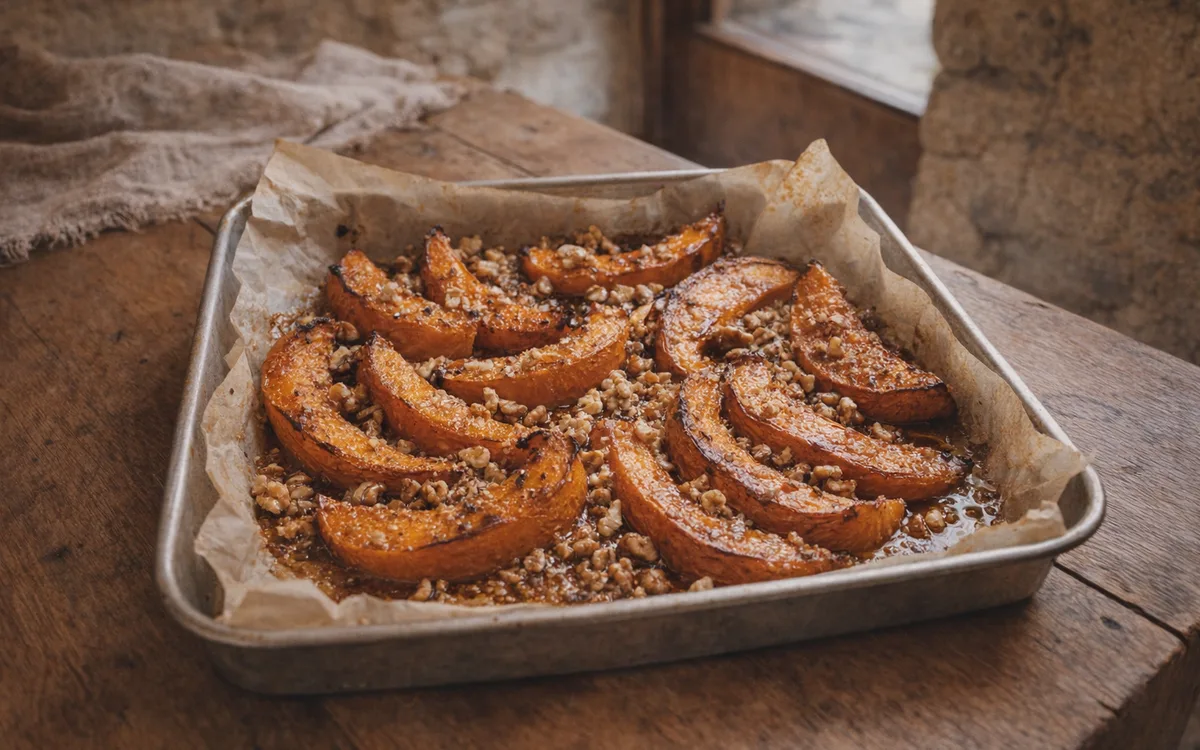
Expect pumpkin that still looks like pumpkin. This is not a cake, a smooth pie filling, or a dessert soaked in syrup. The flesh should yield easily to a spoon or fork, while the edges have enough colour to give a deeper roasted flavour. A little juice in the tray is welcome; a bath of watery liquid is not the aim.
This is our suggested home preparation, not a claim that the dish appears on our restaurant menu. Its appeal is its simplicity: one tray, a few ingredients, and enough attention near the end to catch the pumpkin when it is soft and the walnuts when they are fragrant.
Which Pumpkin or Winter Squash Works Best?
Choose a firm eating pumpkin or winter squash with sound skin and no mould or soft spots. Large carving pumpkins often have watery, less flavourful flesh. They can soften in the oven without developing the sweetness you want for dessert.
Butternut, Hokkaido, or eating pumpkin?
These are useful options in European shops, not a list of specifically Albanian cultivars:
- Butternut squash: Widely available, with relatively even flesh that makes consistent pieces straightforward. Peel it for this preparation.
- Hokkaido or red kuri: Dense flesh and skin that usually becomes tender enough to eat. Scrub the skin well if leaving it on.
- Culinary muscat pumpkin: Useful for substantial wedges, though moisture varies between pumpkins. A wetter piece will need more time for its juices to reduce.
Variety affects both sweetness and cooking time. Let the knife test decide when the pumpkin is ready rather than expecting every squash to finish at the same minute.
How thick should the slices be?
Aim for 2–3 cm at the thickest point. Similar thickness matters more than identical shapes. Very thin tips can darken while a thick centre remains firm, so divide unusually bulky pieces again.
Work on a stable board. Cut a flat base where needed so the squash does not roll, then remove the seeds and stringy pulp. Peel tough rind if you prefer to serve fully edible pieces. If a whole squash is difficult to handle safely, buy a cut section rather than forcing the knife through it.
Small-Tray Albanian Baked Pumpkin: Ingredients and Equipment
Makes: 4 modest dessert portions
Preparation: About 15 minutes
Roasting: About 40–65 minutes; unusually dense squash may take longer
Ingredients
- 1 kg prepared pumpkin or winter squash, weighed after removing seeds and any peel you discard
- 40 g walnuts, roughly chopped
- 1 tablespoon olive oil
- A small pinch of salt
- Optional sweetener: 1–2 tablespoons sugar before roasting or 1–2 tablespoons honey after roasting; start with 1 tablespoon, not both sweeteners
- Optional: 1/4 teaspoon ground cinnamon
The oil helps coat the cut surfaces; the small amount of salt balances the sweetness without making this a savoury dish. Cinnamon is a choice, not a requirement for authenticity. Leave it out if you want the pumpkin and walnuts to be the only strong flavours.
Use an approximately 30 × 25 cm shallow metal roasting tray, baking parchment rated for the oven temperature, a sturdy knife, a board, and a thin knife or skewer for checking tenderness. Move to a larger tray if the pieces cannot sit in one layer with gaps. The right fit matters more than the stated dimensions.
This preparation contains walnuts, a tree-nut allergen. The basic dish is dairy-free. Choose sugar or no added sweetener for a vegan version; honey is not vegan.
How to Make Roasted Pumpkin With Walnuts
-
Heat the oven. Preheat to 200°C conventional or 180°C fan. Line the shallow metal tray with baking parchment rated for that temperature. A fully heated oven helps the pumpkin begin roasting rather than sitting in slowly warming juices.
-
Prepare the pumpkin. Remove the seeds, stringy pulp, and any tough peel you do not want to serve. Weigh out 1 kg prepared flesh and cut it into pieces about 2–3 cm thick at their thickest point.
-
Season and arrange. Coat the pumpkin with 1 tablespoon olive oil and a small pinch of salt. If using sugar, add 1 tablespoon, or up to 2 tablespoons for a less sweet pumpkin; add the optional 1/4 teaspoon cinnamon now too. Reserve honey for after cooking. Arrange in one layer with gaps, preferably with a cut surface against the tray.
-
Roast until nearly tender. Begin checking at about 35 minutes. If one side is colouring much faster, turn the pieces gently with a spatula. Softened wedges can break, so avoid repeatedly moving them. Continue cooking if the thickest flesh still resists a thin knife.
-
Add the walnuts late. When the pumpkin is almost tender, scatter over 40 g roughly chopped walnuts for the final 8–10 minutes. Inspect them early, especially any small fragments resting directly on the hot tray.
-
Check the whole tray. Allow roughly 40–65 minutes overall, extending the time if necessary. A thin knife should slide easily into the thickest flesh, the edges should show browning, and there should be no large pool of watery liquid. Remove any finished pieces if others need longer.
-
Rest and finish. Leave the tray for about 5 minutes, then taste a cooked piece. If you chose honey instead of sugar, drizzle over 1 tablespoon, adding up to 1 tablespoon more only if needed. Spoon any lightly reduced juices over the wedges and serve warm, not scalding hot.
Roast the pumpkin before adding the walnuts
Pumpkin needs sustained heat; exposed walnut pieces scorch much sooner. For extra control, toast the measured walnuts separately in a dry pan over gentle heat, stirring until fragrant, then scatter them over the finished pumpkin instead.
Use tenderness and browning to judge doneness
A brown surface does not prove the centre is cooked. Test the thickest piece, not a thin corner. We want soft flesh and browned edges, not pumpkin that is crisp all the way through.
Why Is the Pumpkin Watery, Firm, or Not Sweet Enough?
There is a watery pool in the tray. Spread the pieces farther apart, transferring some to another shallow tray if necessary, and continue roasting uncovered. Naturally watery pumpkin needs time for moisture to evaporate. Adding honey will not solve that problem; it only sweetens the liquid.
The outside is brown but the centre is firm. Loosely shield the browned areas with foil and keep cooking until the knife enters easily. Next time, cut the pieces more evenly. Increasing the heat is likely to darken the outside further before the centre catches up.
The flesh is soft but pale. Separate the pieces and give them a short additional uncovered roast, watching closely. If the walnuts are already browned, lift them off first. Soft pumpkin is fragile, so move it with a broad spatula rather than pulling at it with a fork.
The walnuts taste bitter or burnt. Remove the scorched pieces and replace them with fresh or separately toasted walnuts. More honey cannot repair burnt nuts. Check for tiny fragments too: those often darken before the larger pieces.
The pumpkin tastes bland or not sweet enough. Taste it warm before adjusting. If you reserved honey, add it a little at a time within the stated amount. If using sugar, a little of the reserved allowance can dissolve in the warm tray juices. Do not automatically add more if the pumpkin is already pleasantly sweet.
Keep moisture and sweetness separate in your decisions. First cook the flesh properly and reduce excess water; then decide whether anything needs sweetening.
Serving Albanian Pumpkin Dessert With Mountain Tea
Serve the wedges warm or at room temperature, with the walnuts scattered across them rather than gathered at the bottom of the dish. Spoon over any lightly reduced roasting juices. There should be enough to moisten the pumpkin, not hide it.
We like the contrast with unsweetened mountain tea. Our çaj mali brewing guide explains how to prepare the herbal infusion without letting sweetness dominate the cup. Put the kettle on while the pumpkin rests and bring both to the table together.
A spoonful of plain yogurt is another option if you enjoy a tangy accompaniment. It is a serving suggestion, not a required traditional component, and it means the plate is no longer dairy-free.
If you enjoy comparing Albanian autumn desserts, shëndetlie, the honey-and-walnut cake, offers a different texture: a baked cake with syrup rather than pieces of roasted fruit. The shared walnuts do not make the two interchangeable.
Seasonal cooking also shapes our kitchen at Bujtina Çupa, where produce comes from our garden and nearby farms. Our menu includes Byrek Bujtine (house-style byrek pie) and Pule fshati me jufka (village chicken with jufka noodles). This pumpkin is something to make at home, rather than a promised dessert on that menu.
Frequently asked questions
Does pumpkin need peeling before making kungull i pjekur?
It depends on the squash. Hokkaido skin usually softens during roasting; tougher pumpkin rind is best removed before cooking or left on the plate after serving. Peel beforehand if you want every part of the served wedge to be edible.
Does Albanian baked pumpkin need honey or sugar?
No. Sweet eating pumpkins often need neither, while milder varieties benefit from a small amount. Choose sugar before roasting or honey afterwards rather than automatically adding both.
When should walnuts be added to roasted pumpkin?
Add walnuts for the final 8–10 minutes, once the pumpkin is almost tender. Alternatively, toast them separately and scatter them over the pumpkin after baking.
How long does baked pumpkin keep in the fridge?
Keep baked pumpkin in a covered container for 3–4 days at 4°C or below, refrigerating it within two hours of cooking. Reheat portions until steaming hot throughout; storing the walnuts separately helps preserve their texture.
Planning an autumn visit to Klos? We’re happy to talk about seasonal food before you arrive. With pumpkin roasting at home still fresh in your mind, get in touch to ask what we’re cooking during your visit.